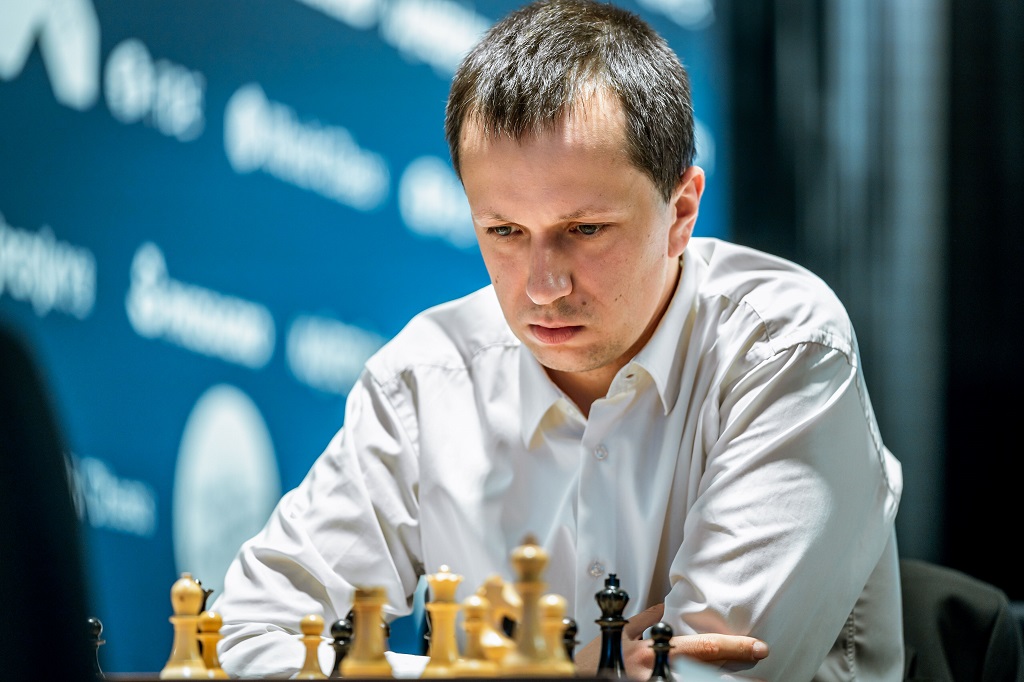
5/24/2019 – Alexander Grischuk and Radoslaw Wojtaszek drew their first semi-final encounters with the black pieces, and will move first against Hikaru Nakamura and Ian Nepomniachtchi in Friday's return games. Both draws were signed with plenty of play on the boards, but given the format the players decided it was too risky to keep going. Expert analysis by GM DANIEL FERNANDEZ. | Photo: Niki Riga / World Chess
new: ChessBase Magazine 225
Chess Festival Prague 2025 with analyses by Aravindh, Giri, Gurel, Navara and others. ‘Special’: 27 highly entertaining miniatures. Opening videos by Werle, King and Ris. 10 opening articles with new repertoire ideas and much more. ChessBase Magazine offers first-class training material for club players and professionals! World-class players analyse their brilliant games and explain the ideas behind the moves. Opening specialists present the latest trends in opening theory and exciting ideas for your repertoire. Master trainers in tactics, strategy and endgames show you the tricks and techniques you need to be a successful tournament player! Available as a direct download (incl. booklet as pdf file) or booklet with download key by post. Included in delivery: ChessBase Magazine #225 as “ChessBase Book” for iPad, tablet, Mac etc.!
YOUR PERSONAL CHESS COACH - Whether you’re taking your first steps into the world of club chess, or already playing at a tournament level: with FRITZ, you can train more efficiently, intelligently and with a more personalised approach than ever before. FRITZ is more than just a chess engine – it’s a training revolution! Whether you’re taking your first steps into the world of club chess, or already playing at a tournament level: with FRITZ, you can train more efficiently, intelligently and with a more personalised approach than ever before.
Chess is a concrete game. There is no way around training your calculation skills. Improve your visualization, pattern recognition and learn calculation techniques such as reciprocal thinking with this course.
€39.90
Gaming the system
The chess world has been trying to deal with the 'problem of draws' for years on end. Some do not consider this to be a real issue, while others keep looking for ways to reduce the amount of peaceful results. For example, in less than two weeks, the seventh edition of the Norway Chess Tournament will try a new format, which forces every game to have a winner at the end of the day — in case of a draw, an Armageddon game will take place.
Tournament organizers have experimented with a wide array of ideas to discourage quick draws, and there has certainly been an improvement if we compare the situation with that of ten or so years ago (again, some even argue that there is no problem to be solved at the time). But sometimes the players choose to be pragmatic, as their careers are on the line... The first games of the semi-finals in Moscow were over after 26 and 35 moves, with all four players agreeing that continuing to look for an advantage would simply have been an unjustifiable decision.
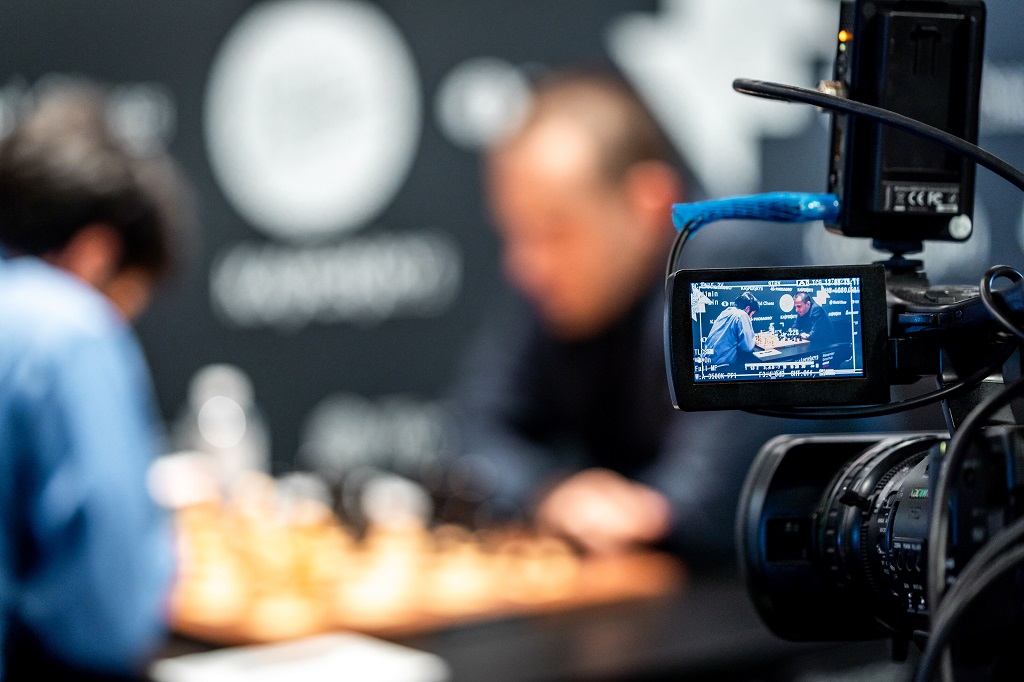
Through the eye of the camera | Photo: Niki Riga / World Chess
Nepomniachtchi ½:½ Wojtaszek: Good prep
A Sicilian Najdorf appeared on the board, with Ian Nepomniachtchi later confessing that he thought he would surprise his opponent with some new ideas. However, as Nepomniachtchi put it, "[Radek] knew nearly all the theory". Indeed, Black equalized, but also spent much more time than his opponent in the ensuing middlegame. When the draw was agreed, Wojtaszek had almost an hour less than his opponent on the clock — Nepo's clock had an hour and twenty-two minutes left!
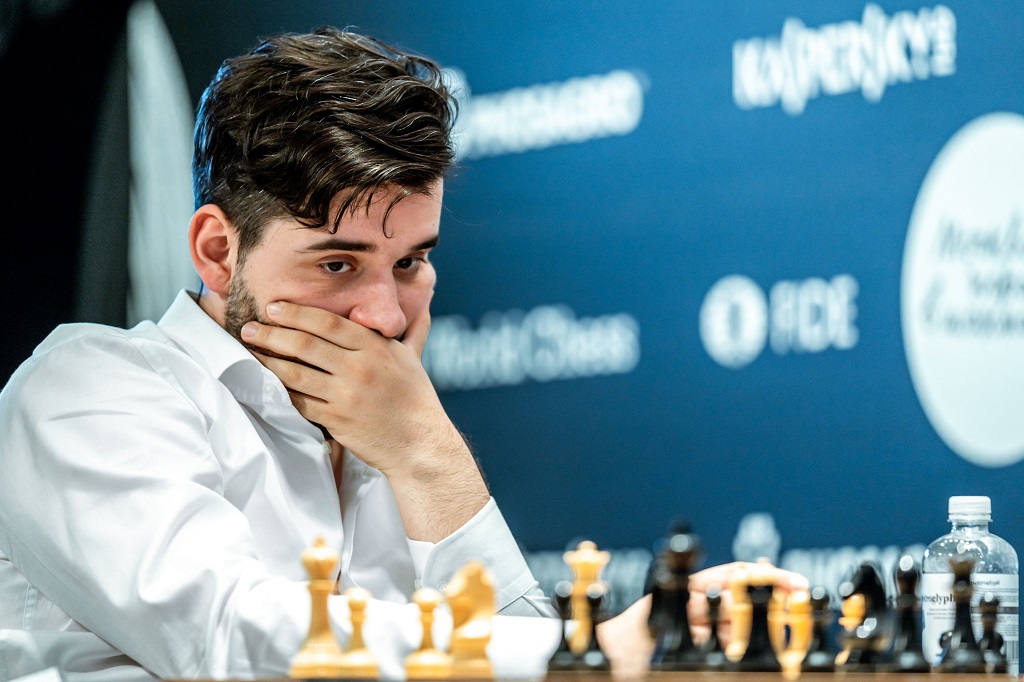
Nepo is well-known for playing quickly | Photo: Niki Riga / World Chess
Russia's highest-rated player explained why he had taken the draw despite having such an advantage on the clock:
Maybe White can play on, but strategically the position is a little bit dangerous, and if you allow Black to co-ordinate his pieces better I think only White can be in trouble, so that's why I decided to offer a draw.
Wojtaszek, on the other hand, criticized his own preparation:
Actually what I prepared was probably quite naïve, because I already played this line against Najer, so I knew more or less the main ideas, but on the other hand it's such an unclear position that you need to know probably much more, so I spent quite a lot of time. And then, okay, when I got an offer I thought that I'm an hour behind...
Annotations by GM Daniel Fernandez
Post-game interview with Nepomniachtchi and Wojtaszek
Such a dynamic and popular opening as the Najdorf is developing the whole time. On this download, Daniel King updates lines that were included on his DVD but also responds to viewers’ requests, considering lines that he omitted from his original repertoir
Nakamura ½:½ Grischuk: No psychological edge
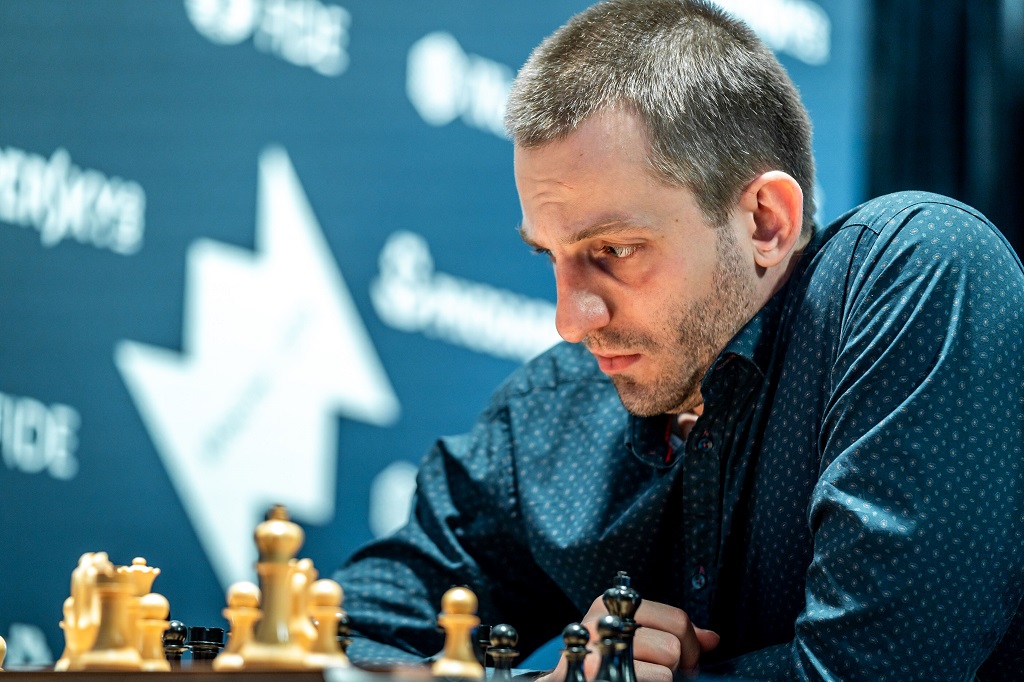
After the opening, Hikaru Nakamura felt his opponent's play should be punished somehow, as Alexander Grischuk did not follow the first suggestion of the computer, but then realized that "practically speaking, it was very hard to prove an advantage". Naka went on to give up the pair of bishops but gained a pawn in exchange. In the struggle that followed, White tried to consolidate his material advantage, but Black did not take long to equalize (or more) and in the final position, as Grischuk stated, "you would need to be crazy to decline a draw here with White".
Grischuk will play White in game two | Photo: Niki Riga / World Chess
Alexander was the one with Black, so Eteri Kublashvili asked him whether he feels he now has a psychological advantage going into the rest of the match. Grischuk responded:
We played, I don't know, hundreds of matches in our lives. Just one draw and you get a psychological edge? It's ridiculous.
Nakamura confirmed his colleague's opinion:
We've played hundreds of games (laughs). I mean, I don't think anything has changed magically since the last time we played, so you just play what you're gonna play and see what happens.
Studying the content of this DVD and adding these openings to your repertoire will provide players with a very strong tool to fight 1...e5 - as the practice of the author clearly demonstrates.
How do you play the Nimzo-Indian? Does White have promising variations available to him or can Black construct a water-tight repertoire? The answers are provided by the Powerbook based on more than 327 000 games, most of which were played by engines.
Commentary by GMs Evgeny Miroshnichenko and Daniil Yuffa
Antonio PereiraAntonio is a freelance writer and a philologist. He is mainly interested in the links between chess and culture, primarily literature. In chess games, he skews towards endgames and positional play.
YOUR PERSONAL CHESS COACH - Whether you’re taking your first steps into the world of club chess, or already playing at a tournament level: with FRITZ, you can train more efficiently, intelligently and with a more personalised approach than ever before.
1.c4 e5 2.Nc3 Bb4!? is an opening idea well worth considering. Black immediately threatens to double the pawns on c3 in the style of the Trompowski or Sicilian Grand Prix attack.
Italian Game Powerbase 2026 is a database and contains 8571 top class games from Mega 2026 and the Correspondence Database 2026, of which 479 are annotated.
Videos: Nico Zwirs discusses the Sicilian with 2…e6 3.d4 cxd4 4.Qxd4 Nc6 5.Qe3 Nf6 6.Nc3. Mihail Marin examines Sindarov’s 6.Ne5 in the Queen’s Pawn Defence. Plus the ‘Lucky bag’ featuring 41 analyses by Berg, Ftacnik, Gupta and many others.
If you're looking for a dynamic alternative to the Slav, Queen's Gambit Declined, or other mainstream systems, the Chigorin Defence offers exactly what modern tournament players need.
Michael Kotyk presents a complete repertoire after 1.e4 e5, built around creative ideas, surprising move orders, and practical weapons designed to catch your opponents off guard.
€69.80
€59.90
We use cookies and comparable technologies to provide certain functions, to improve the user experience and to offer interest-oriented content. Depending on their intended use, analysis cookies and marketing cookies may be used in addition to technically required cookies. Here you can make detailed settings or revoke your consent (if necessary partially) with effect for the future. Further information can be found in our data protection declaration.
Pop-up for detailed settings
We use cookies and comparable technologies to provide certain functions, to improve the user experience and to offer interest-oriented content. Depending on their intended use, cookies may be used in addition to technically required cookies, analysis cookies and marketing cookies. You can decide which cookies to use by selecting the appropriate options below. Please note that your selection may affect the functionality of the service. Further information can be found in our privacy policy.
Technically required cookies
Technically required cookies: so that you can navigate and use the basic functions and store preferences.
Analysis Cookies
To help us determine how visitors interact with our website to improve the user experience.
Marketing-Cookies
To help us offer and evaluate relevant content and interesting and appropriate advertisement.