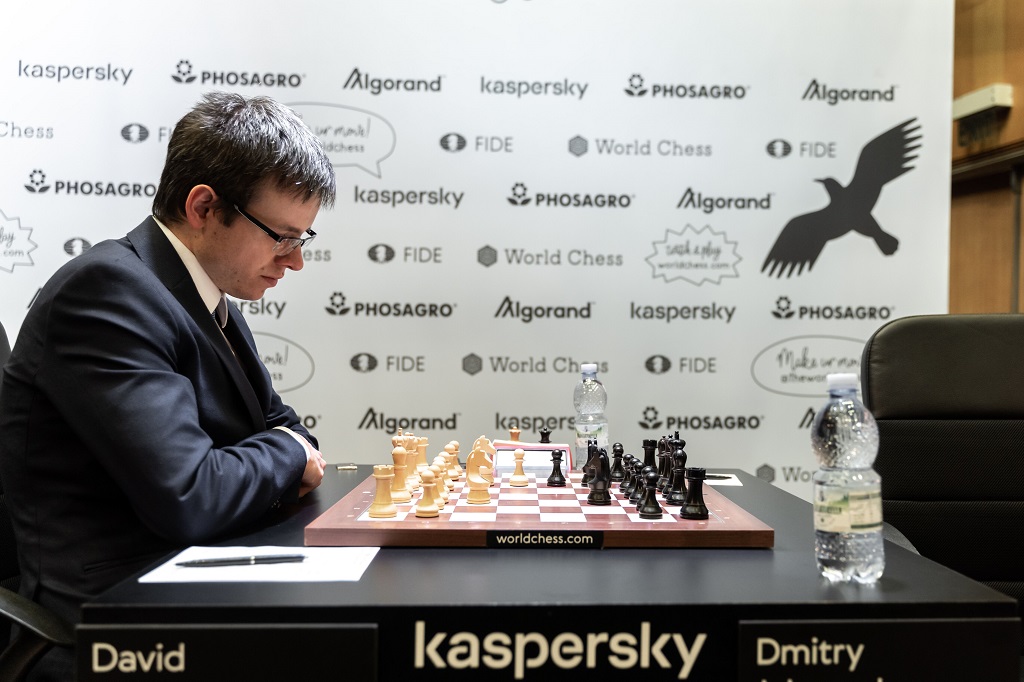
12/16/2019 – David Navara was the first player to secure a spot in the semi-finals of the Jerusalem Grand Prix, as he got a clean 37-move victory over Dmitry Jakovenko. The rest of the games finished drawn, which means three match-ups will be decided in Monday's tiebreaker rounds: Vachier-Lagrave v Andreikin, So v Nepomniachtchi and Wei Yi v Karjakin. | Photo: Niki Riga
new: ChessBase Magazine 225
Chess Festival Prague 2025 with analyses by Aravindh, Giri, Gurel, Navara and others. ‘Special’: 27 highly entertaining miniatures. Opening videos by Werle, King and Ris. 10 opening articles with new repertoire ideas and much more. ChessBase Magazine offers first-class training material for club players and professionals! World-class players analyse their brilliant games and explain the ideas behind the moves. Opening specialists present the latest trends in opening theory and exciting ideas for your repertoire. Master trainers in tactics, strategy and endgames show you the tricks and techniques you need to be a successful tournament player! Available as a direct download (incl. booklet as pdf file) or booklet with download key by post. Included in delivery: ChessBase Magazine #225 as “ChessBase Book” for iPad, tablet, Mac etc.!
YOUR PERSONAL CHESS COACH - Whether you’re taking your first steps into the world of club chess, or already playing at a tournament level: with FRITZ, you can train more efficiently, intelligently and with a more personalised approach than ever before. FRITZ is more than just a chess engine – it’s a training revolution! Whether you’re taking your first steps into the world of club chess, or already playing at a tournament level: with FRITZ, you can train more efficiently, intelligently and with a more personalised approach than ever before.
IM Andrew Martin shows why this 19th-century opening weapon still is a fantastic choice for club players. The Evans produces exciting chess and teaches the art of attack.
€39.90
"One of us has to win"
The fourth leg of the FIDE Grand Prix is being played in Jerusalem, Israel. The 16-player knockout has a €130,000 prize fund, with the series as a whole having an additional prize fund of €280,000 plus two qualifying spots for the 2020 Candidates Tournament. The tournament takes place in the Notre Dame of Jerusalem Centre from December 11th to 23rd.
After day one of the quarter-finals finished with disappointingly short draws on all boards, FIDE Press Officer Anastasiya Karlovich made a point of asking the players about the controversial decision to choose pragmatism over combativeness. Wesley So responded impassively, pointing out that "one of us has to win" in the end. This is simply a logical consequence of using the knock-out format in events with so much at stake. Or, as Maxime Vachier-Lagrave put it:
I understand the frustration from the point of view of the spectators, but for me it's about something else, it's about qualifying for the Candidates, so for this one I cannot be entertaining, at least not if it diminishes my chances.
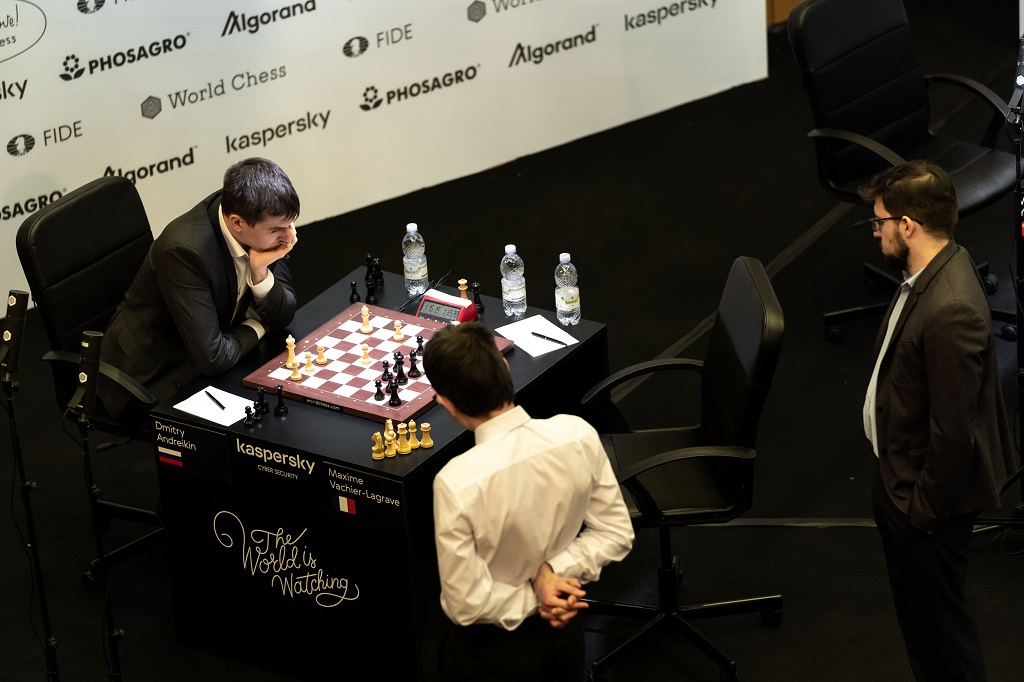
The Frenchman played with Black in the rematch against Dmitry Andreikin, and the players explored a line that was made famous in a game from the 90s, when Joel Lautier drew Garry Kasparov in Tilburg. This prompted 'MVL' to comment that this is now a sort of France v Russia battleground. Andreikin deviated from the famed game on move 20:
The Grunfeld Defence is a very dynamic opening with an excellent reputation and the list of players ready to defend it reads like a who's who in chess. It is rather remarkable, that one variation still retains the position of 'main line' and that after hundreds of games played with it some questions still remain open. GM Lubomir Ftacnik explains.
Lautier had played 20.♖c7 here, and a draw was agreed. Andreikin opted for 20.♔f1, but after 20...♜b8 21.♗c3 the queenside pawns were exchanged and the point was split soon after.
The game attracted David Navara's attention | Photo: Niki Riga
Meanwhile, 1.b3 has also found its way into the practice of today's world elite, and now finally a modern top ten player has taken on the subject for ChessBase: none other than Grandmaster Wesley So!
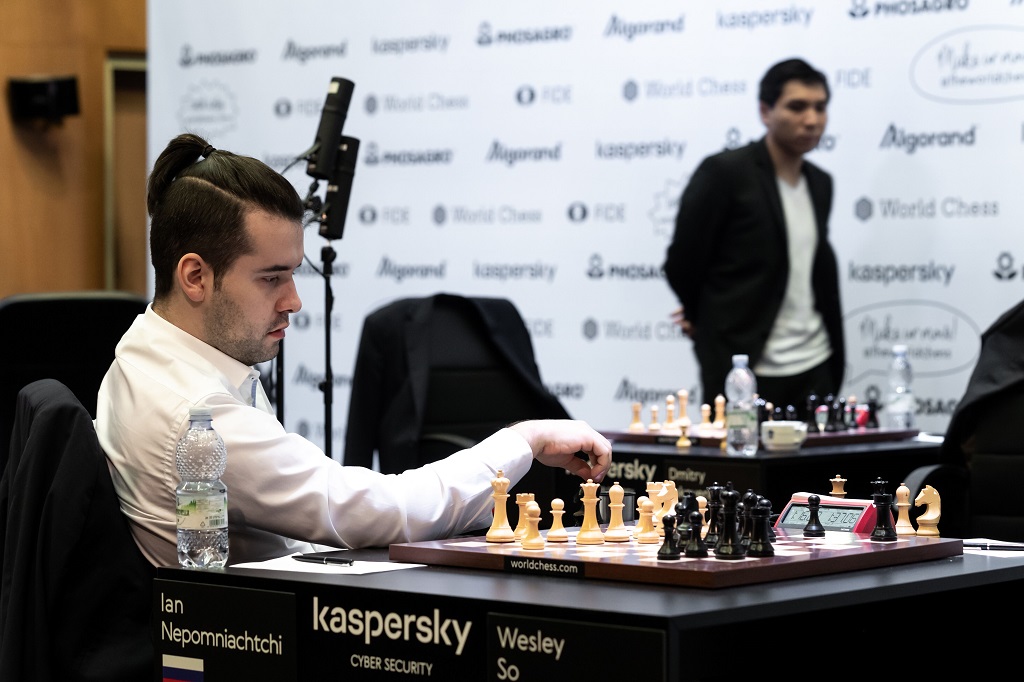
The other match-up relevant to the Candidates race lasted 18 moves, as Wesley So showed good preparation with Black against Ian Nepomniachtchi. The American opted for a classical Ruy Lopez setup, explaining that Ding Liren had used it successfully against Vachier-Lagrave in London. Nepomniachtchi added:
This line with 12.♘xa2 is all about the 16...♛c8 move, so if Black knows ...♛c8 he's probably equalizing...and the game is not gonna be eventful, so I don't think the chess fans missed something.
So commented in turn:
Now we move on to the tiebreaks, where Ian is always very fast.
Wesley So and Ian Nepomniachtchi | Photo: Niki Riga
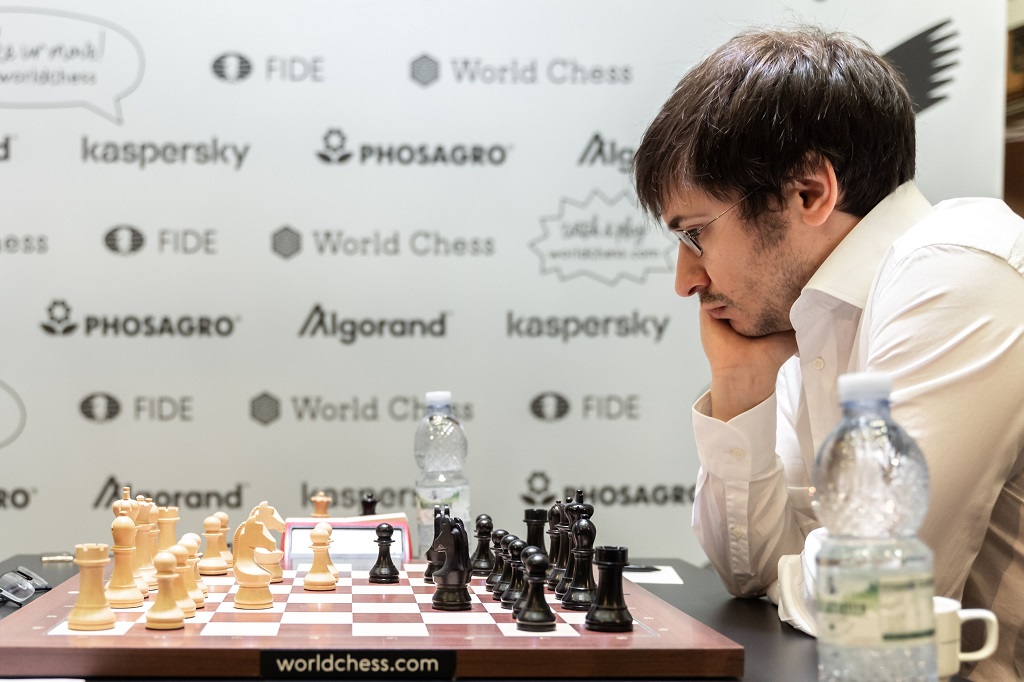
The one decisive game of the day saw David Navara get the upper hand out of the opening, when Dmitry Jakovenko played a bit too passively, especially with 17...♚h8. Navara moved his strong centre forward and eventually created a dangerous passer on the d-file:
The Maroczy System of the Sicilian Defence is one of the modern openings where Black attacks the white centre mainly with pieces. After the moves 1.e4 c5 2.Nf3 Nc6 3.d4 cxd4 4.Nxd4 g6 5.c4 Nf6 the pawns c4 and e4 secure White a space advantage in the middle, however, it is exactly these central pillars which may easily become targets of the black counterattack. Sergei Tiviakov has been applying this system with Black in his tournament practice since 1991 and is considered one its greatest experts.
The Russian grandmaster tried to destabilize White's pawn structure with 24...g5, but Navara had everything in place to plough ahead with 25.d6. The game continued 25...exd6 26.exd6 ♜d7 27.♗xc5, and with the bishop protecting the strong pawn Jakovenko was left with an almost hopeless defensive task.
The pawn promoted to a queen on move 35, and resignation came two moves later. Navara will play either Wei Yi or Sergey Karjakin in the semis.
Dmitry Jakovenko had knocked out Shakhriyar Mamedyarov in round one | Photo: Niki Riga
While the focus of the race for the spot in the Candidates has been put mostly on Vachier-Lagrave and Nepomniachtchi, there is another player in the field who might end up joining one of them next May in Ekaterinburg.
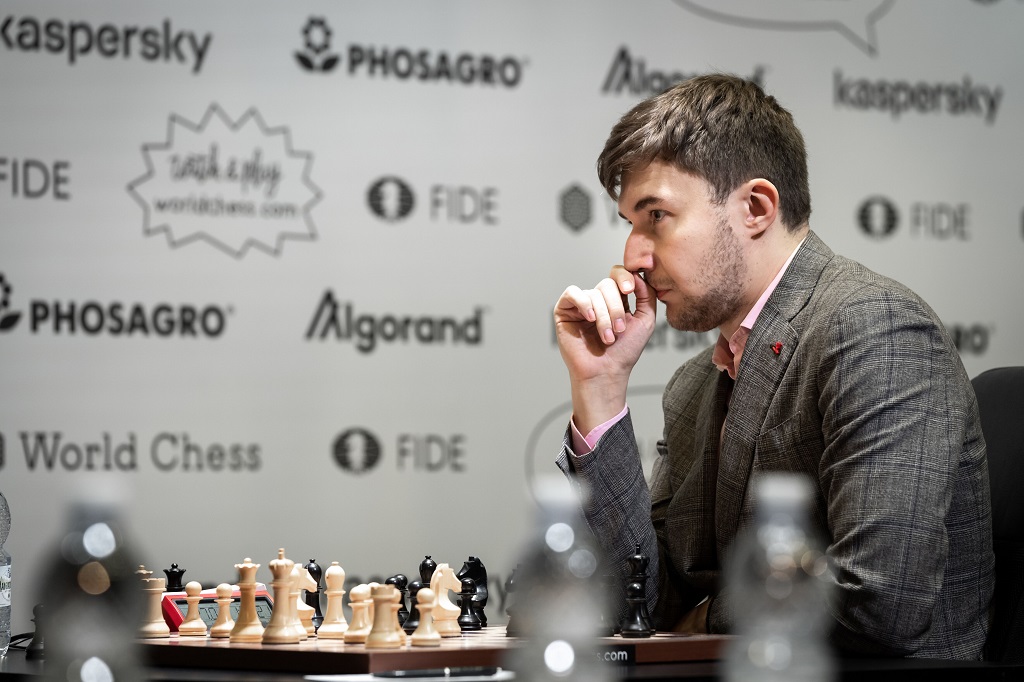
It is impossible for Sergey Karjakin to finish in the top two of the GP overall standings, but he still has an outside chance of getting third place. Since the Russian Chess Federation announced that they will nominate a player from their country as a wildcard and that they will decide who to nominate after pitting the eligible players against each other, Karjakin might end up playing Kirill Alekseenko — who got third place in the Grand Swiss — for the wildcard spot. To do so, he would need to finish first in Jerusalem and wait for So to eliminate Nepomniachtchi on Monday.
In game two of the quarter-finals, Karjakin faced an inspired Wei Yi:
Bologan's way to the Nimzo-Indian was very long and difficult, but now the Moldavian grandmaster recommends the Nimzo-Indian to players of all levels because it’s complex and simple at the same time.
There followed 22.♖xc5 bxc5 23.♖b1 ♝g7 24.♖xb7 h5 25.♖xf7 hxg4, and White was left with two pawns for the exchange. Wei Yi tried to make something of his initiative, but Karjakin defended accurately until reaching the draw on move 40.
Sergey Karjakin | Photo: Niki Riga
Match results - Jerusalem GP
Commentary webcast
Official broadcast with GM Evgeny Miroshnichenko via worldchess.com
Carlos Alberto ColodroCarlos Colodro is a Hispanic Philologist from Bolivia. He works as a freelance translator and writer since 2012. A lot of his work is done in chess-related texts, as the game is one of his biggest interests, along with literature and music.
YOUR PERSONAL CHESS COACH - Whether you’re taking your first steps into the world of club chess, or already playing at a tournament level: with FRITZ, you can train more efficiently, intelligently and with a more personalised approach than ever before.
The Nimzo-Indian has stood the test of time for over a century: Still a top choice for elite players today, from Magnus Carlsen to Praggnanandhaa, it remains one of Black's most reliable ways to fight for real chances against 1.d4 2.c4 3.Nc3.
1.c4 e5 2.Nc3 Bb4!? is an opening idea well worth considering. Black immediately threatens to double the pawns on c3 in the style of the Trompowski or Sicilian Grand Prix attack.
Italian Game Powerbase 2026 is a database and contains 8571 top class games from Mega 2026 and the Correspondence Database 2026, of which 479 are annotated.
Videos: Nico Zwirs discusses the Sicilian with 2…e6 3.d4 cxd4 4.Qxd4 Nc6 5.Qe3 Nf6 6.Nc3. Mihail Marin examines Sindarov’s 6.Ne5 in the Queen’s Pawn Defence. Plus the ‘Lucky bag’ featuring 41 analyses by Berg, Ftacnik, Gupta and many others.
If you're looking for a dynamic alternative to the Slav, Queen's Gambit Declined, or other mainstream systems, the Chigorin Defence offers exactly what modern tournament players need.
€34.90
We use cookies and comparable technologies to provide certain functions, to improve the user experience and to offer interest-oriented content. Depending on their intended use, analysis cookies and marketing cookies may be used in addition to technically required cookies. Here you can make detailed settings or revoke your consent (if necessary partially) with effect for the future. Further information can be found in our data protection declaration.
Pop-up for detailed settings
We use cookies and comparable technologies to provide certain functions, to improve the user experience and to offer interest-oriented content. Depending on their intended use, cookies may be used in addition to technically required cookies, analysis cookies and marketing cookies. You can decide which cookies to use by selecting the appropriate options below. Please note that your selection may affect the functionality of the service. Further information can be found in our privacy policy.
Technically required cookies
Technically required cookies: so that you can navigate and use the basic functions and store preferences.
Analysis Cookies
To help us determine how visitors interact with our website to improve the user experience.
Marketing-Cookies
To help us offer and evaluate relevant content and interesting and appropriate advertisement.











 The fourth leg of the FIDE Grand Prix is being played in Jerusalem, Israel. The 16-player knockout has a €130,000 prize fund, with the series as a whole having an additional prize fund of €280,000 plus two qualifying spots for the 2020 Candidates Tournament. The tournament takes place in the Notre Dame of Jerusalem Centre from December 11th to 23rd.