
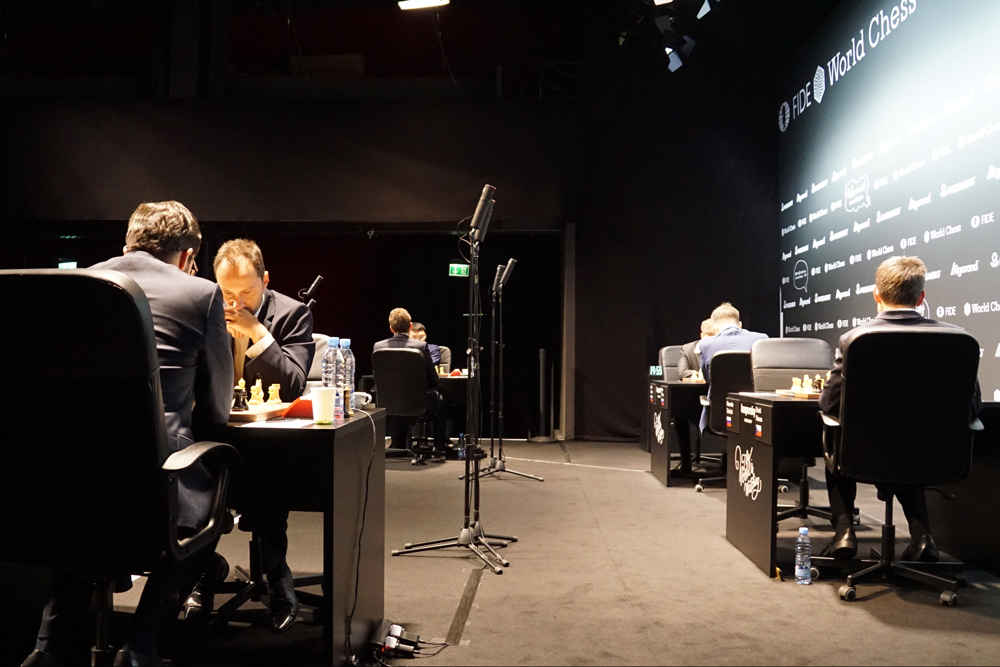

 The third leg of the FIDE Grand Prix is being played in Hamburg, Germany. The 16-player knockout has a €130,000 prize fund, with the series as a whole having an additional prize fund of €280,000 plus two qualifying spots for the 2020 Candidates Tournament. The tournament takes place in the Kehrwieder Haus from November 5th to 17th. You can find more info here.
A curious occurrence was seen in the second and third legs of the Grand Prix. As most chess fans might know by now, the pairings of each GP event are decided by drawing of lots and not by rating. Funnily, both in Riga and in Hamburg, Veselin Topalov was paired up against Hikaru Nakamura in round one; both times the Bulgarian eliminated Nakamura; both times he went on to face Maxime Vachier-Lagrave in the second round; and both times he lost his first game against the Frenchman with the white pieces.
In Latvia, Topalov shocked the spectators by agreeing to a draw in the rematch game after merely twelve moves. Later on, he explained he did not find any realistic chance to get anything in the completely symmetrical final position. Will this part of the story also repeat itself in Germany?
Click or tap any result to open the game via Live.ChessBase.com
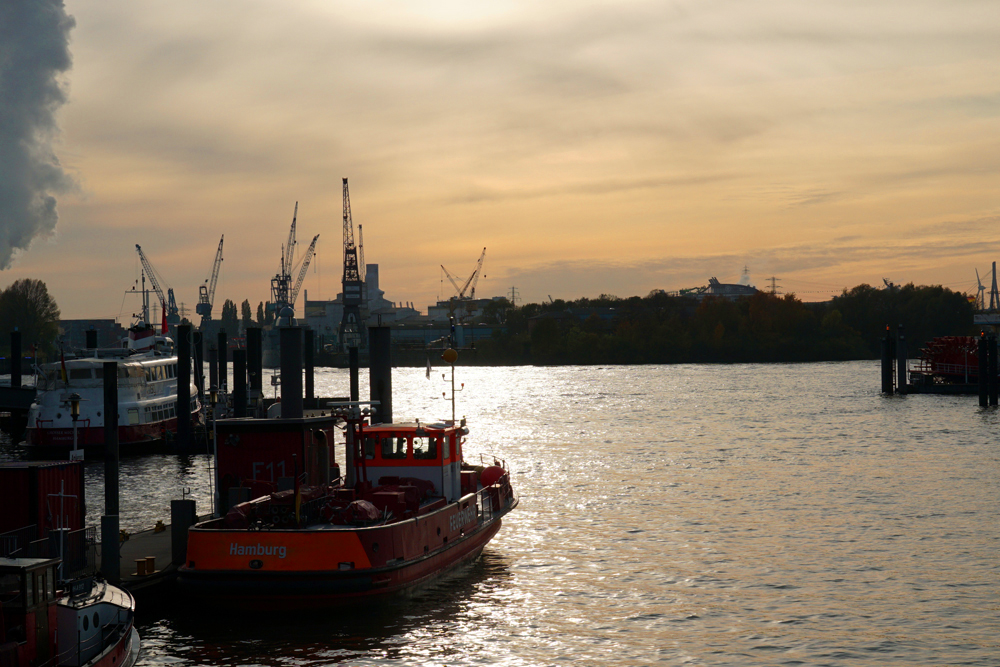
The beautiful scenery in Hamburg | Photo: Nadja Wittmann
The French GM, who arrived in Hamburg as the highest-rated among the participants, played ambitiously in the opening, going for an unbalanced structure against his veteran opponent. White was doing well, but there was plenty of play with both players having the pair of bishops. Topalov seemed to have things under control, until he faltered on move 28:
White has a weakness on e4 and, in order to defend it, he needed to play 28.♖d3 here — if the black bishop moves creating a discovered attack against the central square, he will be in time to guard it. Instead, after Topalov's 28.♖e3 White has 28...♝f4, when moving the rook again to save the exchange is too much of a concession. Thus 29.♗f3 ♝xe3.
Vachier-Lagrave was an exchange up, but the conversion process was not trivial by any means. The Frenchman has shown top form in Hamburg, however, and went on to get a 44-move win, finishing the game with a nice sequence:
Black did not defend the e8-bishop and advanced his strong passer instead: 42...b3. If White captures with the queen, his light-squared bishop cannot stop the pawn after the queen swap, while after 43.♗xe8 there followed 43...♛e2+ 44.♔g1 ♛d1+ and Topalov resigned. The idea is that after 44.♔g2 Black has 44...♛c2+, exchanging the queens and promoting his pawn.
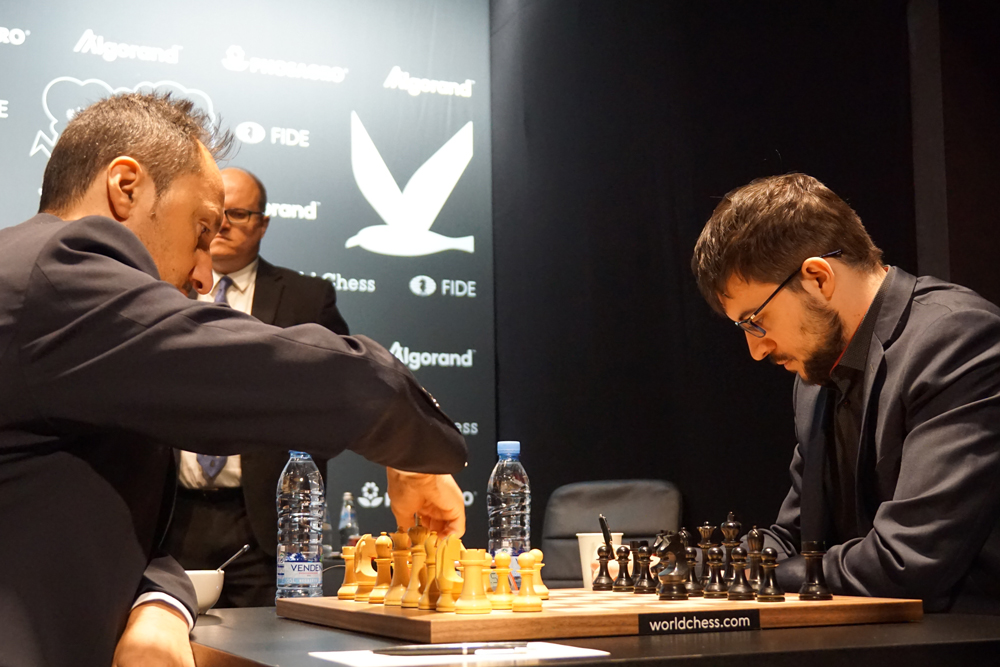
Before the game — Veselin Topalov and Maxime Vachier-Lagrave | Photo: Nadja Wittmann
The all-Russian clash was a 23-move draw out of a Grünfeld Defence, Peter Svidler's favourite setup against 1.d4. It was a highly theoretical battle, with the game following a 1989 encounter between Douven and Vanheste from start to finish. Given the amount of time the players spent starting from move 10, they probably solved some problems over the board, or at least they were trying to remember their notes. Svidler confessed his preparation was rather outdated:
I was trying to figure out during the game if this file was actually older than my opponent — probably it is, and also less trustworthy.
Svidler also mentioned Dubov is his favourite kind of opponent, as preparing for someone like him is practically impossible — there is no way to predict what will come up on the board. The eight-time Russian champion will have the white pieces in Saturday's rematch classical encounter.
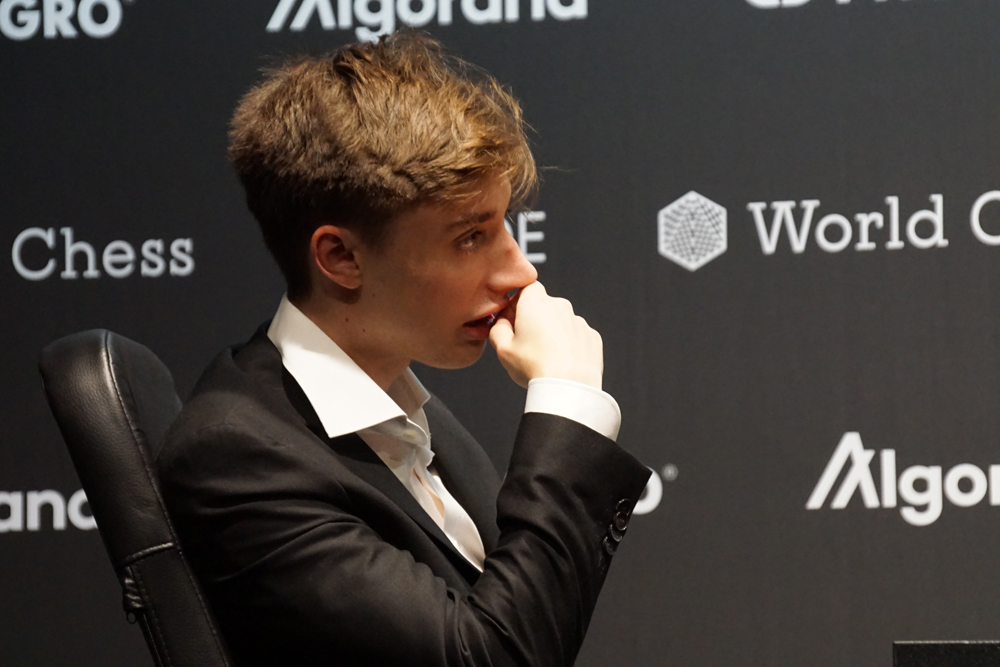
Daniil Dubov | Photo: Nadja Wittmann
For a second time in a row, Jan-Krzysztof Duda found himself defending a tough position with the black pieces. He came from knocking Ian Nepomniachtchi out after drawing the 132-move rematch game in which his opponent was the one with a slim edge throughout. Against Yu Yangyi, the task was not as punishing:
Black had opted for a Petroff Defence, but did not manage to fully equalize out of the opening. White had the initiative while Black put up stiff resistance. The most Yu Yangyi could get after 26...♞xe6 27.dxe6 in the diagrammed position was to get a passer on the e-file in the ending with heavy pieces.
Some accuracy was needed by the Polish grandmaster to keep the balance. The draw was signed after White's 45th move, when there was no way for the Chinese to escape a perpetual check.
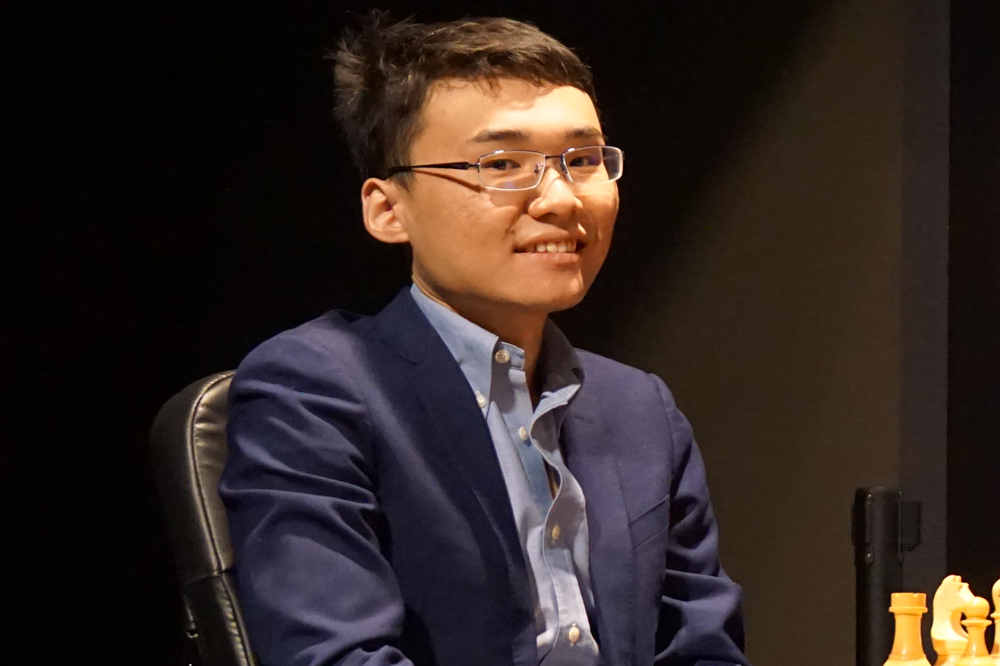
A smiling Yu Yangyi | Photo: Nadja Wittmann
This was the only match-up that included two players who came from winning their round one encounters in tiebreaks. They showed correct positional chess throughout, avoiding risky pawn breaks or perilous adventures with their pieces. The draw was signed after 39 moves in a materially balanced queen endgame.
Alexander Grischuk will have the black pieces in the rematch game. If he manages to take down the Czech number one he will most likely have to face Vachier-Lagrave in the semis, in a crucial match for the overall GP standings.
But first he has to defeat the ever-imaginative David Navara.
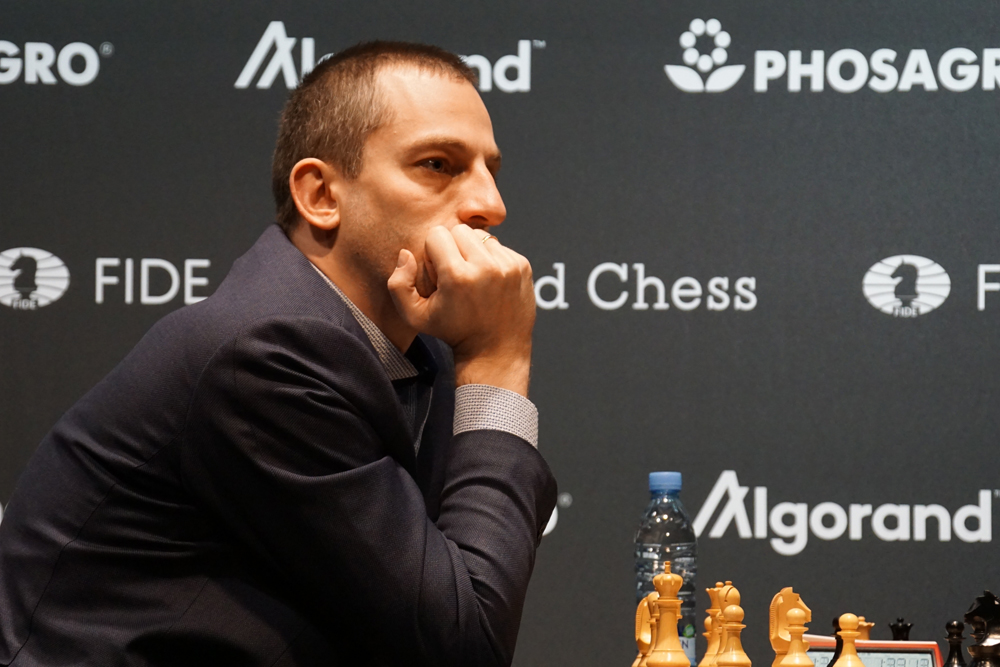
A fan favourite — Alexander Grischuk | Photo: Nadja Wittmann
Commentary by GM Evgeny Miroshnichenko
| Nov. 5–7 | Round 1 + Tie-breaks |
| Nov. 8–10 | Round 2 + Tie-breaks |
| Nov. 11-13 | Semi-final + Tie-breaks |
| Nov. 14 | Rest day |
| Nov. 15-17 | Final + Tie-breaks |