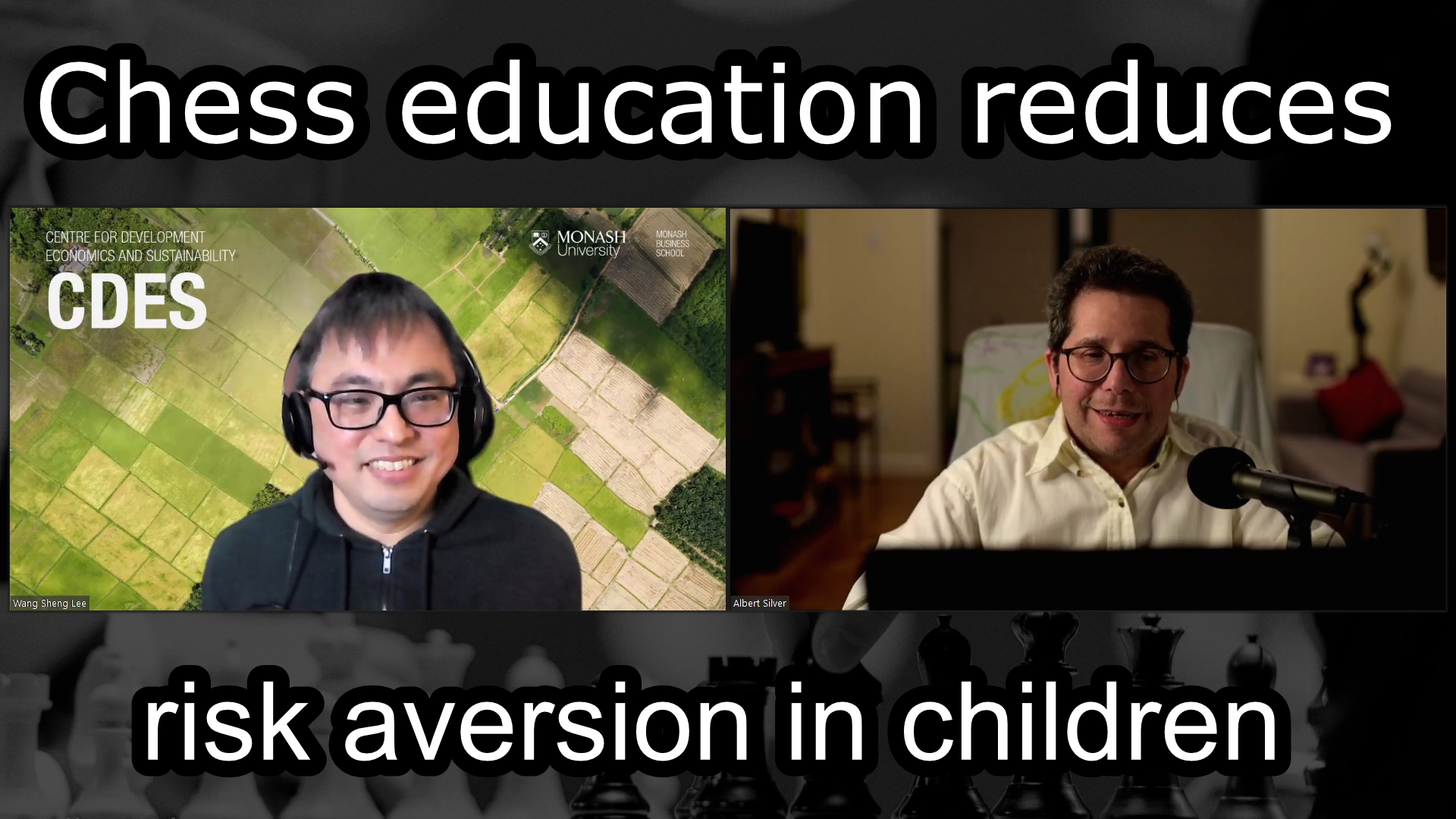
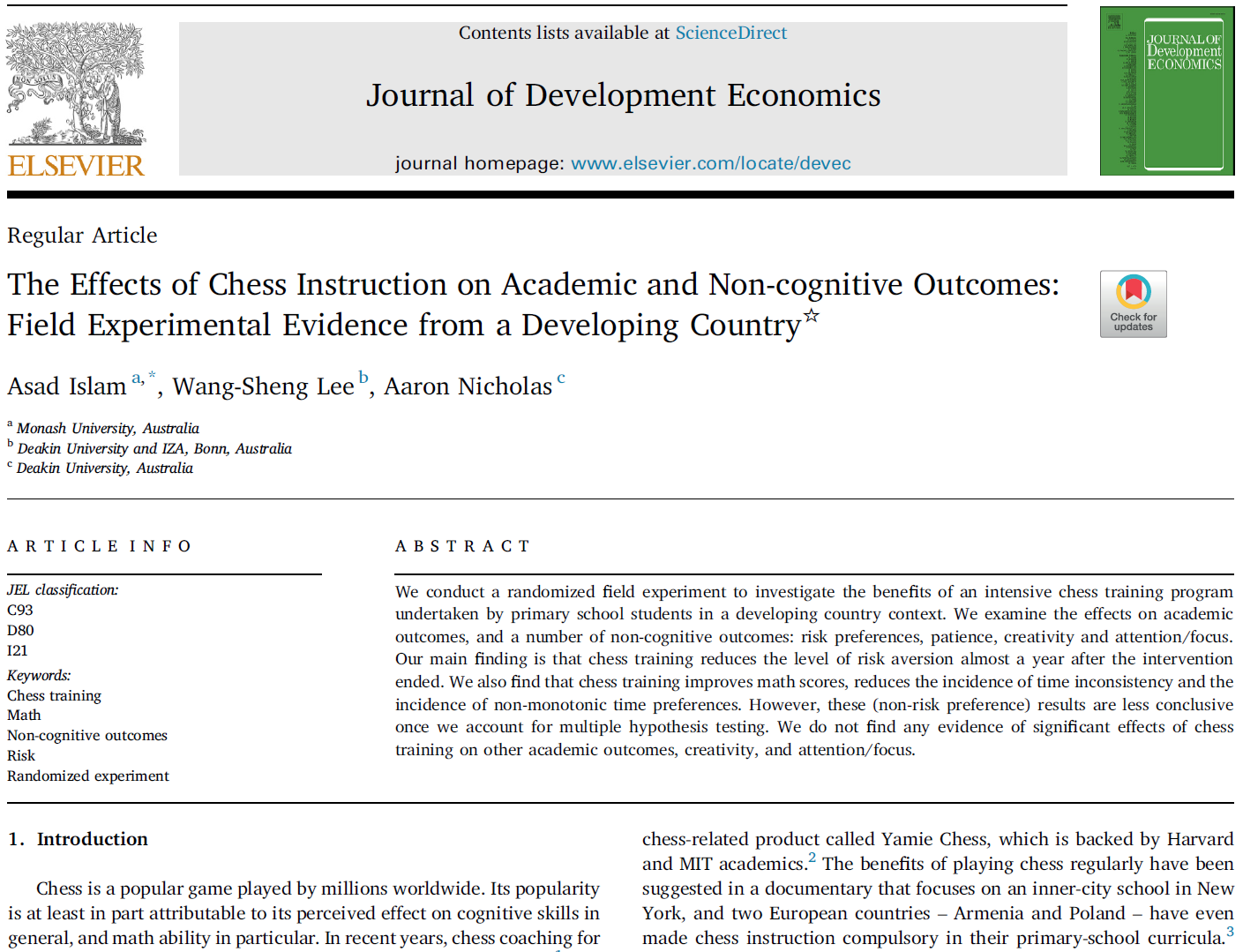
9/10/2021 – Professor Wang-Sheng Lee co-authored the paper "The Effects of Chess Instruction on Academic and Non-cognitive Outcomes". This was *not* yet another paper to attempt to link academic success (ex: math scores) with chess education. Instead, the goal was to study the potential benefits in developing 'soft skills' such as risk aversion, patience, and creativity. A video interview that should not be missed.
new: Fritz 20
Your personal chess trainer. Your toughest opponent. Your strongest ally. FRITZ 20 is more than just a chess engine – it is a training revolution for ambitious players and professionals. Whether you are taking your first steps into the world of serious chess training, or already playing at tournament level, FRITZ 20 will help you train more efficiently, intelligently and individually than ever before.
YOUR PERSONAL CHESS COACH - Whether you’re taking your first steps into the world of club chess, or already playing at a tournament level: with FRITZ, you can train more efficiently, intelligently and with a more personalised approach than ever before. FRITZ is more than just a chess engine – it’s a training revolution! Whether you’re taking your first steps into the world of club chess, or already playing at a tournament level: with FRITZ, you can train more efficiently, intelligently and with a more personalised approach than ever before.
YOUR EASY ACCESS TO OPENING THEORY: Whether you want to build up a reliable and powerful opening repertoire or find new opening ideas for your existing repertoire, the Opening Encyclopaedia covers the entire opening theory on one product.
€169.90
In a recent edition of the Journal of Development Economics, a new article came out called, "The Effects of Chess Instruction on Academic and Non-cognitive Outcomes: Field experimental Evidence from a Developing Country"
What really stood out was the choice of focus. At the words chess education, you would be forgiven for assuming this was yet another paper trying to prove or disprove the possible link between it and school grades, but this was not the case. Instead the authors Asad Islam, Wang-Sheng Lee, and Aaron Nicholas set out to investigate the latent benefits they might offer such as risk preference, patience, time preference and creativity. While all these are traits chess players regularly associate with the royal game, they are not usually the subject of published papers and research. The goal was to improve the citizenry by helping hone these 'soft skills' from a young age, and by extension, pave the way for a brighter economic future that is powered by them.
Of all the 'soft skills' measured, the one that stood out the most clearly was the reduction of risk aversion. This isn't to suggest the children were now embarking on a new wave of hair-pulling recklessness. On the contrary, the ability to better assess the risks in situations, and of course the payoffs, led to more informed decisions and a greater willingness to take calculated risks, a lesson that chess had inculcated in the spades.
This brought to mind one of the earliest quotes and texts to so clearly draw a parallel between chess and life, by none other than Benjamin Franklin in 1786.
A quote that is used in the paper itself and is one of the references cited therein. The paper is well worth reading and examining, and can be found at the university.
Professor Wang-Sheng Lee was kind enough to do an interview in which he reveals he is more than a casual chess player, though is indeed a PhD in Economics, and explains some of the revelations that came from the field study.
Albert SilverBorn in the US, he grew up in Paris, France, and after college moved to Rio de Janeiro, Brazil. He had a peak rating of 2240 FIDE, and was a key designer of Chess Assistant 6. In 2010 he joined the ChessBase family as an editor and writer at ChessBase News. He is also a passionate photographer with work appearing in numerous publications, and the content creator of the YouTube channel, Chess & Tech as well as the author of Typing Tomes, a powerful typing program.
YOUR PERSONAL CHESS COACH - Whether you’re taking your first steps into the world of club chess, or already playing at a tournament level: with FRITZ, you can train more efficiently, intelligently and with a more personalised approach than ever before.
“Attack with Qh5!!” – Tactical training with Oliver Reeh, “6…g5 – nothing ventured, nothing …” – Le Quang Liem comments on one of his victories in Biel, “Grischuk’s stroke of genius” – Petra Papp reveals a surprise in the Sicilian Kan Variation, and much
YOUR PERSONAL CHESS COACH - Whether you’re taking your first steps into the world of club chess, or already playing at a tournament level: with FRITZ, you can train more efficiently, intelligently and with a more personalised approach than ever before.
While tactics decide the game in concrete moments, strategy guides the entire battle. Understanding how to improve your pieces, create weaknesses, execute maneuvers, and steer the game toward favorable structures is what defines strong players.
The Italian Four Knights is the ideal choice. It combines the solid foundation of classical openings like the Ruy Lopez or the Italian Game with an active, initiative-driven style of play.
IM Andrew Martin shows why this 19th-century opening weapon still is a fantastic choice for club players. The Evans produces exciting chess and teaches the art of attack.
IM Andrew Martin complements his Evans Gambit course with a simple and attacking repertoire against all of blacks sidelines after 1.e4 e5.
€34.90
We use cookies and comparable technologies to provide certain functions, to improve the user experience and to offer interest-oriented content. Depending on their intended use, analysis cookies and marketing cookies may be used in addition to technically required cookies. Here you can make detailed settings or revoke your consent (if necessary partially) with effect for the future. Further information can be found in our data protection declaration.
Pop-up for detailed settings
We use cookies and comparable technologies to provide certain functions, to improve the user experience and to offer interest-oriented content. Depending on their intended use, cookies may be used in addition to technically required cookies, analysis cookies and marketing cookies. You can decide which cookies to use by selecting the appropriate options below. Please note that your selection may affect the functionality of the service. Further information can be found in our privacy policy.
Technically required cookies
Technically required cookies: so that you can navigate and use the basic functions and store preferences.
Analysis Cookies
To help us determine how visitors interact with our website to improve the user experience.
Marketing-Cookies
To help us offer and evaluate relevant content and interesting and appropriate advertisement.