
In 1976, two Chess Olympiads were held almost simultaneously: an official FIDE Chess Olympiad in Haifa, Israel (65 participating countries), and a counter-Olympiad in Tripoli with the countries that rejected Israel as the venue in the context of the Middle East conflict (34 participating countries). Some federations took part in neither of the two Chess Olympiads.
A number of African federations took part in the counter-Olympiad in Tripoli with their teams. Eleven African federations, namely those of Tunisia, Algeria, Morocco, Kenya, Madagascar, Libya, Uganda, Mauritius, Mauritania, Gambia and Somalia, founded an African chess federation there, initially called African Chess and later the African Chess Confederation, in order to further develop chess jointly on the African continent, organise competitions and cultural exchange, and give the countries of the continent a common voice within the world chess federation.
At the founding congress, the participating delegates elected Belkadi Ridha from Tunisia as the first president of the new continental federation. Belkadi Ridha was subsequently also appointed a FIDE Vice President.
It took a few more years before the structures for a continental championship were created. The first African Individual Championships were held in Cairo, Egypt, in 1998. Egypt's Ibrahim Hasan Labib became the first continental champion of Africa.
As early as 1993, Slim Bouaziz from Tunisia had become the first player from Africa to receive the GM title from FIDE. Ahmed Adly then became the first player from Africa to win a world title. He won the World Junior U20 Championship in 2004. The first player from sub-Saharan Africa to be awarded the GM title was Amon Simutowe from Zambia in 2009.
Bassem Amin from Egypt is regarded as the strongest player the continent has produced so far, as the first player from Africa to cross the 2700 Elo mark. His peak rating was 2712 in 2019, when he was ranked world number 33. Amin has also won the African Continental Championships seven times so far (2009, 2013, 2015, 2017, 2018, 2022 and 2024).
With Bassem Amin and Ahmed Adly as the country's leading players, Egypt is ranked 51st in FIDE's country ranking (based on the average of the top ten players), making it the strongest federation on the African continent. The strongest sub-Saharan federation is South Africa, ranked 75th.
In 2009, the ACC also organised the African Youth Championships for the first time, in Cape Town. There are now also African Women's Championships, and chess is one of the sports at the African Games.
Organisationally, the ACC, which now has 49 countries as members through their chess federations, has divided the large African continent into five zones: North Africa (Zone 4.1), West Africa (Zone 4.2), Central Africa (Zone 4.3), East Africa and the Indian Ocean (Zone 4.4) and Southern Africa (Zone 4.5).
Last Monday, the 10th ACC Electoral Congress took place at the Skylight Hotel in Addis Ababa, Ethiopia, on the fringes of the Zone 4.4 Championships.
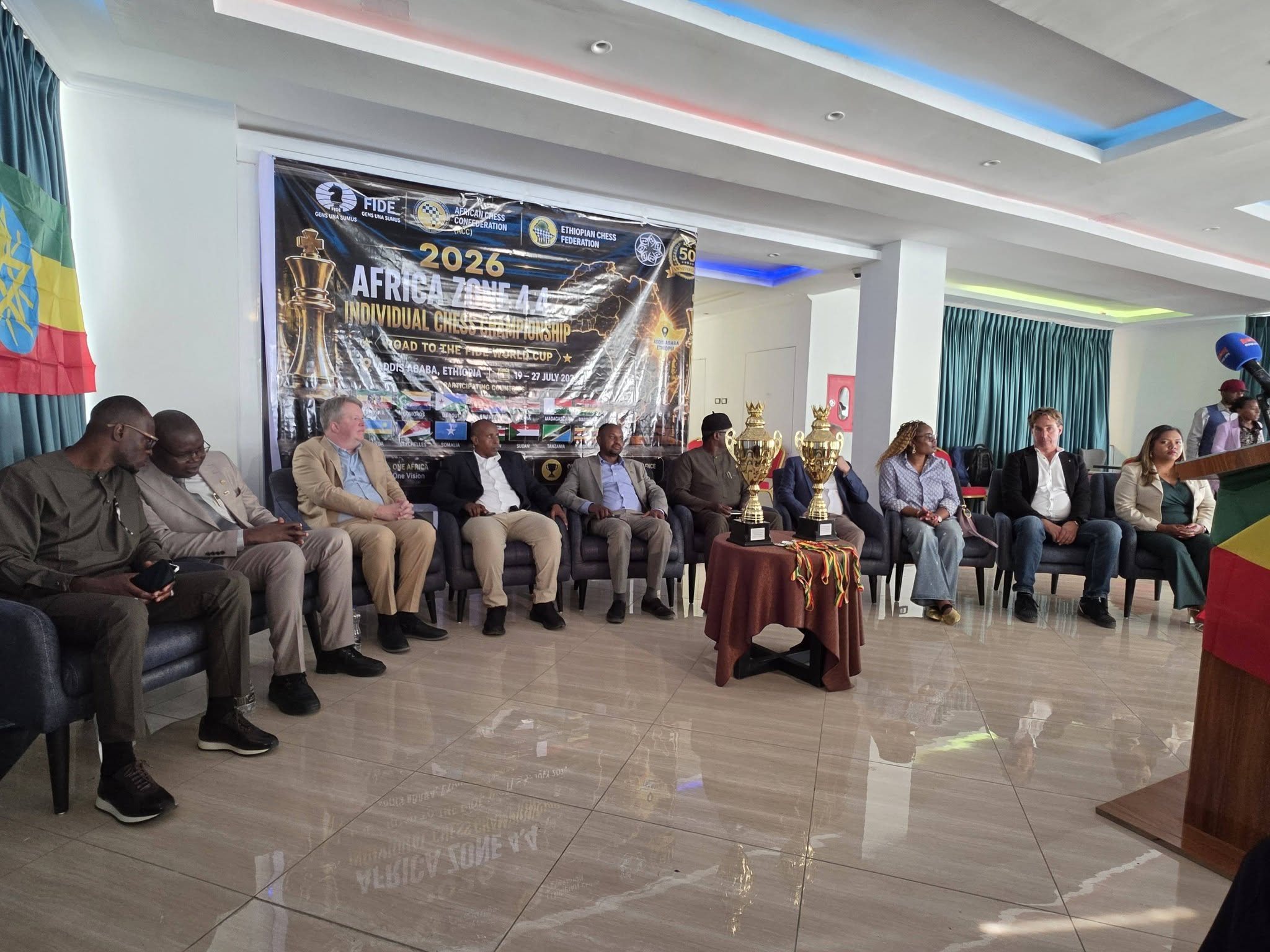
Some European guests in Addis Ababa: Nigel Short (left) and Henric Buettner (right)
In an extremely close election for the office of president, the challenger Benard Wanjala from Kenya defeated the incumbent president Tshepiso Lopang from Botswana.
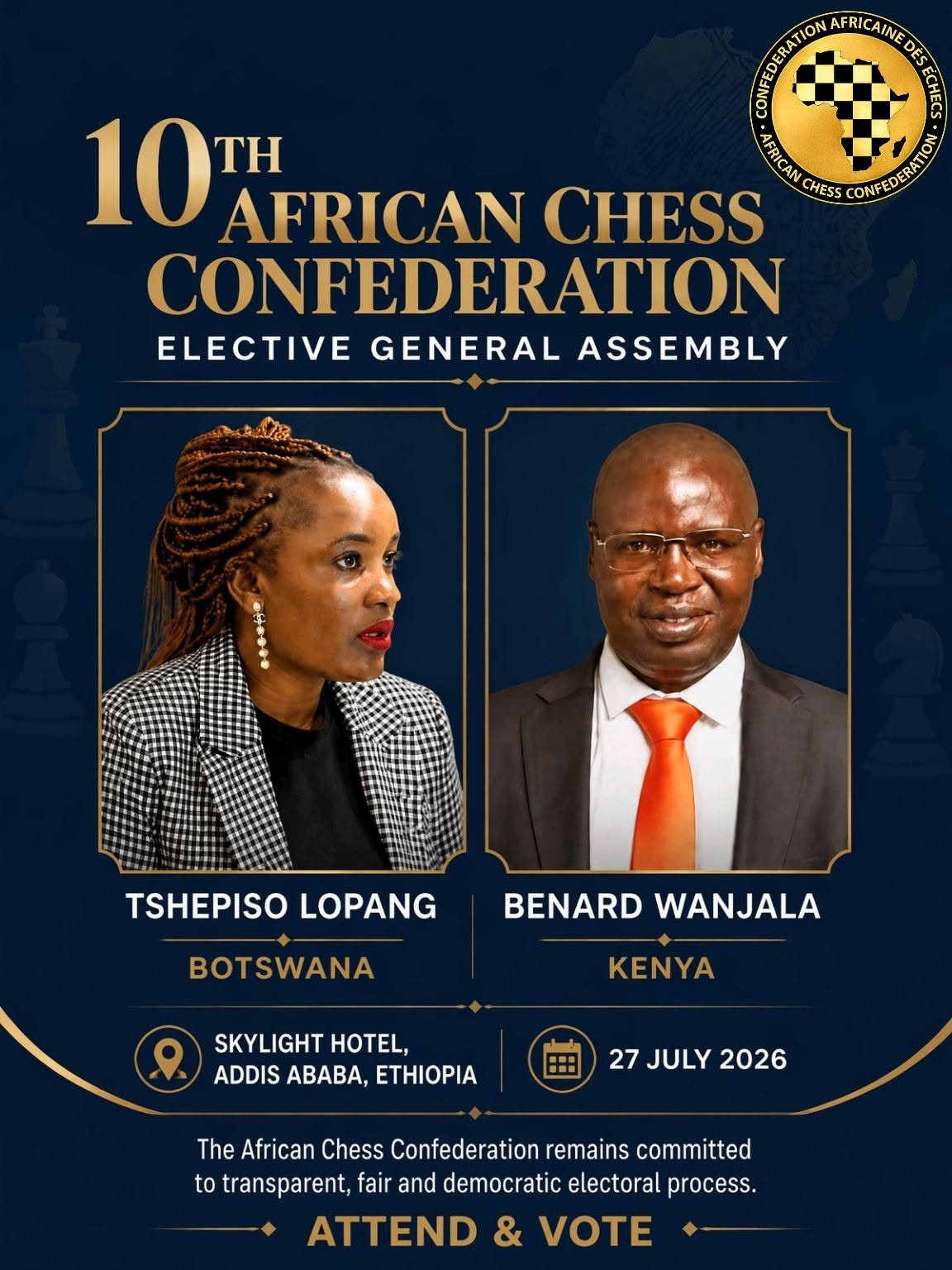
Benard Wanjala (Kenya) – 25 votes
Tshepiso Lopang (Botswana) – 24 votes
The new ACC board now looks as follows:
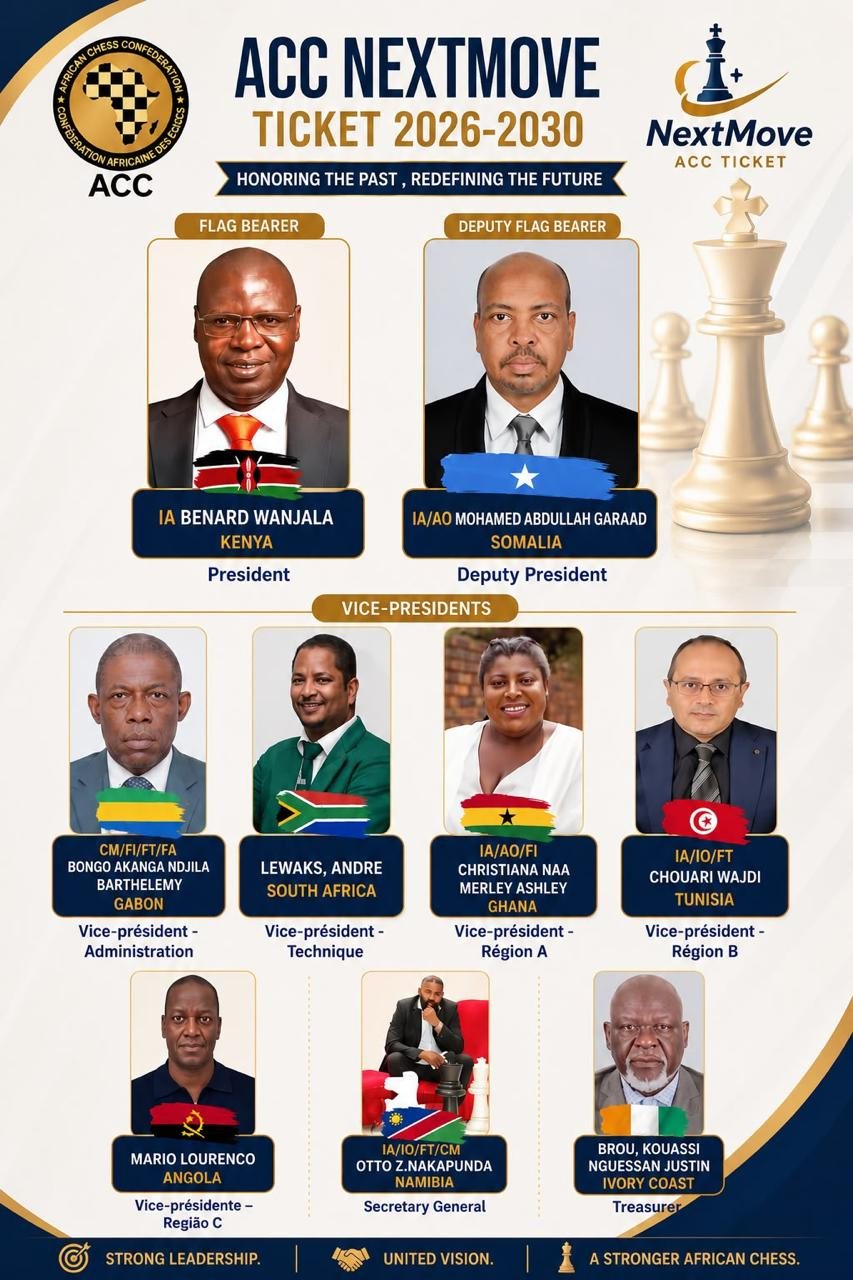
President: Benard Wanjala (Kenya)
Deputy President: Mohamed Abdulla Mohamed (Somalia)
Vice President – Administration: Barthelemy Bongo Akanga Ndjila (Gabon)
Vice President – Technical: Andre Lewaks (South Africa)
Vice President – Region A: Christiana Naa Merley Ashley (Ghana)
Vice President – Region B: Chouari Wajdi (Tunisia)
Vice President – Region C: Mario Lourenço (Angola)
General Secretary: Otto Nakapunda (Namibia)
Treasurer: Kouassi Nguessan Justin Brou (Ivory Coast)
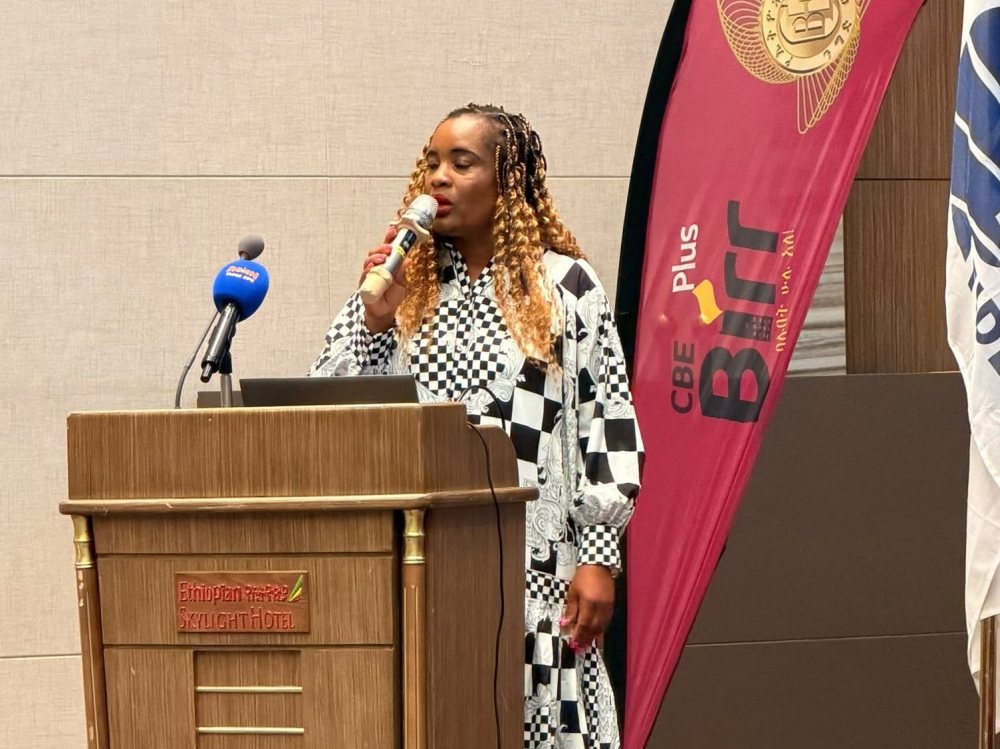
Tshepiso Lopang (photo above), however, accused Benard Wanjala of vote-buying and has filed a complaint against the election result.
The previous presidents of the ACC
Belkadi Ridha (Tunisia), 1978 to 1990
Emmanuel Omuku (Nigeria), 1990 to 1994
Lakhdar Mazouz (Algeria), 1994 to 2002 and 2010–2014
Nizzar Elhadj (Libya), 2002–2006
Buthali Dalibani (Botswana), 2006–2010
Lewis Ncube (Zambia), 2014–2022
Tshepiso Lopang (Botswana), 2022-2026
Benard Wanjala (Nigeria), 2026-
Links: