


The all-Russian final match of the women’s section saw top seed Aleksandra Goryachkina missing chances to get off to a winning start, as she failed to find the most precise continuations to convert a strong kingside attack into a win with the white pieces.
Goryachkina played the straightforward 36.Nf7+, when Black is surprisingly okay after 36...Kg8 37.Qd5 c3 38.Nxh6+ Kh7. In the diagrammed position, the quiet 36.Rd1 was winning, simply transferring the rook to the open file, planning Rd6 with an unstoppable attack.
Soon after missing the opportunity, Goryachkina found herself in an inferior position.
The tables had turned in just five moves, and suddenly Alexandra Kosteniuk was in the driver’s seat. Perhaps the fact that she survived what seemed to be a lethal attack prevented the experienced grandmaster to find the correct move, though — Kosteniuk invited an exchange of queens with 41...Qd4 instead of going for 41...Qe3, protecting the c-pawn’s promotion square.
In fact, the queen swap would have favoured Black, but Goryachkina found the correct continuation in 42.Nh3, rerouting her knight to create threats against Black’s king.
The queens did leave the board soon after, and the game seemed to be heading towards a draw.
Kosteniuk eventually came out on top from this position thanks to her active king and far-advanced passer on the c-file. The 37-year-old from Perm now only needs a draw to win the first edition of the Women’s World Cup.
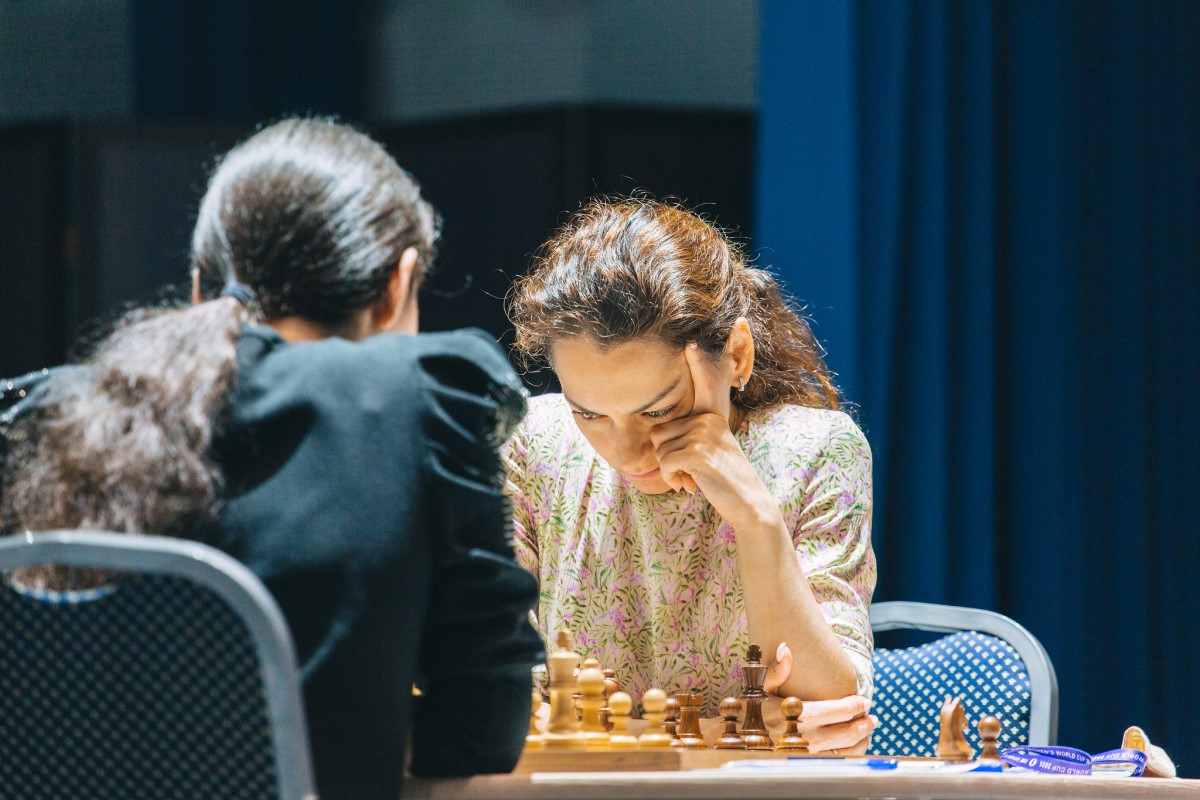
Alexandra Kosteniuk | Photo: Anastasiia Korolkova
In the match for third place, Tan Zhongyi and Anna Muzychuk curiously played the exact same first 12 moves seen in the first semifinal between Sergey Karjakin and Vladimir Fedoseev in the open section, played concurrently.
A well-played game by both contenders was agreed a draw after 42 moves.
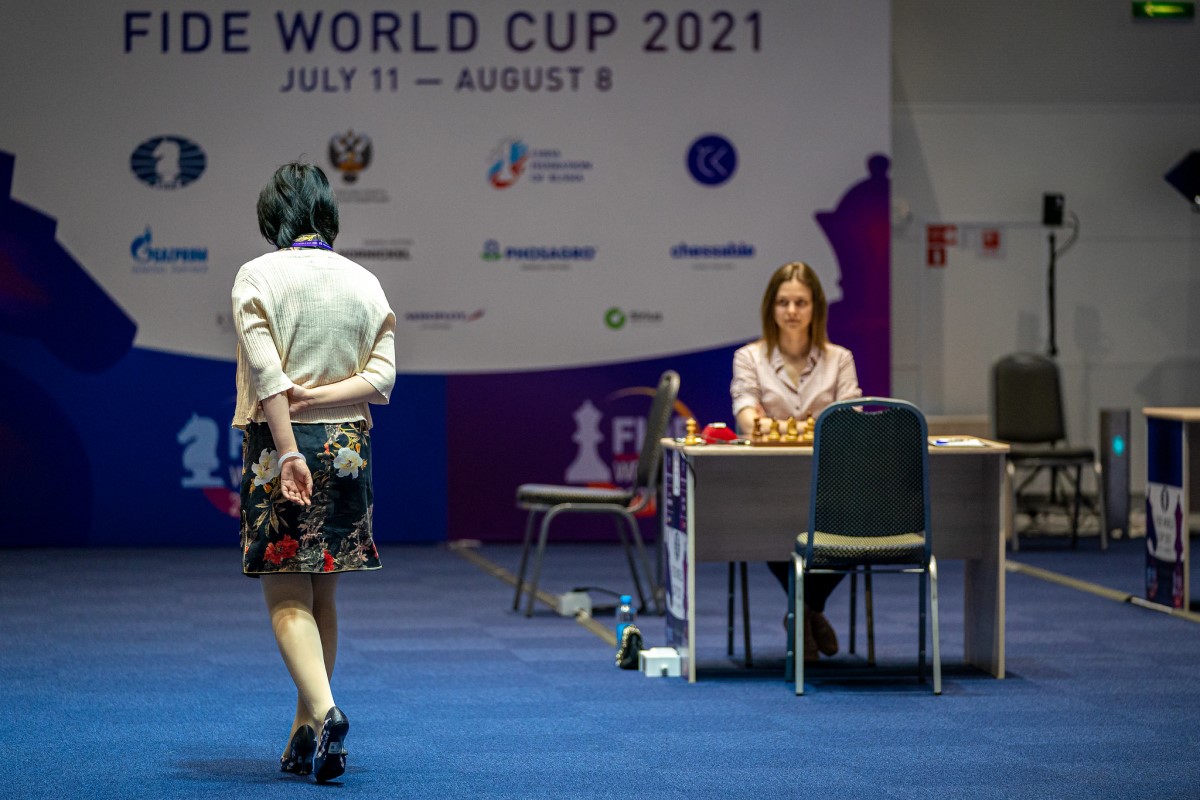
Photographers Anastasiia Korolkova and Eric Rosen have done an excellent job portraying the players during the gruelling events — Tan Zhongyi and Anna Muzychuk | Photo: Eric Rosen
About ten months ago, on 10 October 2020, Jan-Krzysztof Duda ended Magnus Carlsen’s 125-game undefeated streak by beating him with white in round 5 of the Norway Chess Tournament in Stavanger. Yesterday, at the semifinals of the FIDE World Cup, the Polish grandmaster collected a crucial half point with the black pieces against the strongest player in the world.
Duda safely reached this balanced position and showed good technique by playing 28...d3 instead of 28...a5 in this rook ending. GM Karsten Müller explains the intricacies of this endgame in his annotations below.
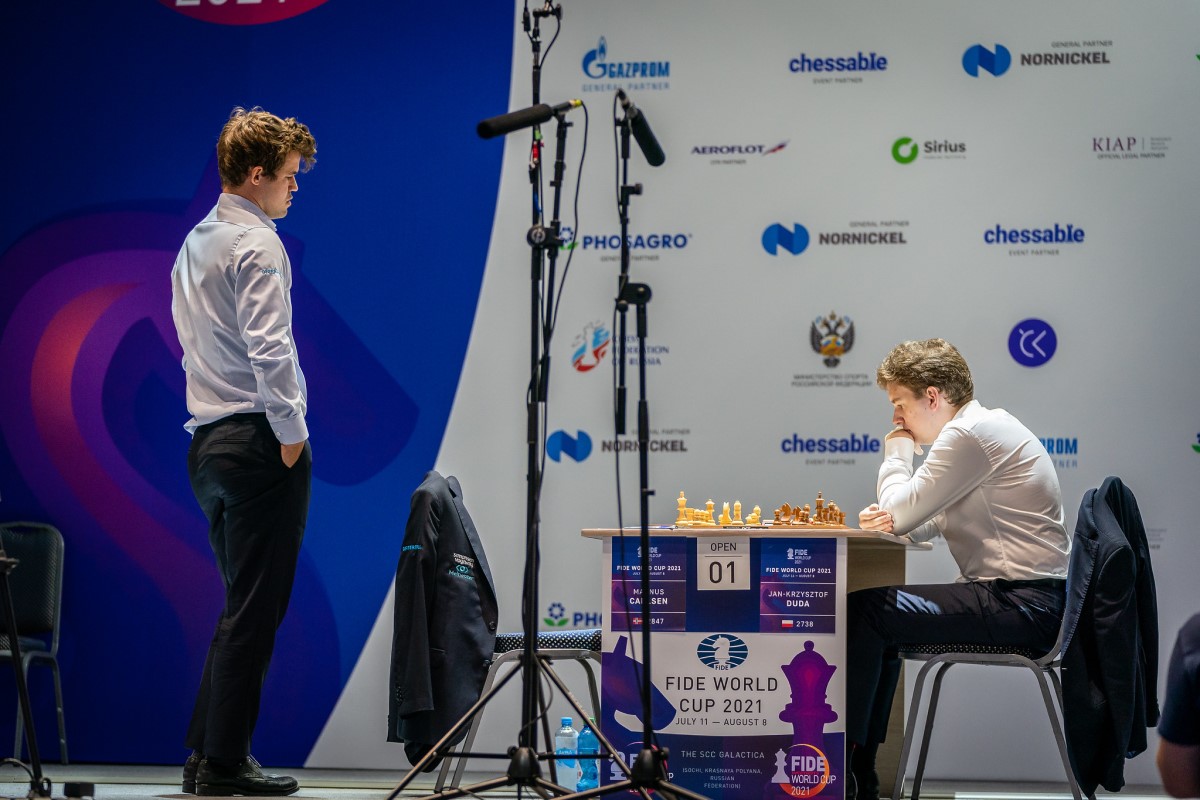
Magnus Carlsen and Jan-Krzysztof Duda | Photo: Eric Rosen
Meanwhile, Fedoseev and Karjakin only drew after 69 moves. They had reached a heavy-piece middlegame by move 25.
A long manoeuvring battle ensued, with Karjakin eventually agreeing to simplify into a rook endgame a pawn down, in which his passed pawn on the a-file gave him enough compensation to keep the balance.
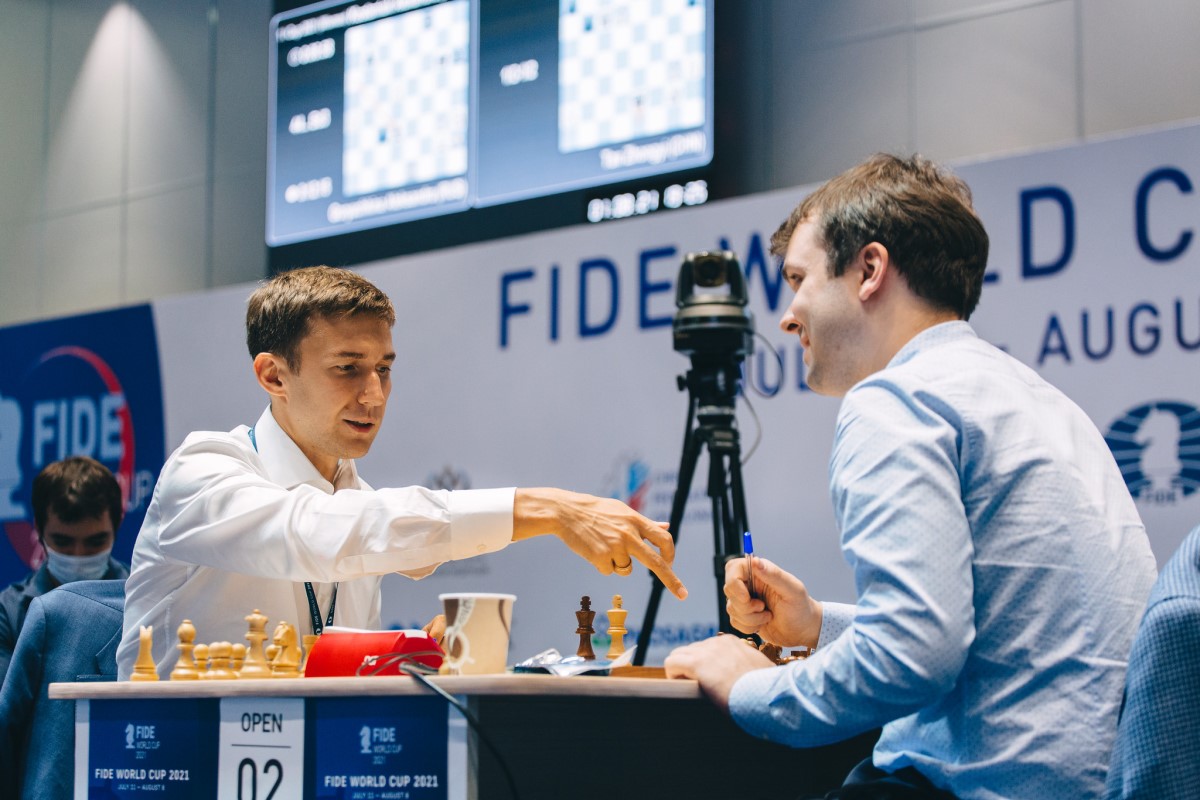
A friendly exchange ensued once the draw was agreed — Sergey Karjakin and Vladimir Fedoseev | Photo: Anastasiia Korolkova