
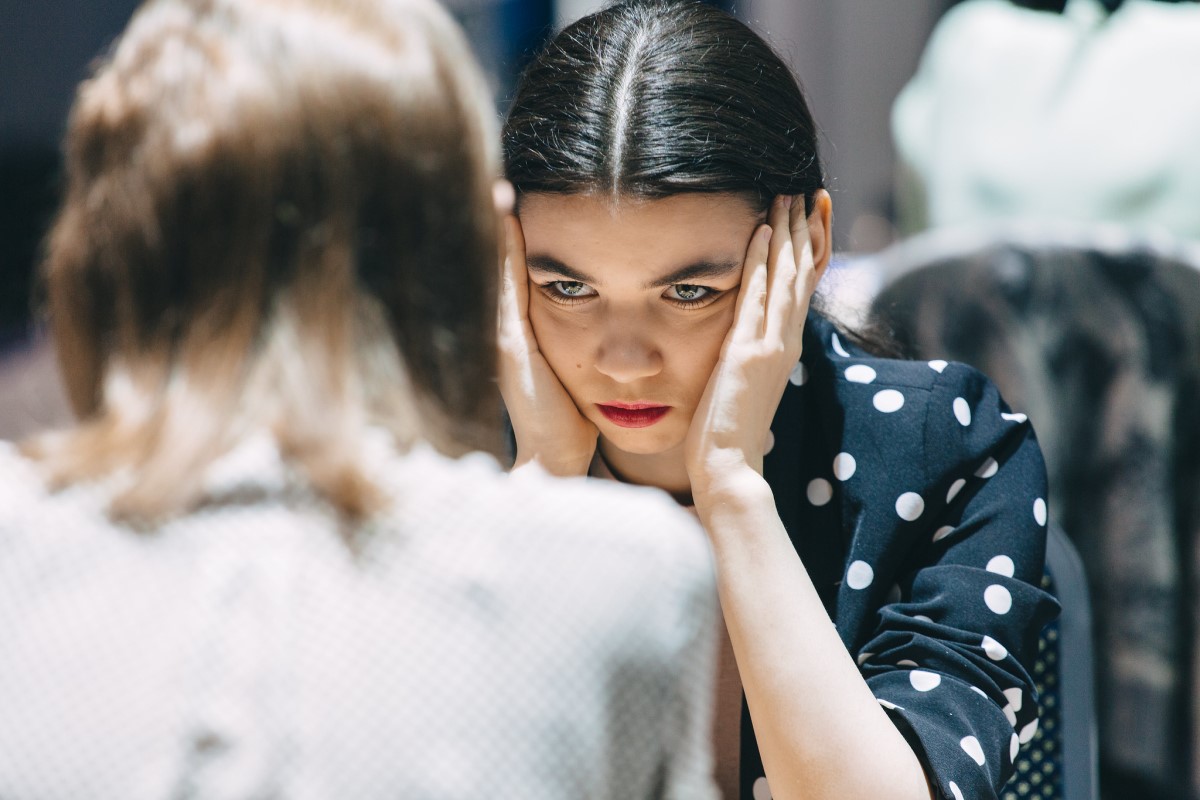

7/31/2021 – Sergey Karjakin knocked out Sam Shankland in the only match of the quarterfinals that was decided in a rapid and blitz playoff at the open section of the FIDE World Cup in Sochi. Meanwhile, Alexandra Kosteniuk and Aleksandra Goryachkina (pictured) advanced to the final in the women’s section after knocking out Tan Zhongyi and Anna Muzychuk respectively. Saturday is a rest day for both categories. | Photo: Anastasiia Korolkova
new: Fritz 20
Your personal chess trainer. Your toughest opponent. Your strongest ally. FRITZ 20 is more than just a chess engine – it is a training revolution for ambitious players and professionals. Whether you are taking your first steps into the world of serious chess training, or already playing at tournament level, FRITZ 20 will help you train more efficiently, intelligently and individually than ever before.
In this video course experts examine the games of Steinitz. Let them show you which openings Steinitz chose, where his strength in middlegames were, how he outplayed his opponents in the endgame & you’ll get a glimpse of his tactical abilities!
€34.90
Karjakin, Goryachkina and Kosteniuk advance
As we pointed out in our recap after the first rest day, 5 out of the 8 previous editions of the World Cup were played in Russia, with 3 of them seeing an all-Russian final match. This year, we are sure to have one finalist in the open section hailing from the host country, while the first women-only edition will have a Russian winner.
Smyslov cultivated a clear positional style and even in sharp tactical positions often relied more on his intuition than on concrete calculation of variations. Let our authors introduce you into the world of Vasily Smyslov.
Although chess has grown incredibly in other countries — i.e. India, China, Iran — and the years of Soviet domination in the elite are over, Russia continues to be a chess powerhouse. In this year’s World Cup, 28 out of the 206 participants in the open and 15 out of 103 players in the women’s event were Russian.
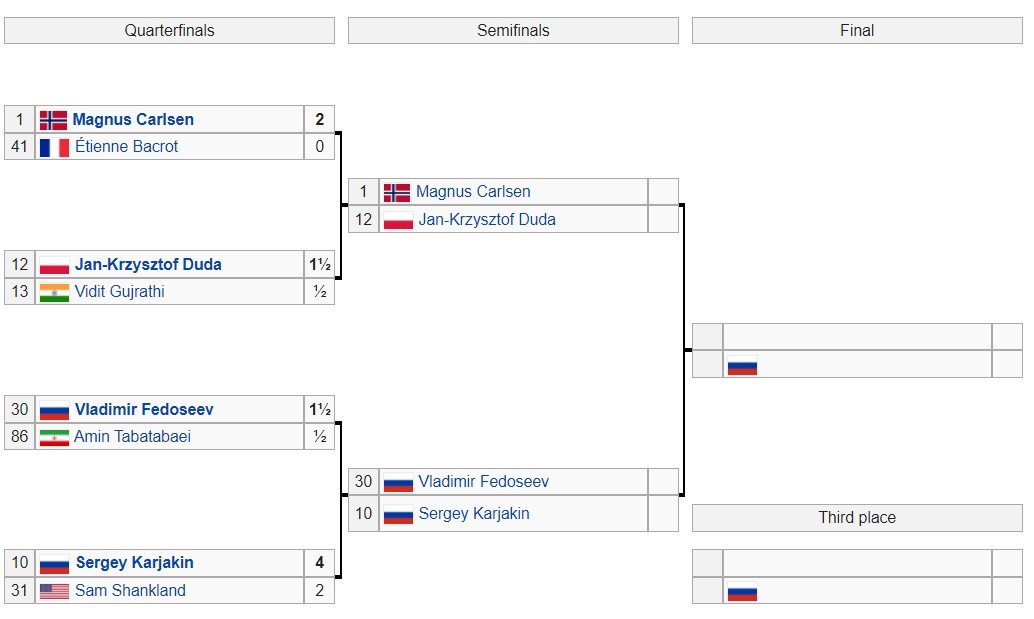
On Friday, Sergey Karjakin set up an all-Russian semifinal against Vladimir Fedoseev after beating Sam Shankland in the only match of the quarterfinals that went to tiebreaks, while both Aleksandra Goryachkina and Alexandra Kosteniuk scored wins with white to knock out Anna Muzychuk and Tan Zhongyi respectively in the classical phase of the semifinals in the women’s tournament.
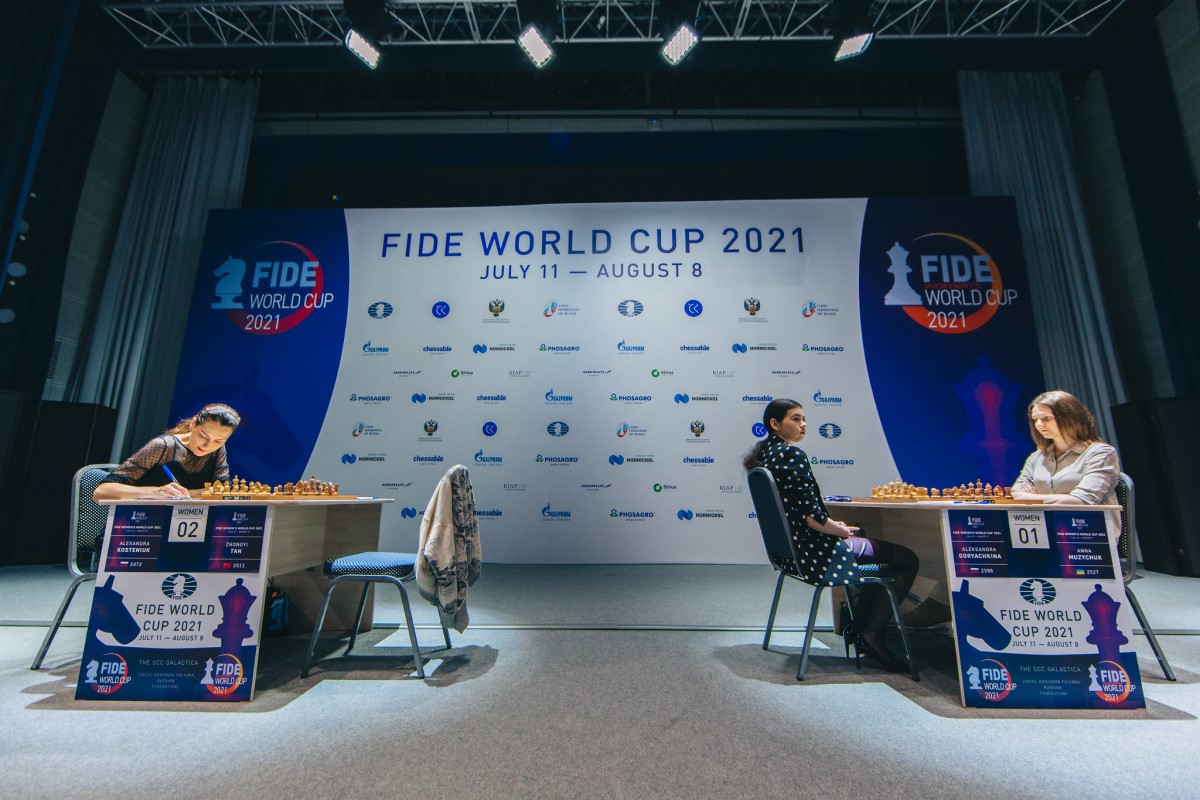
The women’s semifinals took centre stage on Friday | Photo: Anastasiia Korolkova
Winning on demand
Not one single game finished drawn in Karjakin vs Shankland. Twice did the Russian won on demand throughout the match, scoring victories with the white pieces both in the classical section and the first set of rapid tiebreakers.
After beating Shankland in the first 10-minute game — also with white — the Russian kept his cool in a slightly inferior position and ended up winning the game to move on to the next stage. Karjakin’s first two wins on Friday finished similarly, with his rooks and dark-squared bishop threatening to mate the opposite king on the back rank.
On this DVD, Grandmaster and worldrenowned commentator Maurice Ashley reviews some of the most interesting patterns with examples meant to educate and entertain.
Game 4 - Karjakin plays white
Game 5 - Karjakin plays white
With two spots in the Candidates in contention and Carlsen not fighting for any of them, it is possible that the losers of both matches will get a second chance at getting the coveted prizes in the match for third place (unless Carlsen loses against Duda, in which case the loser of Karjakin vs Fedoseev will be out of contention).
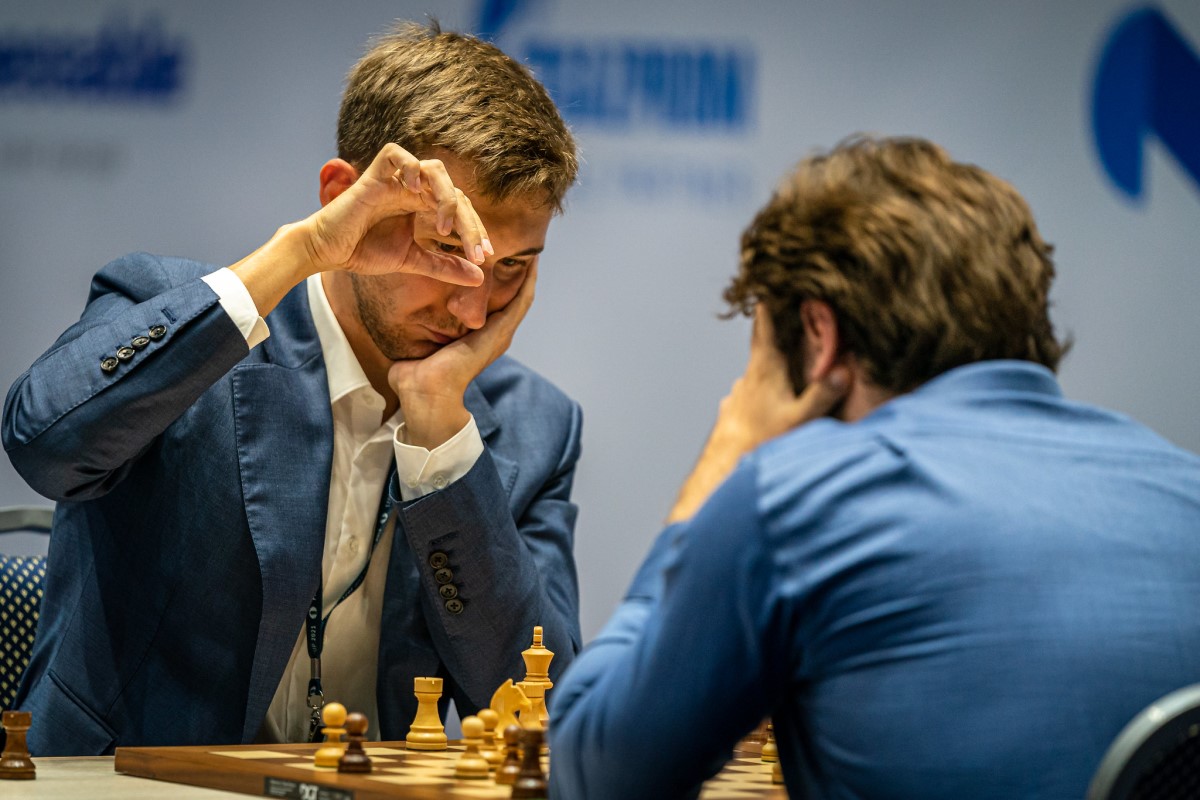
Sergey Karjakin had an incredibly difficult rival in Sam Shankland | Photo: Eric Rosen
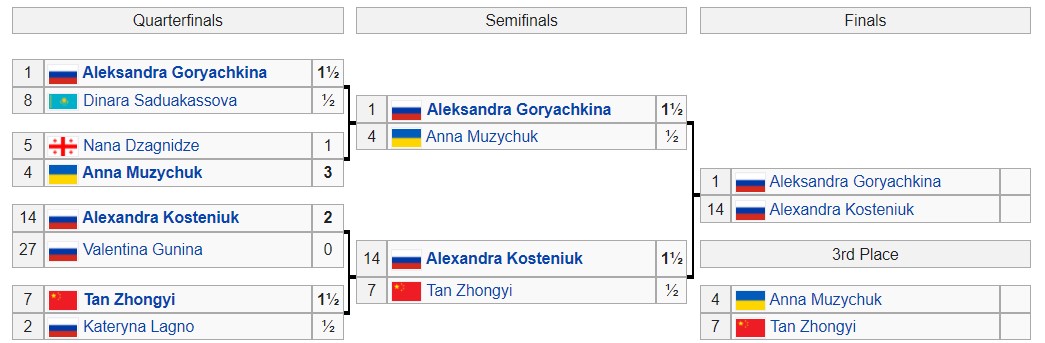
Rating was much more of a reliable predictor in the women’s section, as 3 out of 4 semifinalists were seeded 1st, 4th and 7th in the initial ranking. On Friday, top seed Aleksandra Goryachkina knocked out Anna Muzychuk (4th) and Alexandra Kosteniuk (14th) knocked out Tan Zhongyi (7th).
Kosteniuk is the ‘outsider’ rating-wise, but the 37-year-old former world champion is no stranger to fighting at the very top in the women’s circuit. In the second game of the semis, she made the most of a blunder by her Chinese opponent.
On this DVD, well-known Indian WGM Tania Sachdev shows you how to evaluate certain positions and then find the right concepts and plans on the basis of her own games.
Tan’s 25...Nd5 allowed 26.Bxh5, when Black cannot adequately prevent White from grabbing the exchange due to the threats connected to Qd6+. The Chinese GM went for 26...Rf8, but her position was already hopeless. Kosteniuk swiftly converted her advantage into a 38-move win.
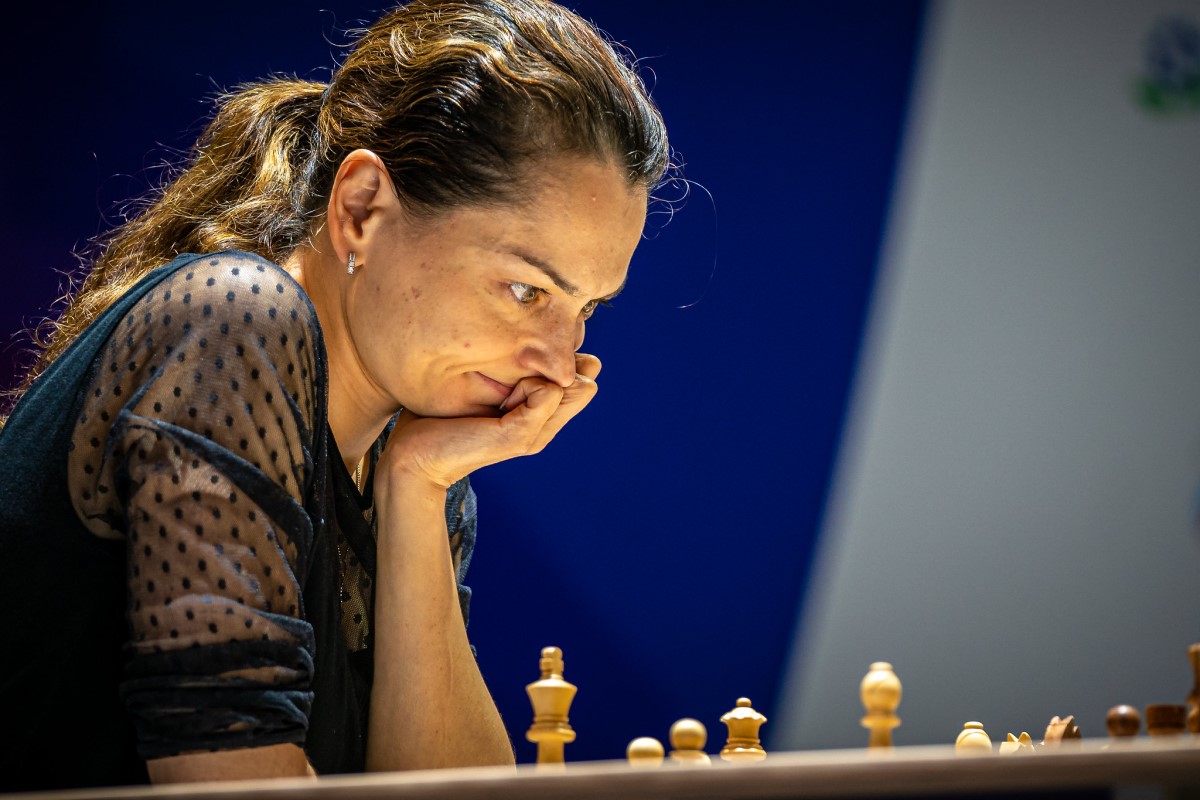
Alexandra Kosteniuk was world champion from 2008 to 2010 | Photo: Anastasiia Korolkova
In the meantime, 22-year-old Goryachkina was grinding out a win from a superior double-rook ending.
Double rook endings occur frequently and are different from single rook endings in several respects.
GM Karsten Müller demonstrates in his annotations below that Black needed to play actively to get good drawing chances in this position. Instead of Müller’s suggestion of 30...g5, though, Muzychuk went for the passive 30...Rc5 and was duly outplayed by her opponent.
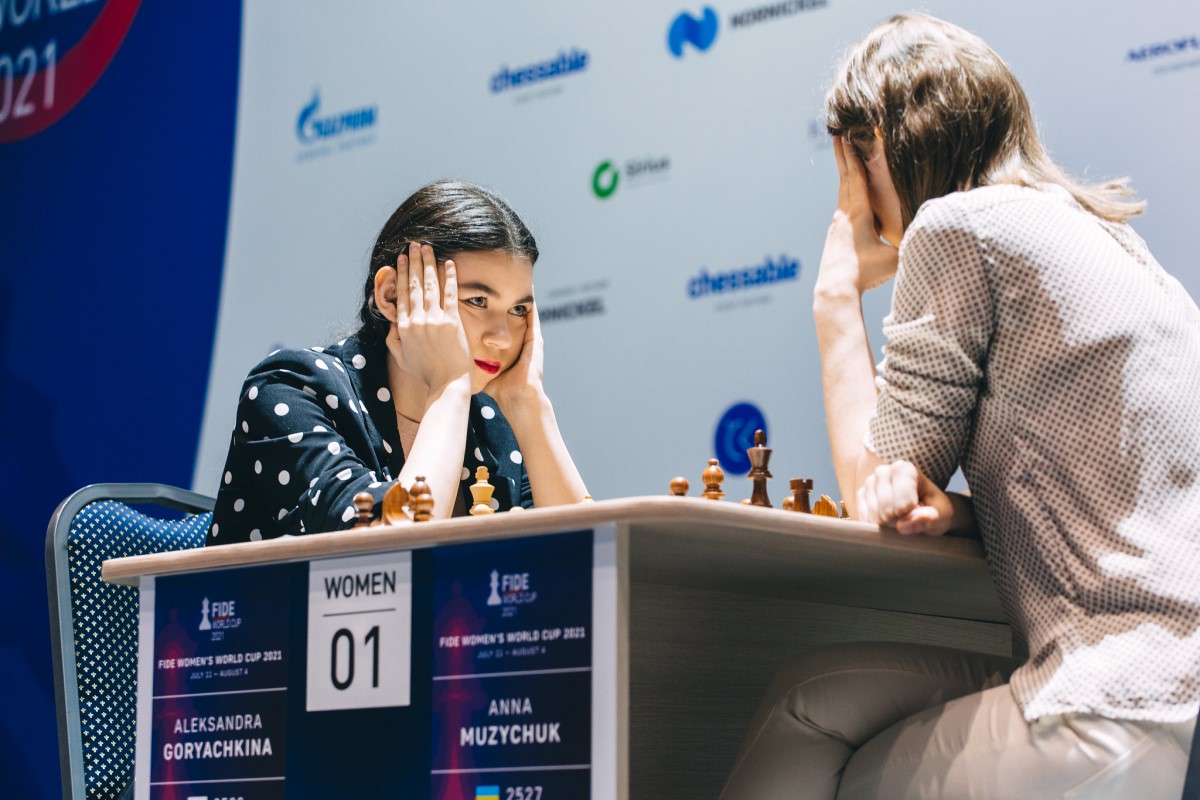
Aleksandra Goryachkina vs Anna Muzychuk | Photo: Anastasiia Korolkova
The final and the match for third place kick off on Sunday. All the players involved are qualified to the Candidates, but they are still fighting for prize money:
Carlos Alberto ColodroCarlos Colodro is a Hispanic Philologist from Bolivia. He works as a freelance translator and writer since 2012. A lot of his work is done in chess-related texts, as the game is one of his biggest interests, along with literature and music.
GM Blohberger presents a complete two-part repertoire for Black: practical, clear, and flexible – instead of endless theory, you’ll get straightforward concepts and strategies that are easy to learn and apply.
Opening videos: Sipke Ernst brings the Ulvestad Variation up to date + Part II of ‘Mikhalchishin's Miniatures’. Special: Jan Werle shows highlights from the FIDE Grand Swiss 2025 in the video. ‘Lucky bag’ with 40 analyses by Ganguly, Illingworth et al.
In this video course, Grandmaster Ivan Sokolov explores the fascinating world of King’s Indian and Pirc structures with colours reversed, often arising from the French or Sicilian.
€39.90
We use cookies and comparable technologies to provide certain functions, to improve the user experience and to offer interest-oriented content. Depending on their intended use, analysis cookies and marketing cookies may be used in addition to technically required cookies. Here you can make detailed settings or revoke your consent (if necessary partially) with effect for the future. Further information can be found in our data protection declaration.
Pop-up for detailed settings
We use cookies and comparable technologies to provide certain functions, to improve the user experience and to offer interest-oriented content. Depending on their intended use, cookies may be used in addition to technically required cookies, analysis cookies and marketing cookies. You can decide which cookies to use by selecting the appropriate options below. Please note that your selection may affect the functionality of the service. Further information can be found in our privacy policy.
Technically required cookies
Technically required cookies: so that you can navigate and use the basic functions and store preferences.
Analysis Cookies
To help us determine how visitors interact with our website to improve the user experience.
Marketing-Cookies
To help us offer and evaluate relevant content and interesting and appropriate advertisement.