11/26/2026 – How ChessBase 27 turns the World Championship into a musical experience. It all started with Ask ChessBase, a fascinating new concept in ChessBase 27 - an AI assistant that has access to the functionality of the chess program it lives in. You can ask it almost anything about the current position or a game. We used it to create musicals about chess.
new: ChessBase Magazine 225
Chess Festival Prague 2025 with analyses by Aravindh, Giri, Gurel, Navara and others. ‘Special’: 27 highly entertaining miniatures. Opening videos by Werle, King and Ris. 10 opening articles with new repertoire ideas and much more. ChessBase Magazine offers first-class training material for club players and professionals! World-class players analyse their brilliant games and explain the ideas behind the moves. Opening specialists present the latest trends in opening theory and exciting ideas for your repertoire. Master trainers in tactics, strategy and endgames show you the tricks and techniques you need to be a successful tournament player! Available as a direct download (incl. booklet as pdf file) or booklet with download key by post. Included in delivery: ChessBase Magazine #225 as “ChessBase Book” for iPad, tablet, Mac etc.!
YOUR PERSONAL CHESS COACH - Whether you’re taking your first steps into the world of club chess, or already playing at a tournament level: with FRITZ, you can train more efficiently, intelligently and with a more personalised approach than ever before. FRITZ is more than just a chess engine – it’s a training revolution! Whether you’re taking your first steps into the world of club chess, or already playing at a tournament level: with FRITZ, you can train more efficiently, intelligently and with a more personalised approach than ever before.
If you're looking for a dynamic alternative to the Slav, Queen's Gambit Declined, or other mainstream systems, the Chigorin Defence offers exactly what modern tournament players need.
€34.90
One thing it is particularly good at is annotating games. It relies on ChessBase's trusted Tactical Analysis for concrete variations, but then goes a significant step further: it explains the game in natural language, describing ideas and turning points. It tells the story of a game.
Playing around with this, we discovered that it is also quite clever at solving the funny task “Write song lyrics about this game”. The resulting lyrics can capture the essence of a game remarkably well. They describe the dramatic moments and the emotion of the players.
Of course, song lyrics are not yet a song. But today there are plenty of AI tools that can turn lyrics into music, in almost any musical style. Working with these tools feels a little like the early days of AI image generation. You have to experiment with prompts, try different styles, and be patient until something really good emerges. But the results can be delightful.
Everything described so far is something you can try yourself with ChessBase 27. We decided to take the idea two steps further.
First, we developed a system that visualizes the music on a chessboard. As you listen to the song, you can follow the moves and see the chess story unfold. The music and the game become a single experience. You may have already seen this in the opening articles of ChessBase 27.
Second, we built an authoring system based on Ask ChessBase that can write the script for an entire mini-musical about a game.
The original "Ask ChessBase" analysis of the first game in the world championship that led to the script of the musical
Covering a whole chess game in one single song would either be a very long and winding road or miss a lot of important details. So one needs several songs, usually three or four to cover one game. Add an introduction, a few spoken interludes, and a conclusion, and this gets you a complete little musical with a natural dramatic structure.
Multiple songs also allow for musical variety and different perspectives. Chess may have only two players, but they make excellent protagonists. One may be confident and ambitious, the other cautious or defiant.
A third voice, perhaps a female spectator or commentator, can observe the struggle and reflect on what the players themselves fail to see. This creates opportunities for contrasting musical styles.
And that is enough to turn a chess game into a small theatrical story in which the moves provide the plot and the players become characters. The music provides the emotion.
There is also a visual dimension. We create virtual singers to represent the players and observers, placing them in settings inspired by the time and location of the original game. These are actors rather than photographic reproductions of the historical players. The result is an entertaining chess lesson, more on the entertainment side than on the side of serious analysis but you experience the game in a refreshing and new way.
Creating music comes with one utterly hopeless challenge: finding a style that appeals to everybody. Musical taste is almost a declaration of social identity. A seasoned musician might happily wander from Renaissance madrigals to dark trap hip-hop, while others recoil the moment the music leaves their stylistic comfort zone. So for our first game of the World Championship between Sindarov and Gukesh we chose some modern main stream radio sound, a mixture of melodic rap and indie pop:
The second game. How to turn a short draw into a baroque pop opera?
And this is a page of other musicals that cover the great classics. Here you will find a bigger variety of musical styles:
There you either click on single musicals or chose the titles/games you like and let them run in a loop for a nice demo in any kind of chess gathering.
AI Slop? Of course! Many people today are wary of the tidal wave of AI-generated content of all kinds. And rightly so. A machine cannot be an artist. But it can help us experiment with fresh ideas without investing huge amounts of time and effort, and playfully venture off the beaten path with a little tongue in cheek.
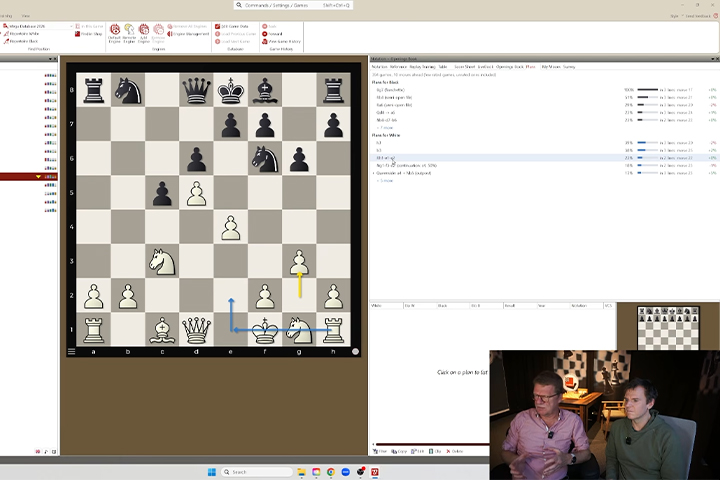
11/17/2026 – “What’s the correct plan in this position?” Every club player asks this question, and ChessBase ’27 now answers it with one click. The new Plans tab, right next to the opening book, mines your reference database for the typical plans of both sides in the current position. You can use it in any position, not just in the opening.
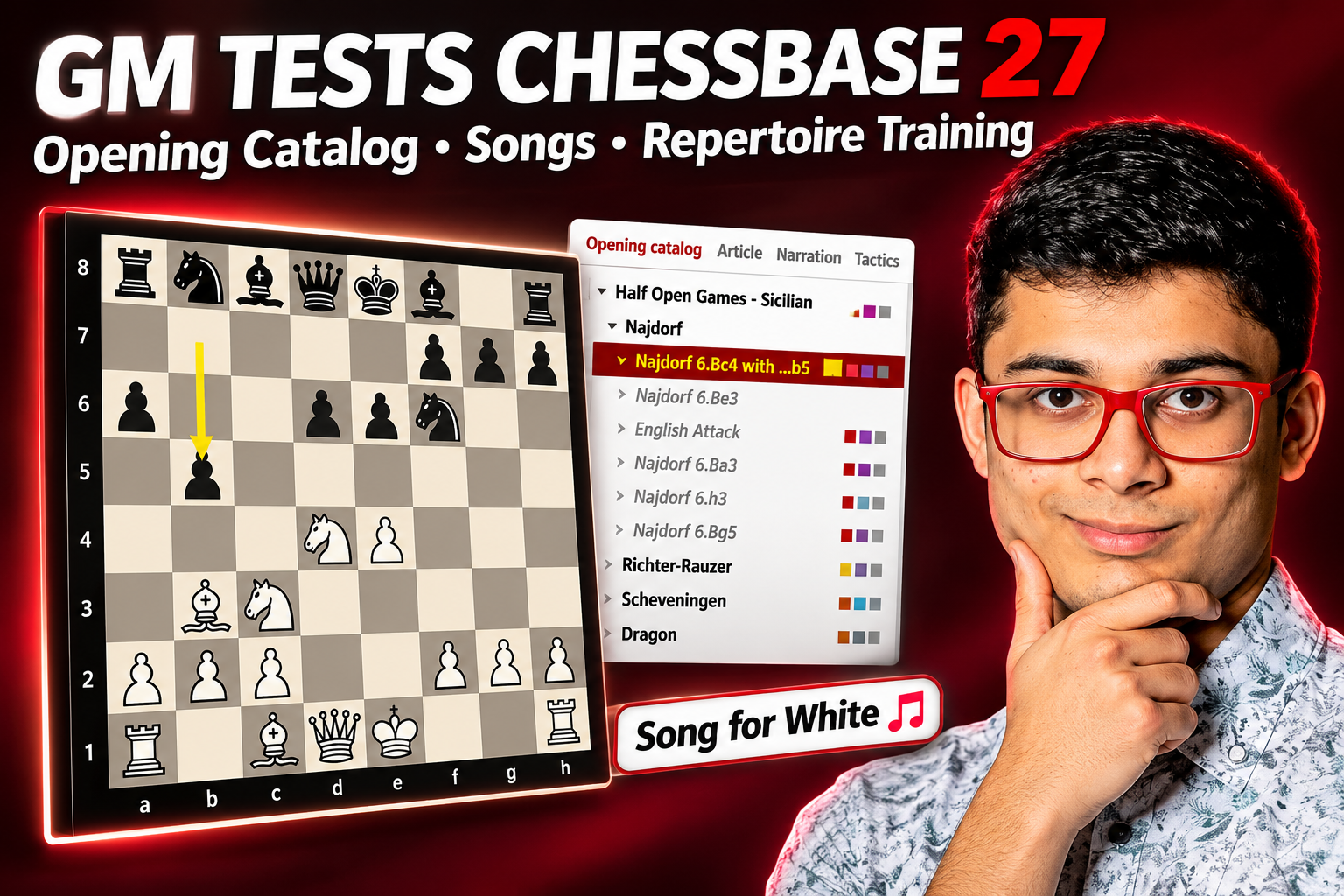
11/16/2026 – What happens when a grandmaster sees ChessBase 27 before anyone else? In this video, I show GM Leon Mendonca a preview of ChessBase 27 and get his honest first reactions to some of its new features. That includes the opening songs, which had to be heard to be believed.
What to do against the Pirc? Many players find it difficult to play against Black’s set-up. Try the Austrian Attack! It is a solid but dangerous weapon and guarantees White an effective attack from the very start! Learn the key tricks of this deadly line and crush the Pirc with ease!
ChessBase Mega Database 2027 – the exclusive annotated database.
€99.90
We use cookies and comparable technologies to provide certain functions, to improve the user experience and to offer interest-oriented content. Depending on their intended use, analysis cookies and marketing cookies may be used in addition to technically required cookies. Here you can make detailed settings or revoke your consent (if necessary partially) with effect for the future. Further information can be found in our data protection declaration.
Pop-up for detailed settings
We use cookies and comparable technologies to provide certain functions, to improve the user experience and to offer interest-oriented content. Depending on their intended use, cookies may be used in addition to technically required cookies, analysis cookies and marketing cookies. You can decide which cookies to use by selecting the appropriate options below. Please note that your selection may affect the functionality of the service. Further information can be found in our privacy policy.
Technically required cookies
Technically required cookies: so that you can navigate and use the basic functions and store preferences.
Analysis Cookies
To help us determine how visitors interact with our website to improve the user experience.
Marketing-Cookies
To help us offer and evaluate relevant content and interesting and appropriate advertisement.




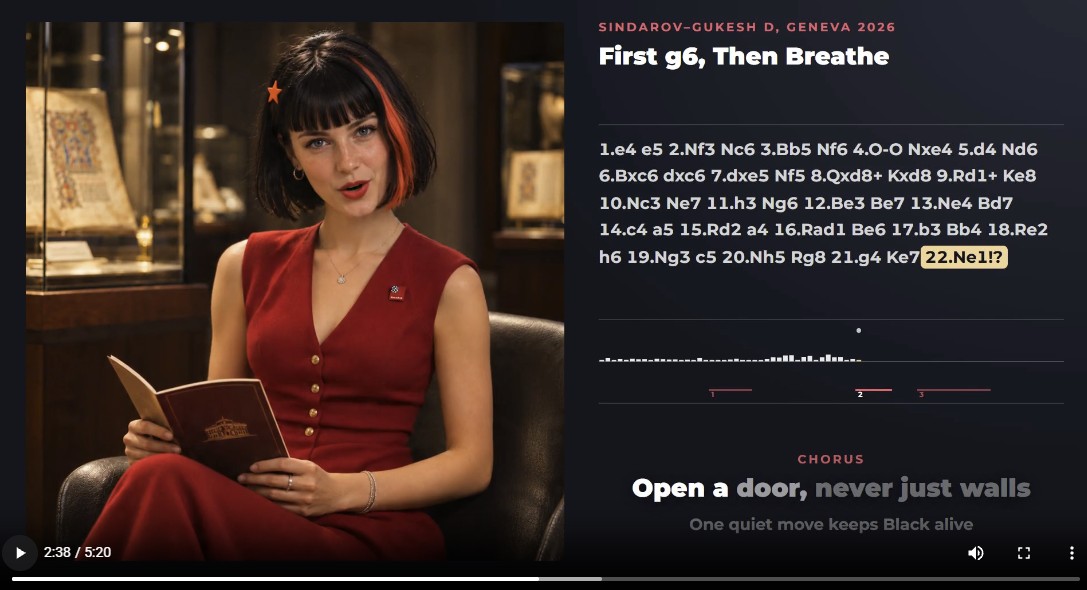







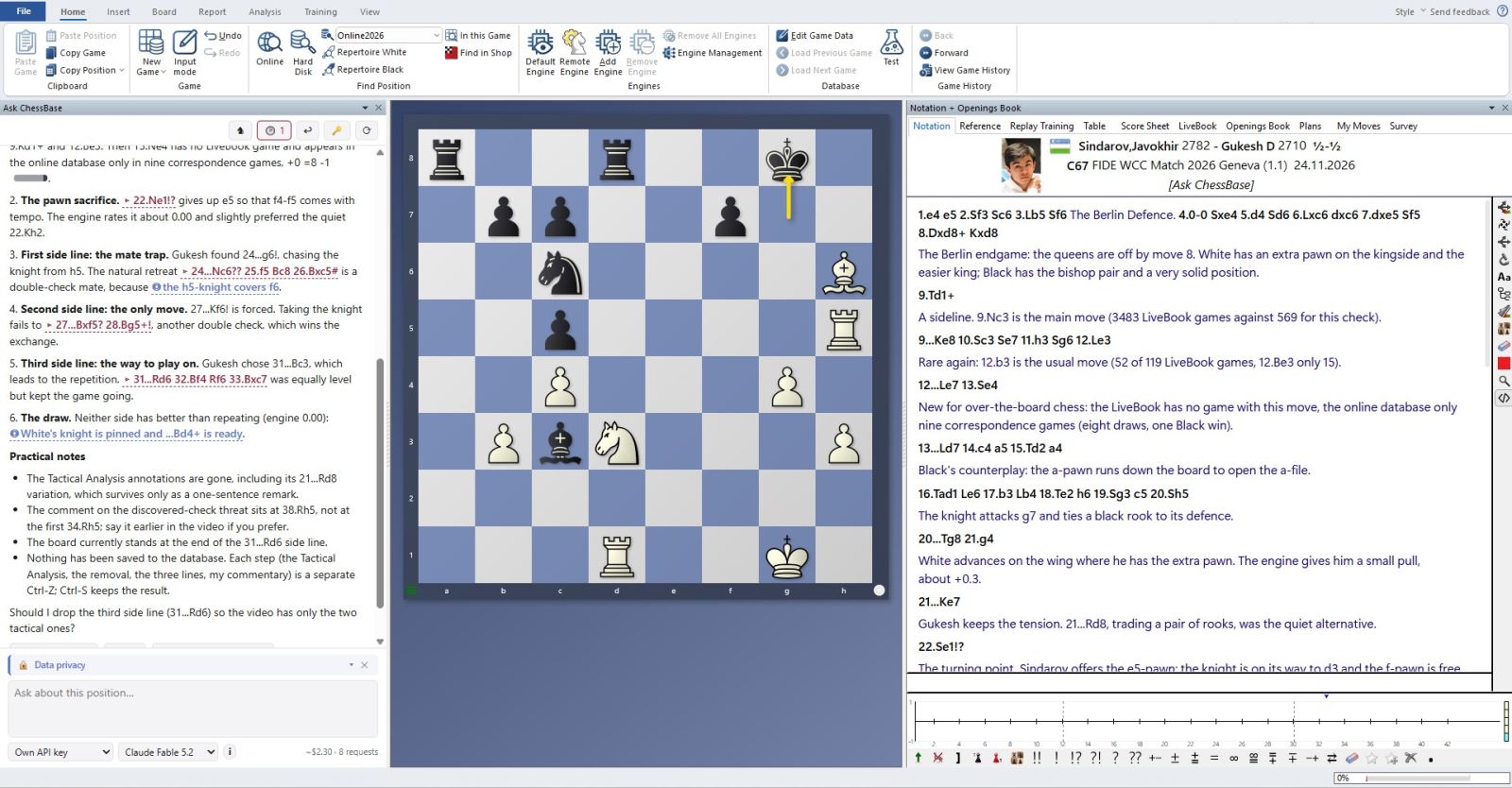 The original "Ask ChessBase" analysis of the first game in the world championship that led to the script of the musical