



.jpeg)

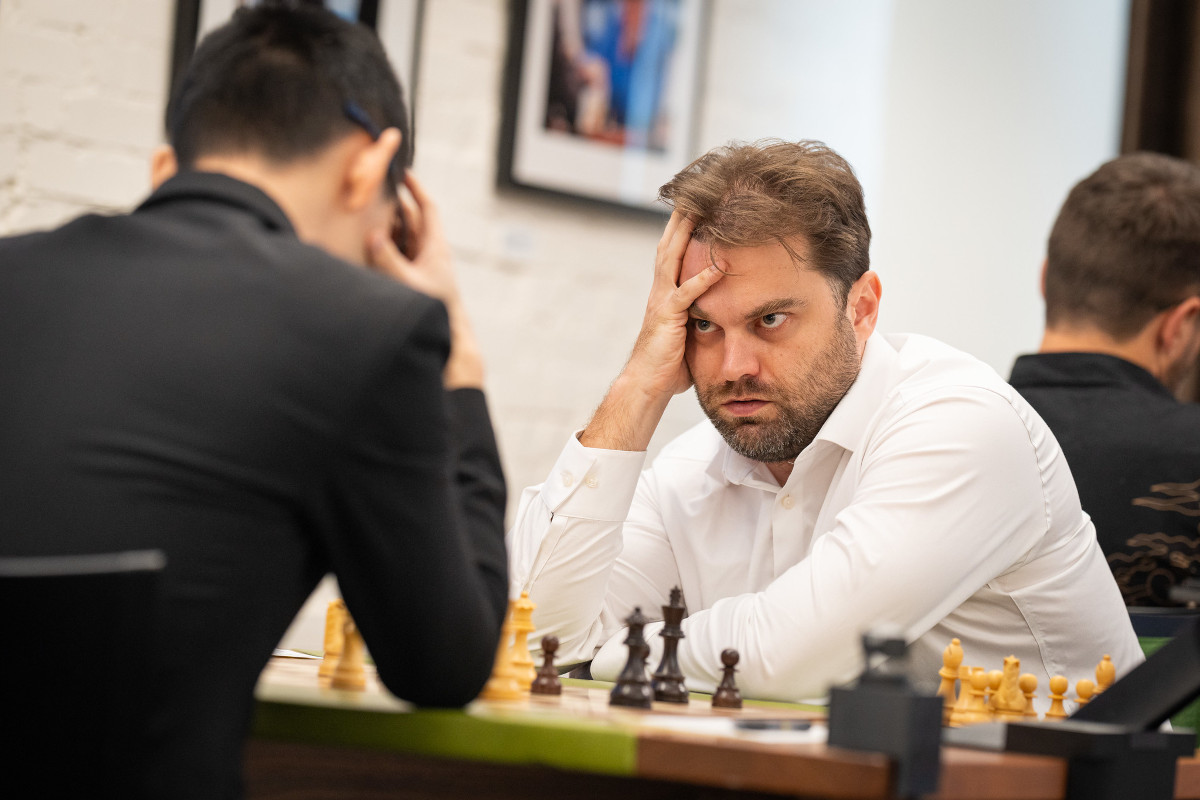
Wesley So strengthened his position at the top of the US Chess Championship by defeating Andy Woodward in round eight. The three-time national champion now has 6/8 points, a full point ahead of defending champion Fabiano Caruana, who drew against Sam Sevian. Woodward, Jeffery Xiong, Awonder Liang and Grigoriy Oparin share third place on 4½/8, with three rounds remaining.
So's victory over Woodward was the most relevant result of the day. Playing white against the 16-year-old, So gradually simplified the position until the players reached a pawn endgame that appeared objectively balanced. However, Woodward made an inaccurate king move, allowing So to improve his position and eventually create a passed pawn on the queenside.
Further imprecisions enabled So to convert his advantage, securing his fifth victory of the tournament. He remains the only unbeaten player in the open section.
So v. Woodward
Annotations by Martina Gerdts
This was a battle between ChessBase authors!
The game began with the Ragozin Variation of the Queen's Gambit Declined.
After move 18, Wesley So still had 1 hour and 25 minutes left on the clock. A fair amount of material had already been exchanged. The players soon transitioned from the middlegame into a pawn endgame.
After 33.Kc3, it was already difficult for Black to find a way to keep the balance. Black still had 33...a6 available, after which care would be needed to prevent White from breaking through. White still needed a few moves to find a promising manoeuvre.
Instead of 36...Kc6, ...h6 would once again have been the more appropriate move. After 37.h4, ...h6 is no longer possible because b5 wins the endgame. After 37.h4, Woodward played 37...Kd6, and So replied with 38.c5! bxc5 39.b5!, creating a passed pawn. The new sole leader went on to grab the black pawns on the kingside and win the game.
Caruana was unable to keep pace with the leader. Playing black against Sevian, the five-time US champion failed to obtain significant winning chances, and the encounter ended drawn after 42 moves. The result left Caruana alone in second place. Following Sunday's rest day, the ninth round will feature a direct encounter between Caruana and So, with the defending champion playing white.
The other decisive game saw Sam Shankland defeat Hans Niemann with the white pieces. Shankland obtained the better prospects and eventually converted his advantage, securing his second victory of the tournament.
Xiong missed an opportunity to join Caruana in second place when he failed to convert a promising position against Ray Robson.
Xiong v. Robson
White has a clear edge with his active king and better pawn structure. However, Xiong failed to find the precise move order to increase his advantage. Here 42.f5? gives Black a key tempo to play 42...Nc6, and after 43.Ne4+ Ke7 44.Nc3 Black has 44...Nb4, defending the all-important d5-square.
Instead, if White starts with 42.Ne4+, he gets to create the threat against the weak pawn on b6 in time: 42...Ke7 43.fxe5 fxe5 44.Nc3 and there is no good way to deal with the threat of Nd5+, with a clear advantage.
In the game, Robson continued to defend accurately until escaping with a draw.
This course offers a structured and practical introduction to the core elements of positional chess.
Free video sample: Introduction
Free video sample: Strategic Classic: Bondarevsky - Smyslov
Oparin also had chances against Levon Aronian, but failed to find the strongest continuations. Both games ended drawn, as did Liang's encounter against Abhimanyu Mishra.

Jeffery Xiong | Photo: Lennart Ootes

Grigoriy Oparin | Photo: Lennart Ootes
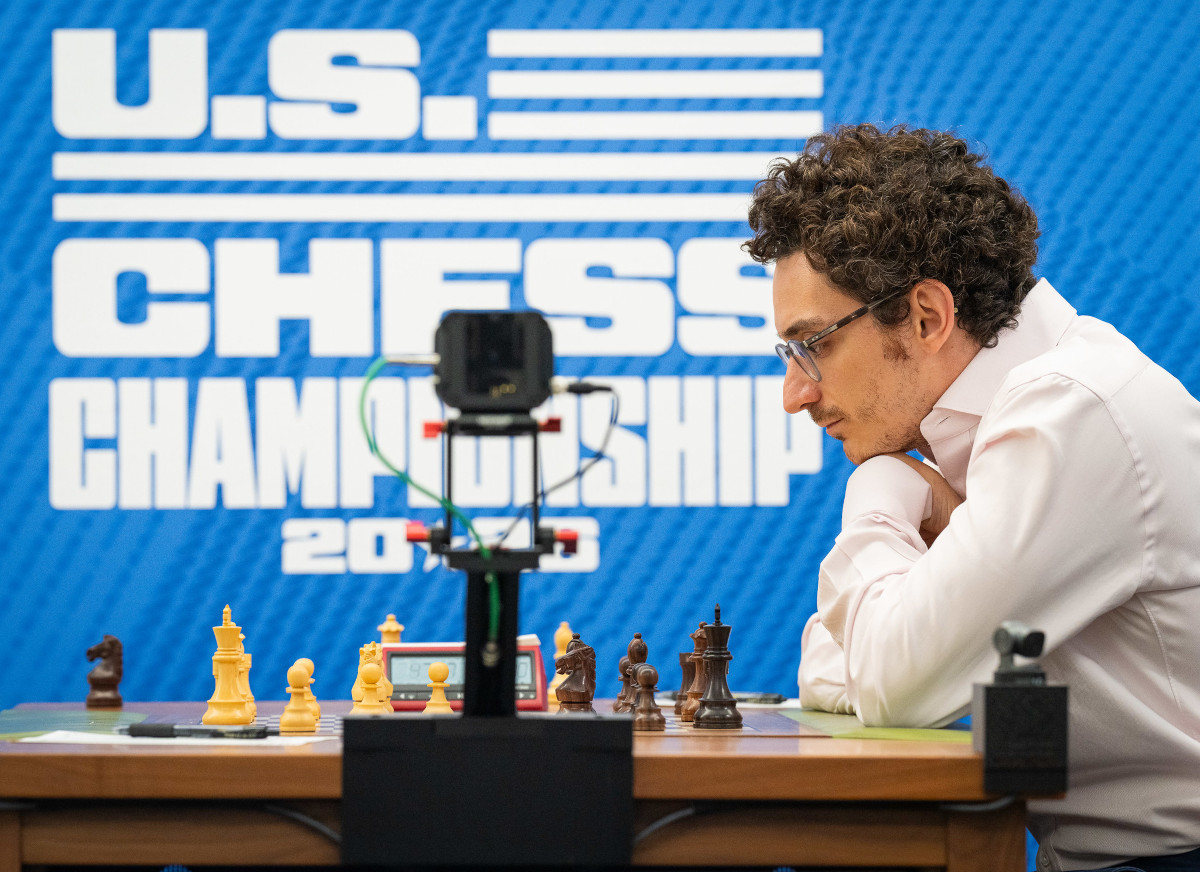
Fabiano Caruana will play white against sole leader Wesley So in Monday's ninth round | Photo: Lennart Ootes
Alice Lee and Rachael Li maintained their joint lead in the US Women's Championship after both drawing their eighth-round encounters. The two players now have 6/8 points, half a point ahead of Thalia Cervantes, who defeated Carissa Yip. Jennifer Yu and Nazi Paikidze also scored victories, while Irina Krush missed an opportunity to catch the leaders.
Lee faced Anna Zatonskih with the white pieces and obtained a favourable position from a Catalan Opening. She gradually increased the pressure and reached a heavy-piece endgame with a considerable advantage. However, the 17-year-old failed to find the most effective continuation, allowing Zatonskih to organise her defence and eventually secure a draw.
Li also had opportunities against Tatev Abrahamyan. Playing black, the 16-year-old encountered difficulties after allowing her opponent to establish control over important dark squares. Both players subsequently missed chances to obtain a more substantial advantage, and the encounter eventually ended drawn.
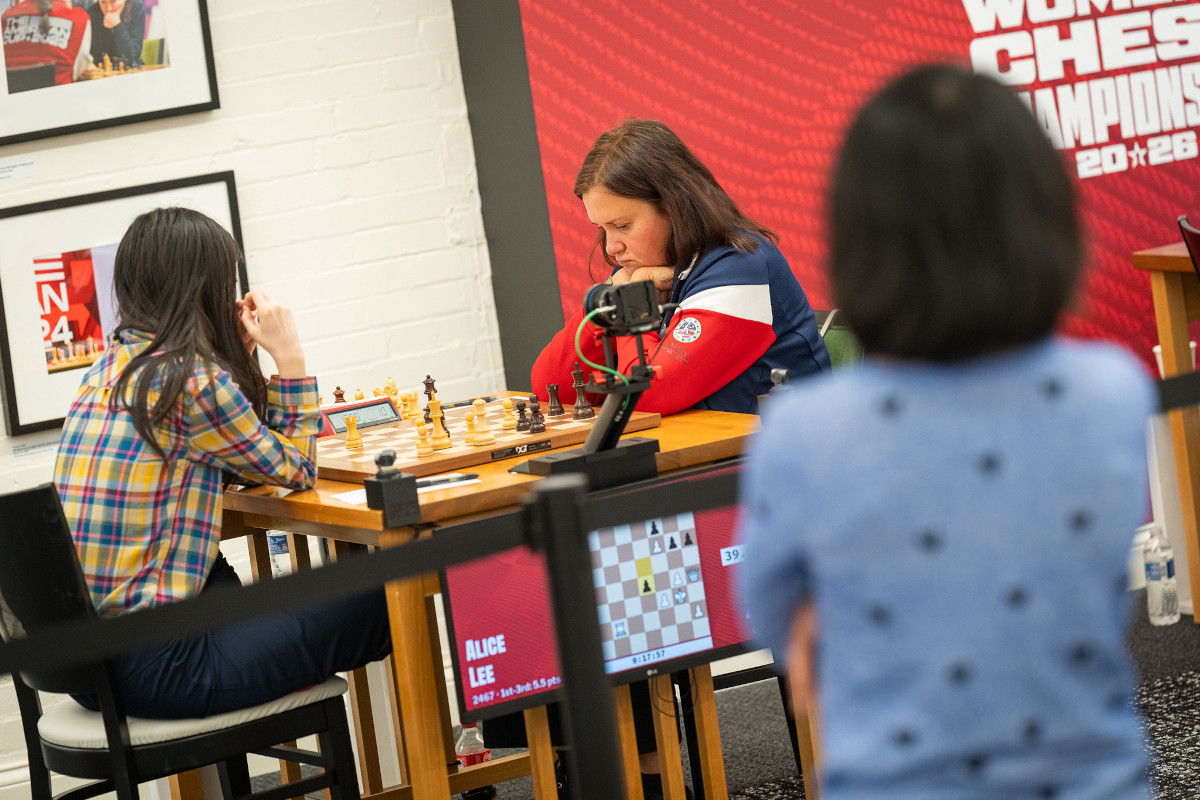
Alice Lee v. Anna Zatonskih | Photo: Lennart Ootes
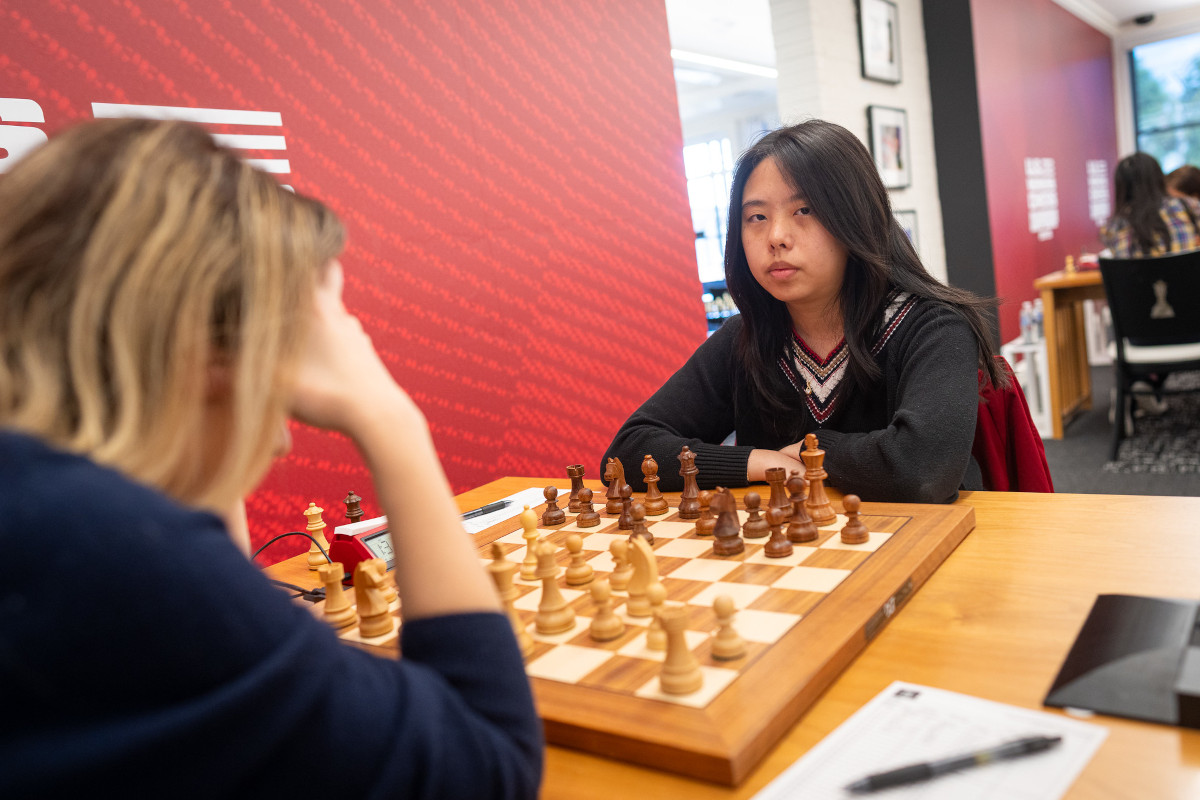
Rachel Li | Photo: Lennart Ootes
Cervantes took advantage of the leaders' draws, as she got the better of Yip with the black pieces. Cervantes obtained a favourable position against the defending champion, whose position deteriorated further after several inaccuracies.
The game ended abruptly when Yip overlooked a direct checkmate threat.
Cervantes now stands just half a point behind Lee and Li.
Krush missed an opportunity to join the leaders when she lost to Jennifer Yu. The eight-time national champion had recovered from an opening-round defeat to reach 5/7, but suffered another setback on Saturday.
The longest and most complicated game of the round was played between Paikidze and Anna Sargsyan. Paikidze found herself in a clearly inferior position and sacrificed her queen in an attempt to generate counterplay. Although the sacrifice was objectively mistaken, Sargsyan subsequently made inaccuracies that allowed Paikidze to turn the tables and eventually create decisive mating threats.
Paikidze v. Sargsyan
Annotations by Martina Gerdts
Paikidze felt that she had her back against the wall in this game. She did not go down without a fight, however, and promptly sacrificed her queen for activity.
The engine is not impressed by this move and would recommend 37.Qg1 Rxe6 38.Qd1, allowing White to continue fighting with two pawns and a piece for a rook. With only 11 seconds left on the clock, Paikidze played 37.Qxf2 and worsened her position in time trouble.
As the game continued, she sought shelter for her king behind her knights and advanced her e-pawn together with one of the knights towards the promotion square and the black king.
By this point, Paikidze had already managed to generate activity. The black queen on a3 later had the opportunity to capture on a2 with check, but the king simply moved via d3 to e2. The knight on d2 proved to provide sufficient protection for the king.
After 54...Bg5, intending to attack the knight twice in the near future, White found a nice combination: 55.Rf7+ Kh8? 56.Rf3 Qb2, and suddenly White was even better!
Both of Black's moves, 55...Kh8 and 56...Qb2, were played by Sargsyan after only 2 and 3 minutes respectively. She should have spent more time here. After the combination, White was able to improve the position of her already active pieces and threaten mate. Once she had managed to shelter her king from Black's checks, Sargsyan resigned.
There was mate-in-four on the board.
After 67...Qxd2, there would follow 68.Rxh7#. The black rook can still sacrifice itself on d7 via c7, and the queen can do the same on b3. After 67...Qh6, the pawn can run through and White then delivers mate. Black has no way left to escape the mating net.


| Advertising |










.jpeg)