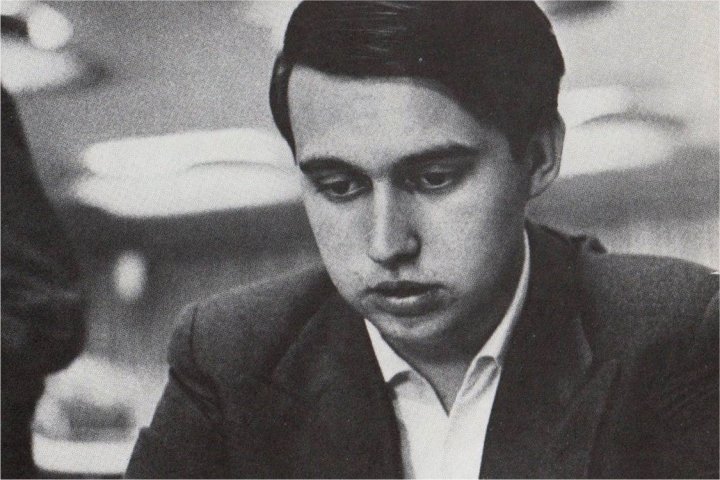
7/19/2026 – Today, Dr Dieter Keller of Zurich celebrates his 90th birthday. Heartfelt congratulations to the International Master, who defeated several of the leading players of his time, most notably Bobby Fischer, Efim Geller, Bent Larsen and Oscar Panno. Eduard Frey presents highlights from a remarkable life. | Photo: Dieter Keller at the Zurich International Tournament 1959 | Source: Tournament book, via Europe Échecs
new: Fritz 20
Your personal chess trainer. Your toughest opponent. Your strongest ally. FRITZ 20 is more than just a chess engine – it is a training revolution for ambitious players and professionals. Whether you are taking your first steps into the world of serious chess training, or already playing at tournament level, FRITZ 20 will help you train more efficiently, intelligently and individually than ever before.
YOUR PERSONAL CHESS COACH - Whether you’re taking your first steps into the world of club chess, or already playing at a tournament level: with FRITZ, you can train more efficiently, intelligently and with a more personalised approach than ever before. FRITZ is more than just a chess engine – it’s a training revolution! Whether you’re taking your first steps into the world of club chess, or already playing at a tournament level: with FRITZ, you can train more efficiently, intelligently and with a more personalised approach than ever before.
Even more power forFritz. Even more Chess knowledge for you.
€89.90
Despite always remaining an amateur, Keller defeated many great players, including Fischer, Larsen, Geller, Donner, Pomar and Panno. At the 1953 World Junior Chess Championship in Copenhagen, Dieter Keller was the only player to defeat the eventual champion, the Argentine legend Oscar Panno, who is now the oldest living former World Championship Candidate.
Keller defeated Fischer in their individual encounter at the 1959 Zurich International, which was eventually won by Tal. Keller lost a marvellous game against Tal at the same tournament. Both games can be replayed below.
He finished second behind Albéric O’Kelly at the 1960 Nimzowitsch Memorial in Zurich. A year later, he shared first place with Carlos Guimard in a smaller international tournament in Enschede and defeated Bent Larsen in Zurich. In that same year, 1961, Dieter Keller was awarded the IM title by FIDE.
In 1975, he shared first to third place in Zurich at the Swiss Championship with international participation. He finished level with Cuba’s Guillermo García González and his Swiss compatriot Werner Hug, the 1971 World Junior Champion, and ahead of players such as Unzicker, Dückstein and the Icelandic icon Fridrik Olafsson.
Keller was Swiss Champion in 1958, 1960, 1961 and 1963.
In chess, always an amateur
Dieter Keller studied at the University of Zurich, where he earned a doctorate in law. He learned chess from his father at the age of seven. During his youth, he developed his skills through local club activities and informal competitions.
Away from the board, Keller worked for the city administration after completing his studies. He first served in the municipal insurance fund and later worked for many years as legal counsel to the City of Zurich, balancing his professional career with his continued involvement in Swiss chess.
As an amateur player, Keller did not often travel to international tournaments and missed many team events because of his professional and family commitments. After playing on top board for Switzerland at the 1968 Olympiad in Lugano, he made no further Olympiad appearances. Much later, while on holiday, he took part in the inaugural World Team Chess Championship, held in Lucerne in 1985, and achieved a plus score against strong opposition.
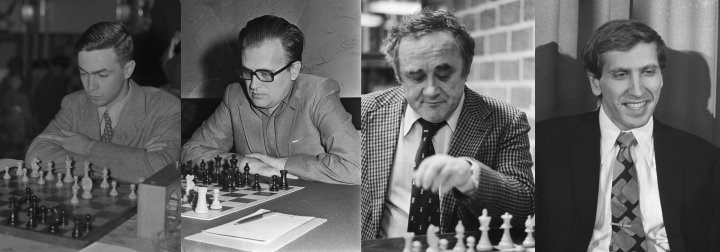
Great players defeated by Dieter Keller: Oscar Panno, Bent Larsen, Efim Geller and Bobby Fischer | All photos by ANEFO, the Dutch National Archives press agency
World Junior Chess Championship in Copenhagen 1953
The World Junior Chess Championship was launched by FIDE as a biennial competition in 1951. The first edition was played under the Swiss system, but the following championships were usually organized in two stages: preliminary single round-robin groups, followed by a final single round-robin tournament for the leading players. Since the mid-1970s, the World Junior Chess Championship has once again been played under the Swiss system and is now held annually.
In 1953, Oscar Panno of Argentina and Klaus Darga of West Germany tied for first place. Panno won the title on tie-break; there was no play-off. Defending champion Borislav Ivkov of Yugoslavia and Fridrik Olafsson of Iceland shared third and fourth places. Dieter Keller finished joint fifth alongside Jonathan Penrose of England, James Sherwin of the United States and the great Bent Larsen of Denmark.
In the qualification stage, Panno suffered his only defeat against the Swiss player Dieter Keller. Their second encounter, in the final group, ended in a draw.
Chess keeps you young! More than 70 years later, four of these eight players are still alive: James Sherwin, born in 1933; Klaus Darga, born in 1934; Oscar Panno, born in 1935; and Dieter Keller, born in 1936.
Keller once again reached the final group at the third World Junior Championship, held in Antwerp in 1955. Boris Spassky won the tournament, whose participants also included Lajos Portisch, born in 1937.
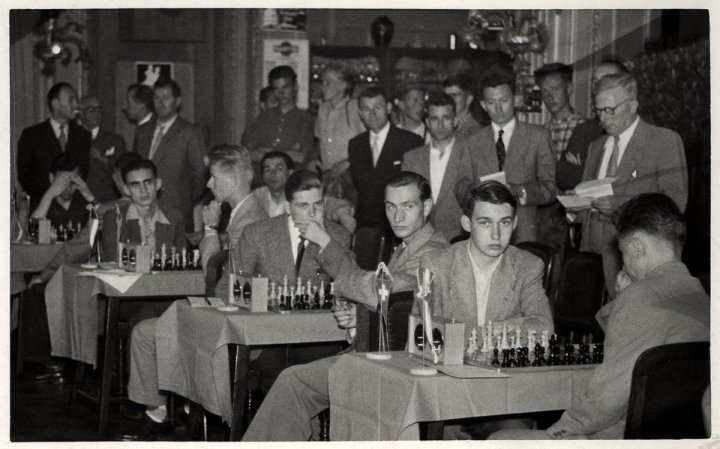
World Junior Championship in Antwerp 1955, with Dieter Keller | Photo: www.lecavalier.lu
In 1956, shortly after celebrating his 20th birthday, Keller played on fourth board for Switzerland at the Chess Olympiad in Moscow. During the preliminary rounds, he scored a brilliant positional victory over Geller, who was already one of the strongest players in the world and had first competed in a Candidates Tournament in 1953. This victory over Geller brought the previously unknown outsider to wider attention:
Zurich Jubilee International Invitation Tournament 1959
The 150th anniversary of the Schachgesellschaft Zürich was celebrated in 1959 with a prestigious 16-player international invitation tournament.
Five of the eight participants in the 1959 Candidates Tournament took part: Bobby Fischer, Paul Keres, Svetozar Gligoric, Fridrik Olafsson and Mikhail Tal. A few months later, Tal also won the Candidates Tournament. He thus became the World Championship challenger and dethroned Botvinnik in 1960.
The future World Champion took clear first place with 11½ points from 15 rounds. Gligoric finished second with 11 points. Fischer and Keres shared third place with 10½, followed by Larsen and Unzicker.
Keller regards this defeat against Tal as perhaps his best and certainly his most complex game:
Some days you lose, and some days you win. Keller’s most famous victory came in the same tournament. The Swiss player’s upset victory knocked Bobby Fischer out of a share of the lead. Had Fischer won the game, he would have tied with Tal for first place.
The game is a good example of what can happen when a player impatiently tries to win a position that does not justify such an approach, even against a comparatively weaker opponent. It was played in the penultimate round, when Fischer and Tal were leading the tournament. Fischer still had Black against Tal in the final round; that game ended in a draw. The pressure was therefore on Fischer:
The inimitable Croatian YouTuber agadmator, who runs one of the platform’s most popular chess channels, took a closer look at the game:
The Game That Cost Bobby Fischer First Place in Zurich 1959 – YouTube 11:31 minutes; excellent analysis with witty comments
Top board for Switzerland at the 1968 Chess Olympiad in Lugano
Four countries made their Olympiad debuts at the 18th edition in 1968: Andorra, Costa Rica, Singapore and the Virgin Islands. A total of 53 teams took part, a new record for the biennial competition. At the time, the women’s Olympiad was still held separately at a different venue.
There were 41 grandmasters in the field. The Soviet Union, which won the gold medal, and Yugoslavia, which took silver, were the only teams with six grandmasters in their squads. The United States and Hungary each had five grandmasters among the six players then permitted.
Even many strong teams had no grandmaster in their line-ups, including Italy, France, England, Sweden, Norway, Finland, Poland, Israel, Austria and Brazil. The Brazilian team was led by 16-year-old Henrique Mecking, then the youngest International Master in the world. The host nation Switzerland was led by IM Dieter Keller on top board. It was his third and final appearance at a Chess Olympiad.
Keller displayed some fine tactics and maintained the momentum throughout a concise attacking victory over Arturo Pomar, who in 1962 had become Spain’s first grandmaster:
Those were the days, and time flies. Happy birthday, good health and happiness – with our very best wishes to Dieter Keller.
YOUR PERSONAL CHESS COACH - Whether you’re taking your first steps into the world of club chess, or already playing at a tournament level: with FRITZ, you can train more efficiently, intelligently and with a more personalised approach than ever before. FRITZ is more than just a chess engine – it’s a training revolution! Whether you’re taking your first steps into the world of club chess, or already playing at a tournament level: with FRITZ, you can train more efficiently, intelligently and with a more personalised approach than ever before.
Eduard FreyEduard Frey was born in spring 1967, is an economist (lic. et mag. rer, pol.) and works as a coach in human resources. He learned the game as a child from his father. Chess is a hobby without rating. He has been a frequent visitor to the Biel Chess Festival since 1976, as well as to Lucerne (1982 Olympiad, and the 1985, 1989, 1993, 1997 World Team Championships), and to the international tournaments in Zurich or the Lugano Open series. Frey spoke with many top players; he knew Viktor Korchnoi, Wolfgang Uhlmann and Mark Taimanov more closely.
YOUR PERSONAL CHESS COACH - Whether you’re taking your first steps into the world of club chess, or already playing at a tournament level: with FRITZ, you can train more efficiently, intelligently and with a more personalised approach than ever before.
How grandmasters win without fireworks: GM Jan Markos shows you 11 very practical tips from "How to play in a lost position" to "Be patient like Carlsen" that will improve your tournament chess.
The Nimzo-Indian has stood the test of time for over a century: Still a top choice for elite players today, from Magnus Carlsen to Praggnanandhaa, it remains one of Black's most reliable ways to fight for real chances against 1.d4 2.c4 3.Nc3.
1.c4 e5 2.Nc3 Bb4!? is an opening idea well worth considering. Black immediately threatens to double the pawns on c3 in the style of the Trompowski or Sicilian Grand Prix attack.
Italian Game Powerbase 2026 is a database and contains 8571 top class games from Mega 2026 and the Correspondence Database 2026, of which 479 are annotated.
Videos: Nico Zwirs discusses the Sicilian with 2…e6 3.d4 cxd4 4.Qxd4 Nc6 5.Qe3 Nf6 6.Nc3. Mihail Marin examines Sindarov’s 6.Ne5 in the Queen’s Pawn Defence. Plus the ‘Lucky bag’ featuring 41 analyses by Berg, Ftacnik, Gupta and many others.
€14.90
We use cookies and comparable technologies to provide certain functions, to improve the user experience and to offer interest-oriented content. Depending on their intended use, analysis cookies and marketing cookies may be used in addition to technically required cookies. Here you can make detailed settings or revoke your consent (if necessary partially) with effect for the future. Further information can be found in our data protection declaration.
Pop-up for detailed settings
We use cookies and comparable technologies to provide certain functions, to improve the user experience and to offer interest-oriented content. Depending on their intended use, cookies may be used in addition to technically required cookies, analysis cookies and marketing cookies. You can decide which cookies to use by selecting the appropriate options below. Please note that your selection may affect the functionality of the service. Further information can be found in our privacy policy.
Technically required cookies
Technically required cookies: so that you can navigate and use the basic functions and store preferences.
Analysis Cookies
To help us determine how visitors interact with our website to improve the user experience.
Marketing-Cookies
To help us offer and evaluate relevant content and interesting and appropriate advertisement.