Tempo moves

by Karsten Müller
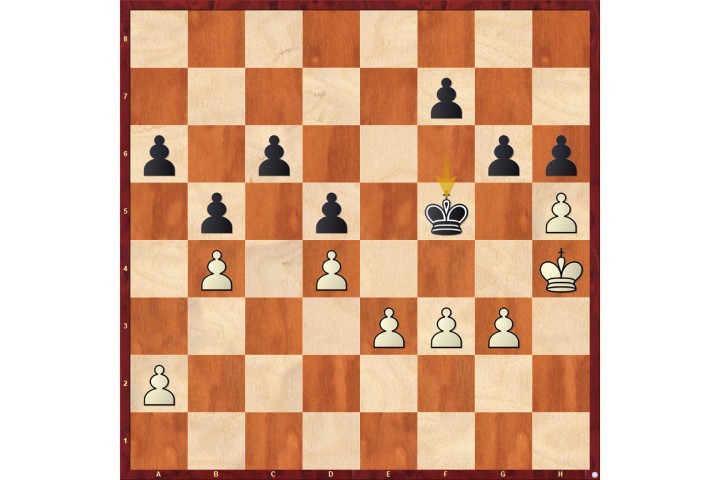
9/16/2025 – Having time to spare is often a luxury – in chess, it can mean the difference between a win and a draw. In the diagram position, it’s White to move and win. What should he do?

Let endgame expert Dr Karsten Müller show and explain the finesses of the world champions. Although they had different styles each and every one of them played the endgame exceptionally well, so take the opportunity to enjoy and learn from some of the best endgames in the history of chess.

Karsten Mueller in ChessBase Magazine

Do you like these lessons? There are plenty more by internationally renowned endgame expert Dr Karsten Müller in ChessBase Magazine, where you will also find openings articles and surveys, tactics, and of course annotations by the world's top grandmasters.


 Order now in the ChessBase Shop  – Single issue € 21.90!

ChessBase Magazine trial subscription with 33% savings advantage and thank you bonus!*

Try out ChessBase Magazine now! Order the ChessBase Magazine taster package!
Read ChessBase Magazine for 6 months (= 3 issues) for the special price of only € 44.90 € (instead of € 65,70 for buying them individually). As a thank you, you will also receive 3 months ChessBase Premium Membership free of charge. 

*Bonus for new subscribers only, i.e. there was no CBM subscription for 12 months!

ChessBase Magazine one year subscription - plus original ChessBase USB stick with 128 GB *

Save twice with ChessBase Magazine: For the annual subscription to ChessBase Magazine you’ll pay only € 109.90 per year (compared to € 131.40 for the 6 individual issues).

* Bonus only for new subscribers, i.e. there was no CBM subscription for 12 months! As a new subscriber you will receive the original ChessBase USB stick with 128 GB

Apart from his regular columns and video lectures in ChessBase Magazine there is a whole series of training DVDs by Karsten Mueller, which are bestsellers in the ChessBase Shop.

Karsten Mueller

Karsten Mueller regularly presents endgame lessons in the ChessBase Video Portal

Links


Karsten Müller is considered to be one of the greatest endgame experts in the world. His books on the endgame - among them "Fundamentals of Chess Endings", co-authored with Frank Lamprecht, that helped to improve Magnus Carlsen's endgame knowledge - and his endgame columns for the ChessCafe website and the ChessBase Magazine helped to establish and to confirm this reputation. Karsten's Fritztrainer DVDs on the endgame are bestsellers. The mathematician with a PhD lives in Hamburg, and for more than 25 years he has been scoring points for the Hamburger Schachklub (HSK) in the Bundesliga.

Discuss

Rules for reader comments


Not registered yet? Register

Frits Fritschy Frits Fritschy 9/29/2025 09:53
I went through some variations both with 24.Rc3 e5 25.dxe5 Rxe5 and 25.Kd3 exd4, and I don't see any real problems for black. In the first variation, if white tries to block the queenside with b4, black usually can break the blockade, if necessary with a temporary pawn sacrifice on c5. In the other variation, remaining passive seems to be quite enough.
Of course you can hope for a number of small inaccuracies in the rook endgame, but you can hope as well for one lethal mistake in a difficult pawn endgame. I'm not going to argue the one is better than the other; it depends on your personal taste and abilities, and also on the time situation.
oxygenes oxygenes 9/29/2025 08:12
@FritsFritschy
In this particular position is rook exhange better for white, because he got 4 black pawn blocked by 3 white at queen wing, though still draw with precise play. And opposite, black need to keep rook to have easier play and avoid unrepairrable mistakes in pawn ending.
Frits Fritschy Frits Fritschy 9/28/2025 04:51
Does white have a clear plan when he doesn't exchange the last rook? It seems to me that if you don't exchange, black isn't likely to make serious mistakes in the rook ending after for example 24.Rc3 e5. But in a pawn ending, every wrong move can be fatal. So if you're confident that you are good in pawn endings, exchanging seems a reasonable game plan.
28... c6? is a strange move, even when it wouldn't lose. Why give away a move that could be a saving tempo? White can force it after 28... Ke6 29.e4 f6(!) 30.h4 g6 31.Kf4 with a near zugzwang. (31... Kd6? 32.g4 h6 33.h5 gxh5 34.gxh5 Ke6 35.exd5+ and you should have cxd5 here.) But as white doesn't have Kh5 anymore, the draw is near.
My point is: black doesn't need to see al this – you shouldn't make pawn moves if you don't have a good reason for it.
Karsten Müller Karsten Müller 9/20/2025 09:41
oxygenes: Very good point!
oxygenes oxygenes 9/19/2025 04:57
Lesson could be - do not change last rook, if you have not clear plan, what to do next in pure pawn ending.
Karsten Müller Karsten Müller 9/19/2025 09:34
NMcrazyim5: Yes you are right. 28...c6? is a losing error as 29.Kh5 wins in a very deep way. 28...Ke6 draws. Even simple looking pawn endings can be amazingly complicated. In the game 29.h3? was another mistake like 35...Kf5?.
NMcrazyim5 NMcrazyim5 9/19/2025 09:04
Hi Karsten, I found this endgame extremely fascinating and apparently black is lost after 28..c6 too but the refutation is a bit over my head with multiple zugzwangs to eventually push the h pawn and weaken f6 for white king to invade.
1