
.jpeg)

Praggnanandhaa Rameshbabu retained the outright lead at the Saint Louis Rapid & Blitz after the second day of rapid play, increasing his tally to 9 points from a possible 12, with wins worth 2 points in the rapid section. Javokhir Sindarov is his nearest challenger on 7/12, while a big group of five players share third place with a fifty-percent score, i.e. 6/12.
Despite several sharp and unbalanced positions, only 2 of Monday's 15 games produced a winner. Both decisive results came in round five, when Pragg defeated Awonder Liang and Jorden van Foreest got the better of Wesley So. Notably, numerous advantages were missed or neutralised across the three rounds.
Pragg had an early opportunity to widen his lead when he faced Sindarov in round four. Out of a King's Indian Defence, the tournament leader gained a minor piece early on.
Sindarov had two extra pawns and the safer king. The Uzbek star generated enough complications to remain in the game and eventually secured a draw.
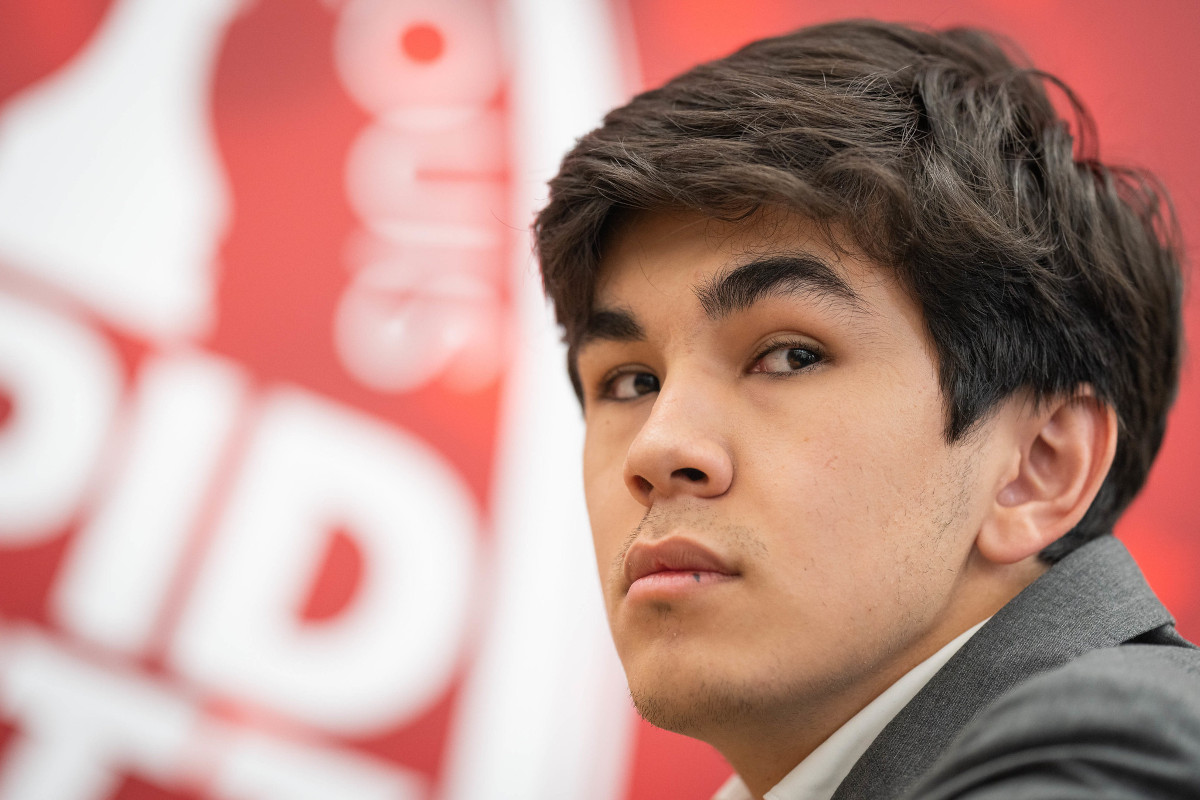
Javokhir Sindarov | Photo: Lennart Ootes
The same round also produced two further escapes. Leinier Dominguez built a commanding position against Anish Giri, but was unable to convert an unusual ending in which his queen faced a rook and two minor pieces. Liang, meanwhile, moved from a winning position against Van Foreest to a losing one before the game ultimately ended in a draw.
Pragg recovered from the missed opportunity by defeating Liang with black in round five. It was an exciting, double-edged battle emerging from a Caro-Kann Defence. Pragg got to end the game with a good-looking tactical shot.
32...Bxf1, ignoring the attack against Black's queen on d6, prompted Liang's resignation. One of the lines that justifies White's decision is 33.Nxd6 Rxf2 34.Bxf1 Rxf1+ 35.Kg2 and now 35...Nf4+, with a royal fork.
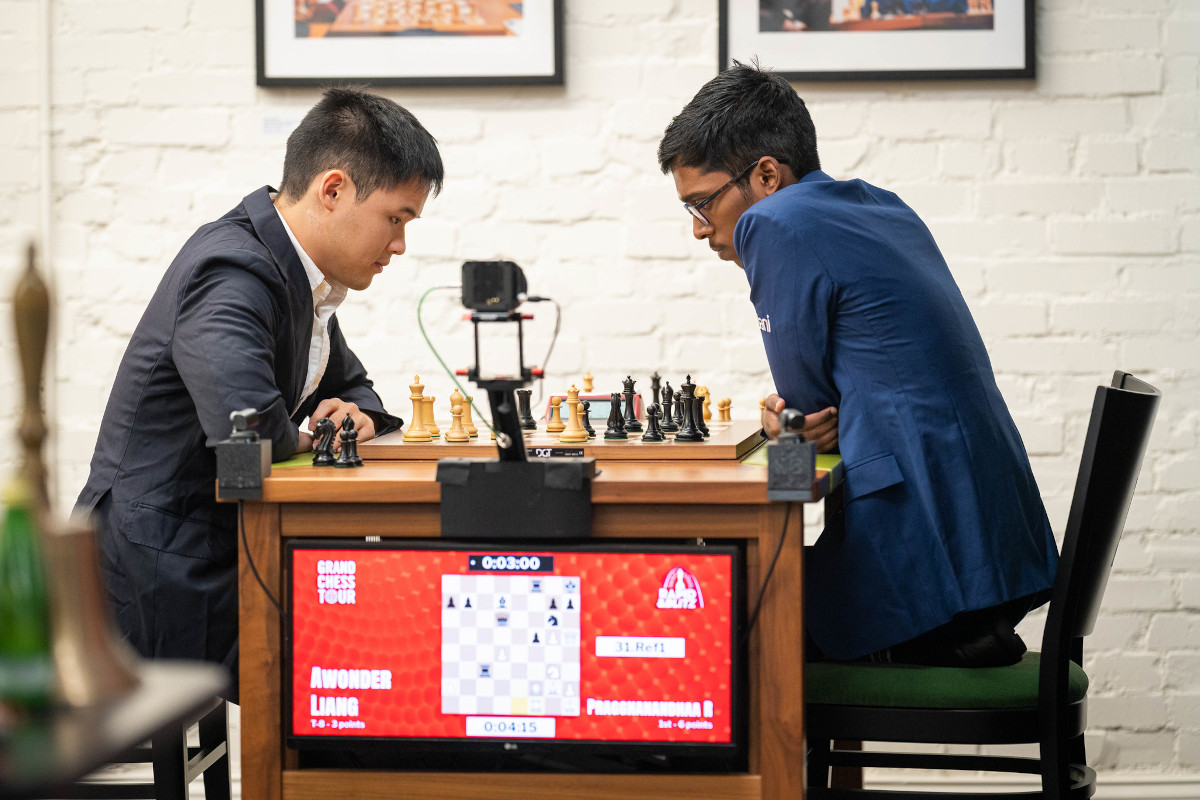
Awonder Liang facing Praggnanandhaa Rameshbabu | Photo: Lennart Ootes
Van Foreest claimed the other victory after turning around a difficult game against So. The US grandmaster held the advantage for much of the encounter, but failed to find the right continuation on move 54.
The one winning move for White here is 54.Rf3!, when after 54...Qe1 (using the idea of doubling on the first rank seen in the game) White has 55.Qf4 and Black is forced to defend with 55...Qe5, and after the queen trade, the passer on the d-file wins the game for White.
Instead, So went for 54.d6?, which leads to an equal position. Moreover, after 54...Qg1 So erred again with 55.Ne4? (correct is 55.b4). Van Foreest had no trouble finding 55...Qc1+
56.Kb3 Rh2 followed, and there is no effective defence against the threat of capturing on b2. Resignation came two moves later.
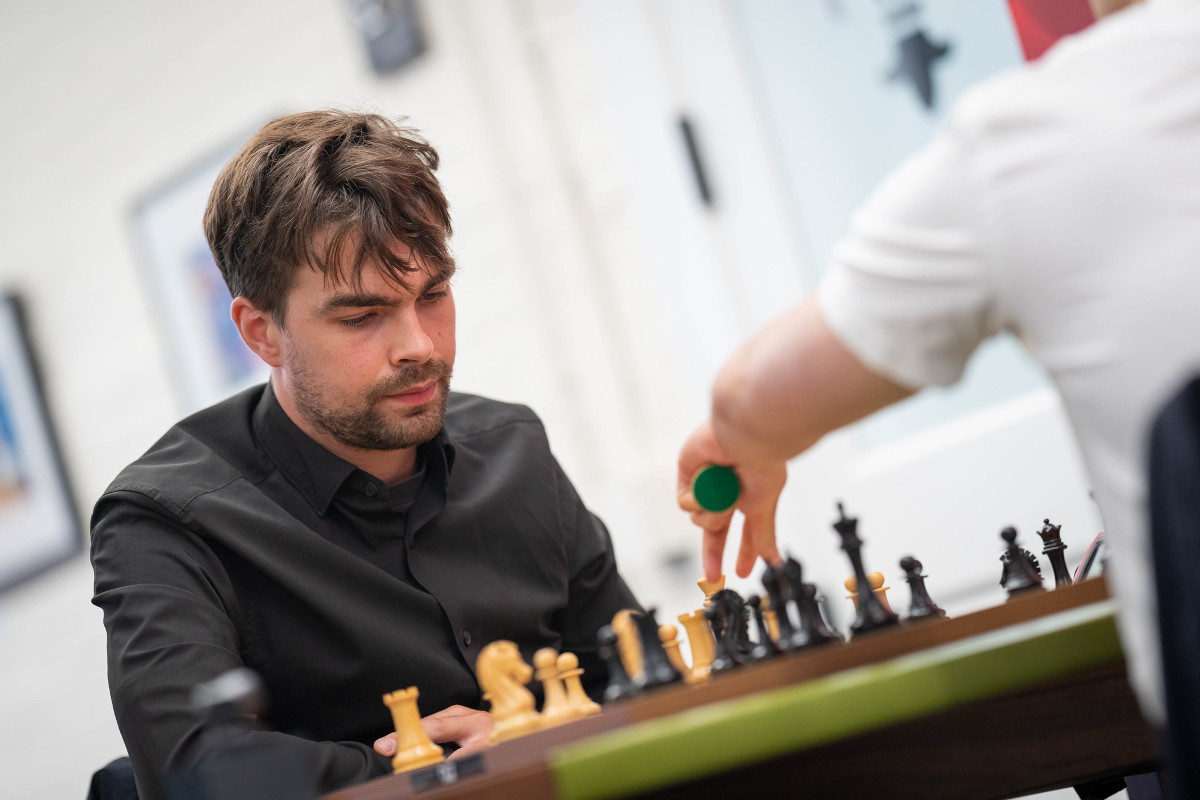
Jorden van Foreest | Photo: Lennart Ootes
Sindarov and Levon Aronian also exchanged missed chances in round five. Sindarov emerged from the opening with a superior position and retained an advantage into an exchange-up ending. Aronian later reversed the course of the game and reached a favourable position with a knight against a rook.
One of the lines missed by Aronian was particularly beautiful.
Winning is 62...Qd6!, giving up the pawn on d3 (with check) - which had been the focus of attention for quite a while now. The idea is that after 63.Qxd3+ Kh7 (diagram), there is no defence against the deadly ...Nf1+ double check!
Instead, Aronian played 62...Nf5? and a draw by repetition followed. Remarkably, this was not the only position in which the ...Qd6 idea was winning. However, Sindarov was also winning just a few moves before reaching this setup.

Levon Aronian and Javokhir Sindarov | Photo: Lennart Ootes
The day concluded with Pragg facing So in round six. The leader damaged his opponent's pawn structure and carried a small but stable advantage into a major-piece ending. So defended accurately, however, and held the draw after 117 moves despite being a pawn down.
The final three rapid rounds will be played on Tuesday.