



.jpeg)

Role models are important for chess beginners and young players. It makes a great deal of sense to study great masters whose playing style resembles your own, or the style you would like to develop. You can study their games and, for example, use their opening repertoire as a guide. The Master Class series, which now comprises 20 volumes, provides excellent material for this purpose.
My first Master Class DVD was Volume 1 on Bobby Fischer, which I bought in 2013 as part of “Bobby Fischer’s Fritz”, a package available at the time that combined Fritz 15 SE with Master Class Volume 1.
Further volumes followed, up to Volume 8 (Carlsen, since reissued), but then I somewhat lost interest. So I was very curious to see how the Master Class format had developed in the meantime.
The basic structure of the Master Class has not changed. After an introduction presenting the master and a brief biography, there are chapters by different authors on openings, strategy, tactics and endgames. The extensive bonus chapter includes a database containing all of Larsen’s games, as well as additional test positions on tactics, strategy and endgames, and two “opening books” in Powerbook format covering Larsen’s opening repertoire with White and Black.
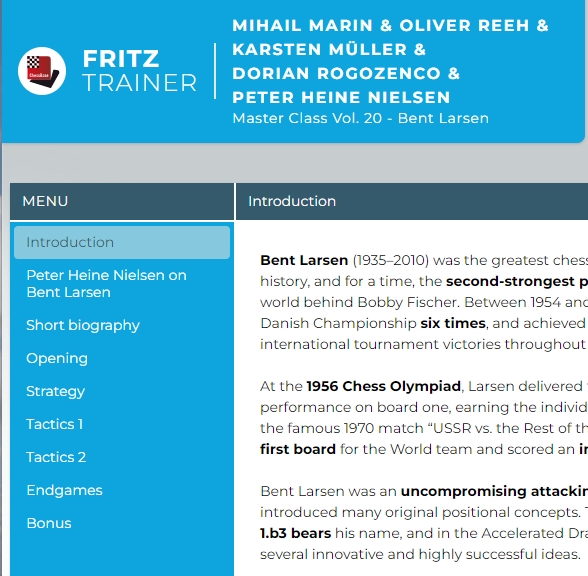
A clear difference can be seen in the design, presentation and format. Up to Volume 12 (Anand), either ChessBase, Fritz or the ChessBase Reader was required, limiting use to Windows computers.
After that, the Fritz Trainer app was included, which is also available for Apple Mac. Starting with Volume 17 (Spassky), Master Class editions can also be read online on any computer or tablet in the “ChessBase Book” format, which is particularly well suited to these biographies.
Introduction and Short Biography
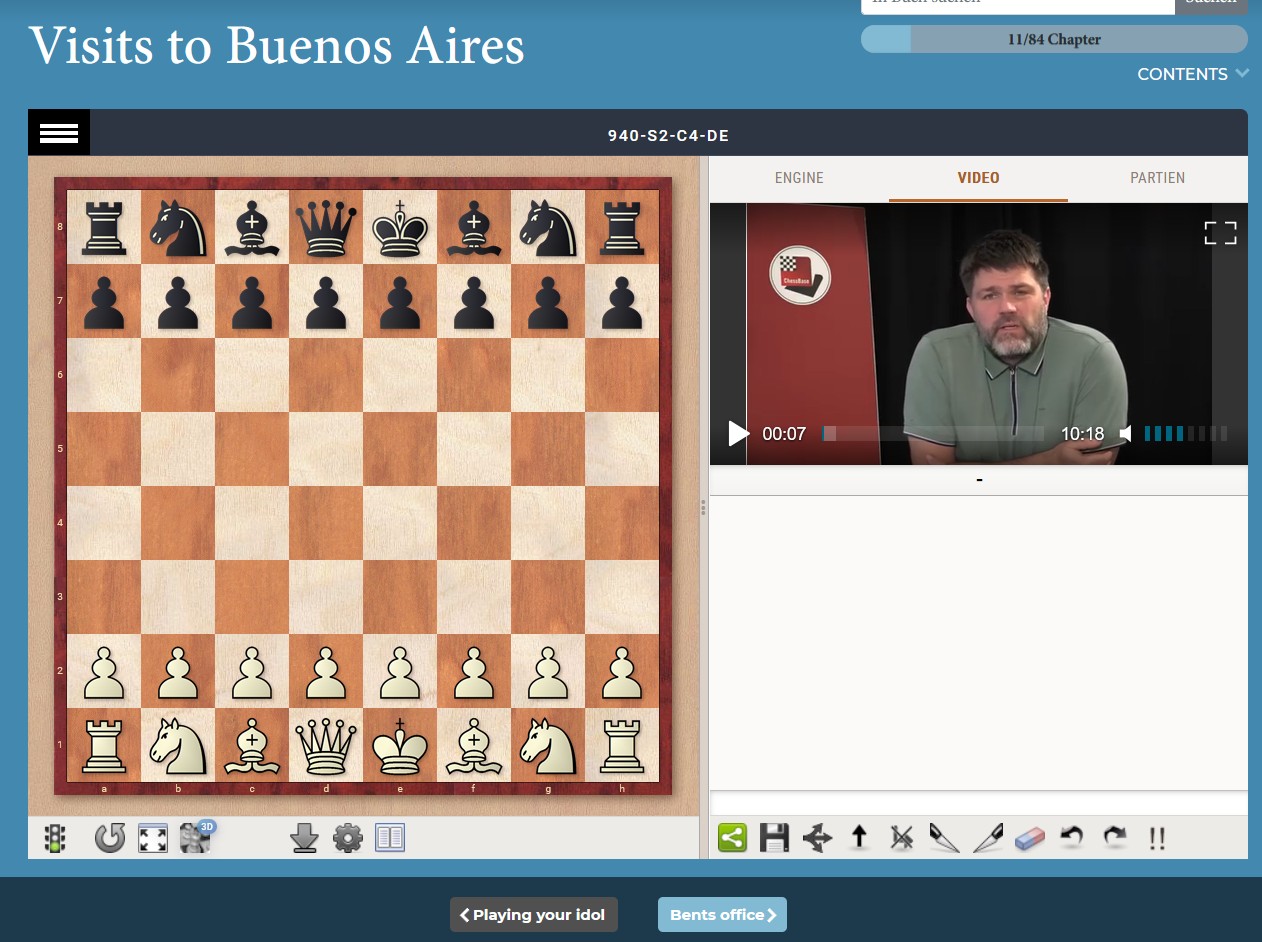
In the Bent Larsen volume, I particularly enjoyed the video contributions by Larsen’s fellow Dane Peter Heine Nielsen, who supplements the biography with accounts of his personal encounters with Larsen and explains the influence the great master had on his own career.
Free video samples
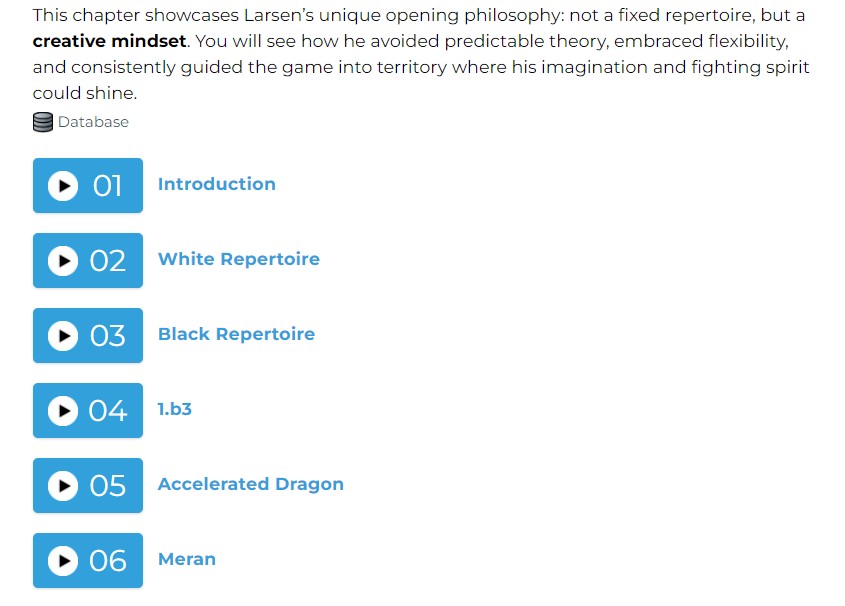
In this chapter, Dorian Rogozenco presents the openings and variations that Larsen had in his repertoire. Larsen liked to play unusual lines that appeared to promise little or no opening advantage. One of them (1.b3) even bears his name.
Strategy, Tactics and Endgames
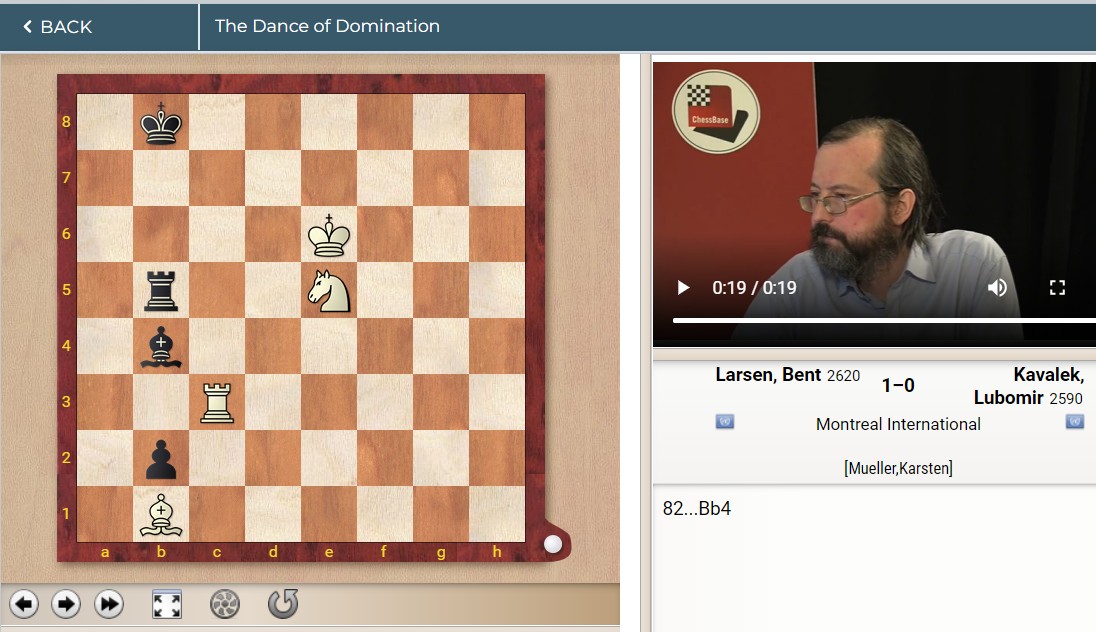
The content of these chapters is strongly reminiscent of the corresponding sections in ChessBase Magazine. This is hardly surprising, as they are written by Mihail Marin (strategy), Oliver Reeh (tactics) and Karsten Müller (endgames), the same authors who are responsible for the respective sections in CBM.
I particularly liked the fact that the tactics and endgame chapters also include interactive exercises in FritzTrainer format.
Conclusion
This Master Class volume provides the reader with an almost complete picture of the Danish master and his chess career. We get to know his opening repertoire, while the authors present highlights from his play in tactics, strategy and endgames. Like the other volumes in the series, Master Class Volume 20 is an excellent training tool in the style of ChessBase Magazine. And thanks to the optional ChessBase Book format, we can also enjoy the contributions comfortably on a tablet while sitting on the sofa.
The product was provided to the author by ChessBase.
More products form the Master Class series are available in the ChessBase Shop


| Advertising |









.jpeg)

.jpeg)