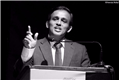
3/1/2026 – Is calculation becoming a strength that turns into a weakness? In this opinion piece, Ravi Abhyankar explores the delicate balance between calculation and instinct in modern chess. Can today’s elite players afford to rely only on deep calculation and ignore speed? Why does blitz matter so much for a classical World Champion today? By blending data, history, and modern realities, the article explains what dominance means in modern chess. | Photo: Grand Chess Tour / Lennart Ootes
new: ChessBase Magazine 225
Chess Festival Prague 2025 with analyses by Aravindh, Giri, Gurel, Navara and others. ‘Special’: 27 highly entertaining miniatures. Opening videos by Werle, King and Ris. 10 opening articles with new repertoire ideas and much more. ChessBase Magazine offers first-class training material for club players and professionals! World-class players analyse their brilliant games and explain the ideas behind the moves. Opening specialists present the latest trends in opening theory and exciting ideas for your repertoire. Master trainers in tactics, strategy and endgames show you the tricks and techniques you need to be a successful tournament player! Available as a direct download (incl. booklet as pdf file) or booklet with download key by post. Included in delivery: ChessBase Magazine #225 as “ChessBase Book” for iPad, tablet, Mac etc.!
YOUR PERSONAL CHESS COACH - Whether you’re taking your first steps into the world of club chess, or already playing at a tournament level: with FRITZ, you can train more efficiently, intelligently and with a more personalised approach than ever before. FRITZ is more than just a chess engine – it’s a training revolution! Whether you’re taking your first steps into the world of club chess, or already playing at a tournament level: with FRITZ, you can train more efficiently, intelligently and with a more personalised approach than ever before.
The Hyper-Accelerated Dragon is fast, from the very first moves, your bishop heads to g7, seizes the long diagonal, and turns into the most feared piece on the board.
It rewards players who love initiative and clear attacking plans.
€39.90
Parkinson's Law
Note: This article is an opinion piece and reflects the personal views of the author.
At the beginning of his classic, C. Northcote Parkinson describes an elderly lady of leisure who spends an entire day writing and dispatching a postcard to her niece. An hour finding the postcard, another looking for her glasses, half an hour searching for the address, more than an hour composing the message, and twenty minutes deciding whether to take an umbrella to the post office. A busy person might complete the entire task in three minutes.
From this example, Parkinson formulates his First Law: Work expands so as to fill the time available for its completion.
This law often applies to chess. Give two grandmasters five hours, fifty minutes, or ten minutes to play a game, they will usually consume all the allotted time.
Calculation vs. Instinct
At one end lies calculation: the analysis of concrete variations, described by cognitive scientists as "search", a slow process. At the other lies instinct or intuition: pattern recognition, chunking, the fast process. Research suggests that top grandmasters do not analyse wider - they analyse deeper. Compared to weaker players, they do not necessarily consider more candidate moves. But they calculate critical lines to far greater depth and evaluate positions more accurately.
Modern elite youngsters such as Gukesh and Praggnanandhaa are sometimes described as calculating machines. Many of their moves coincide with the engine's first choice. Their precision is extraordinary.
Classical rating vs. Blitz rating
Classical rating traditionally reflects chess understanding, strategic depth, calculation ability: the slow process. Blitz rating reflects, in addition, instinct, quick decision-making, and the ability to function under severe time pressure. In today's chess ecosystem, these skills are no longer separable.
The three-format players
In the February 2026 open rating lists, only five players are in the top 10 of all three formats, i.e., classical, rapid, and blitz: Carlsen, Nakamura, Caruana, Erigaisi, and Firouzja. Carlsen remains a phenomenon; he refuses to descend from the summit. Nakamura and Caruana are within striking distance of becoming a challenger. Erigaisi and Firouzja represent the emerging wave that may soon knock on the championship door. The three-format players are also more likely to receive invitations to elite tournaments in the modern circuit. Gukesh, the World Champion, is notably absent from this three-format group.
In this Fritztrainer: “Attack like a Super GM” with Gukesh we touch upon all aspects of his play, with special emphasis on how you can become a better attacking player.
Gukesh, currently ninth in the classical rating list, stands 51st in blitz. Carlsen, Nakamura and Firouzja have each crossed the 2900 blitz rating mark at some stage. Caruana, Anand and Nepomniachtchi have all peaked above 2800. Erigaisi is currently 2776 and climbing. Gukesh's blitz peak rating was 2659 (August 2023). The contrast becomes sharper when we examine the results. Gukesh has lost nearly 40% of the blitz games he has played. (Compare: Carlsen 14%, Nakamura 14%, Erigaisi 20%, Firouzja 22%, Caruana 30%). Firouzja wins a phenomenal 60% of his blitz games, compared to Gukesh's 45%.
Gukesh's classical statistics at a glance. | Source: Gukesh's FIDE Profile
Gukesh's blitz statistics highlight a clear contrast with his classical strength. | Source: Gukesh's FIDE Profile
Gukesh is immensely gifted, extraordinarily hardworking, and clearly focused on classical chess. It is unusual for a reigning World Champion to have such a modest blitz ranking and statistical profile. Is this indifference? Neglect? Or a strategic underestimation of blitz?
Gukesh loses in 14 moves against Duda at SuperUnited Blitz 2025. | Video: ChessBase India
Why blitz matters for a classical World Champion
In the 20th century, it was possible for elite players to specialize almost exclusively in classical chess. That era is over.
1. Time controls are shrinking.
With increments often introduced only after move 40, time management has become decisive.
2. Elite tournaments increasingly rely on tiebreaks.
Rapid, blitz, and even Armageddon now determine winners.
3. World Championships are no longer immune.
Kramnik–Topalov (2006), Anand–Gelfand (2012), Carlsen–Karjakin (2016), Carlsen–Caruana (2018), and Nepomniachtchi–Ding (2023) were all decided in shorter formats.
4. Opening preparation has exploded.
In the engine era, novelties can appear deep into the middlegame. Positions become sharper and more calculation-heavy.
5. Fischer Random (Chess960) is gaining legitimacy.
In this format, pure calculation and adaptability matter even more.
To dominate modern chess and to secure elite invitations, speed chess now matters. Fortunately, Gukesh is only nineteen. Instinct can be trained.
This DVD allows you to learn from the example of one of the best players in the history of chess and from the explanations of the authors how to successfully organise your games strategically, and how to keep your opponent permanently under pressure.
Viswanathan Anand was instinctive from the beginning. In his early youth, he would often play with breathtaking speed. He saw the right move and only occasionally calculated to justify his intuition. In the 1990s, as he entered the super-elite, Anand realized that instinct alone was insufficient. To reach the absolute summit, he had to deepen his calculations, improve his endgame technique, and eliminate impulsive decisions. He trained himself to slow down. The result: five World Championship titles and remarkable longevity!
With Gukesh, the situation appears reversed. He is a phenomenal calculating player. But he may need to cultivate greater practical instinct. Just as Anand trained himself to slow down, Gukesh may need to train himself to speed up. Improving his blitz strength will not merely boost a rating number; it may also enhance his practical decision-making under classical time pressure as well.
There is a reason why Gukesh is known as the calculation machine. | Video: ChessBase India
Good vs. Perfect
Kasparov once contrasted Anand and Kramnik by invoking Vasily Smyslov. Smyslov famously said: I play forty good moves. If my opponent plays forty good moves, the game is a draw. Kasparov observed that Anand, like Smyslov, is pragmatic. He is satisfied with good moves. Kramnik, by contrast, often searched for the perfect move. The pursuit of perfection consumes enormous energy. Anand's pragmatism contributed to his longevity. Smyslov reached the Candidates Final at 63. Anand, in his mid-fifties, remains competitive at the highest level.
For calculating prodigies like Gukesh or Praggnanandhaa, this is a valuable lesson. There are no prizes for beautiful or deep calculations. The prizes are for winning games and tournaments. One must avoid getting lost in the jungle of analysis, especially when the search for an exclamation mark move ends with a question mark in time trouble.
Strategic and tactical suggestions for Gukesh
Become a three-format top-10 player by 2028. This requires systematic commitment to rapid and blitz improvement.
Play a closed training match before the 2026 World Championship with special emphasis on time management, followed by rapid and blitz sparring.
Insist on an increment from move one in the World Championship match 2026.
Gukesh is already a World Champion, and still a teenager. The question is not whether he is good enough. The question is whether he wishes to dominate his era. Blitz strength may be the missing piece.
Ravi AbhyankarRavi Abhyankar is an independent analyst, writer, logician and strategic advisor based in Mumbai. He previously lived in Russia and Poland for sixteen years. A lifelong chess enthusiast, he has met eight World Chess Champions and played against three of them in simultaneous exhibitions and friendly games.
YOUR PERSONAL CHESS COACH - Whether you’re taking your first steps into the world of club chess, or already playing at a tournament level: with FRITZ, you can train more efficiently, intelligently and with a more personalised approach than ever before.
1.c4 e5 2.Nc3 Bb4!? is an opening idea well worth considering. Black immediately threatens to double the pawns on c3 in the style of the Trompowski or Sicilian Grand Prix attack.
Italian Game Powerbase 2026 is a database and contains 8571 top class games from Mega 2026 and the Correspondence Database 2026, of which 479 are annotated.
Videos: Nico Zwirs discusses the Sicilian with 2…e6 3.d4 cxd4 4.Qxd4 Nc6 5.Qe3 Nf6 6.Nc3. Mihail Marin examines Sindarov’s 6.Ne5 in the Queen’s Pawn Defence. Plus the ‘Lucky bag’ featuring 41 analyses by Berg, Ftacnik, Gupta and many others.
If you're looking for a dynamic alternative to the Slav, Queen's Gambit Declined, or other mainstream systems, the Chigorin Defence offers exactly what modern tournament players need.
Michael Kotyk presents a complete repertoire after 1.e4 e5, built around creative ideas, surprising move orders, and practical weapons designed to catch your opponents off guard.
€69.80
€59.90
We use cookies and comparable technologies to provide certain functions, to improve the user experience and to offer interest-oriented content. Depending on their intended use, analysis cookies and marketing cookies may be used in addition to technically required cookies. Here you can make detailed settings or revoke your consent (if necessary partially) with effect for the future. Further information can be found in our data protection declaration.
Pop-up for detailed settings
We use cookies and comparable technologies to provide certain functions, to improve the user experience and to offer interest-oriented content. Depending on their intended use, cookies may be used in addition to technically required cookies, analysis cookies and marketing cookies. You can decide which cookies to use by selecting the appropriate options below. Please note that your selection may affect the functionality of the service. Further information can be found in our privacy policy.
Technically required cookies
Technically required cookies: so that you can navigate and use the basic functions and store preferences.
Analysis Cookies
To help us determine how visitors interact with our website to improve the user experience.
Marketing-Cookies
To help us offer and evaluate relevant content and interesting and appropriate advertisement.