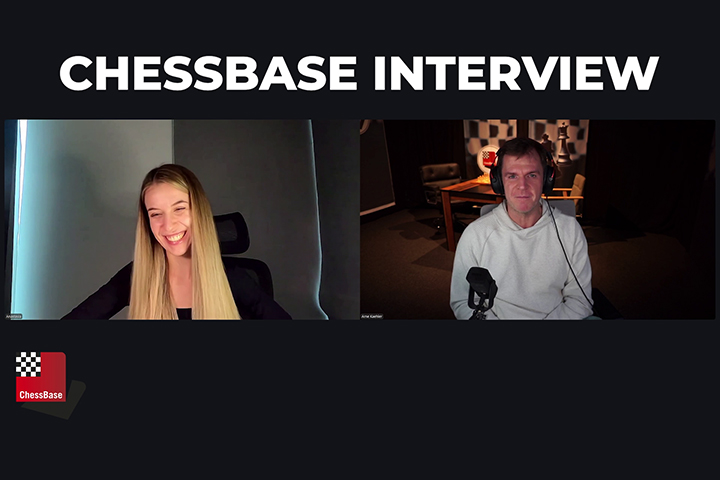
Interview with Anastasia Corotcova

by Arne Kaehler
1/1/2026 – This interview introduces Anastasia Corotcova as a member of the ChessBase team, sharing how she grew into chess through her grandmother, an international arbiter, before choosing an IT career while staying closely connected to chess. She talks about her work as an arbiter, a fun kids-tournament anecdote, and her experience creating a weekly TV chess show for children. The final part is a lighthearted rapid-fire Q&A that reveals her personality, interests, and everyday habits.

EXPAND YOUR CHESS HORIZONS
Data, plans, practice – the new Opening Report In ChessBase there are always attempts to show the typical plans of an opening variation. In the age of engines, chess is much more concrete than previously thought. But amateurs in particular love openings with clear plans, see the London System. In ChessBase ’26, three functions deal with the display of plans. The new opening report examines which piece moves or pawn advances are significant for each important variation. In the reference search you can now see on the board where the pieces usually go. If you start the new Monte Carlo analysis, the board also shows the most common figure paths.

Interview with Anastasia Corotcova

  • 0:27 – How, and where did you learn to play chess?
  • 1:53 – What made you decide not to take the chess path professionally?
  • 3:15 – You’re still competitive today—what role did your grandmother play, and why did you choose the arbiter path as well?
  • 4:19 – What was the craziest thing you’ve experienced as an arbiter?
  • 5:53 – Who causes more problems: club/amateur players or titled players?
  • 7:25 – How did you get into creating educational chess content for kids?
  • 10:48 – Random / Rapid-fire questions

EXPAND YOUR CHESS HORIZONS
Data, plans, practice – the new Opening Report In ChessBase there are always attempts to show the typical plans of an opening variation. In the age of engines, chess is much more concrete than previously thought. But amateurs in particular love openings with clear plans, see the London System. In ChessBase ’26, three functions deal with the display of plans. The new opening report examines which piece moves or pawn advances are significant for each important variation. In the reference search you can now see on the board where the pieces usually go. If you start the new Monte Carlo analysis, the board also shows the most common figure paths.

Links:


Arne Kaehler, a creative mind who is passionate about board games in general, was born in Hamburg and learned to play chess at a young age. By teaching chess to youth teams and creating chess-related videos on YouTube, Arne was able to expand this passion and has even created an online course for anyone who wants to learn how to play chess. Arne writes for the English and German news sites, but focuses mainly on content for the ChessBase media channels.
Discussion and Feedback Submit your feedback to the editors