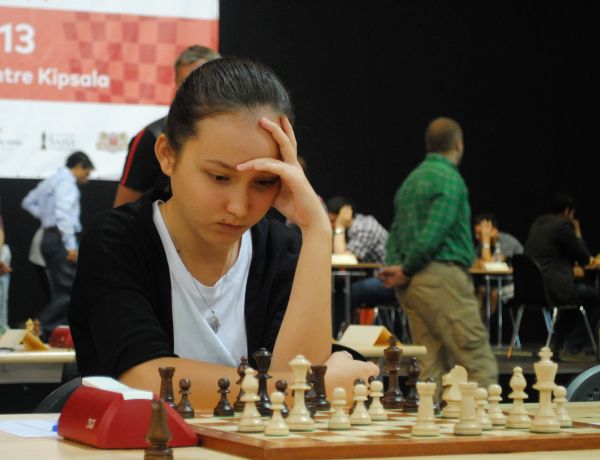
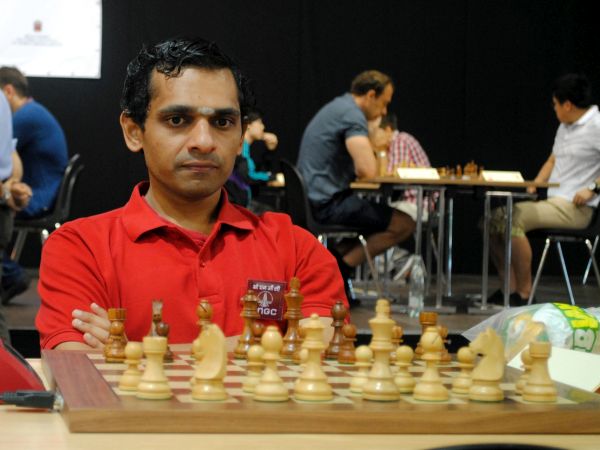
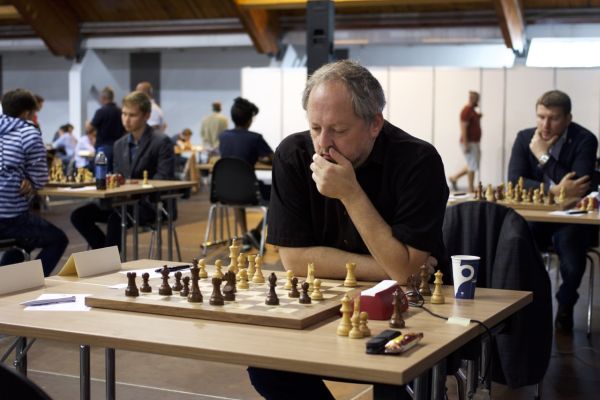
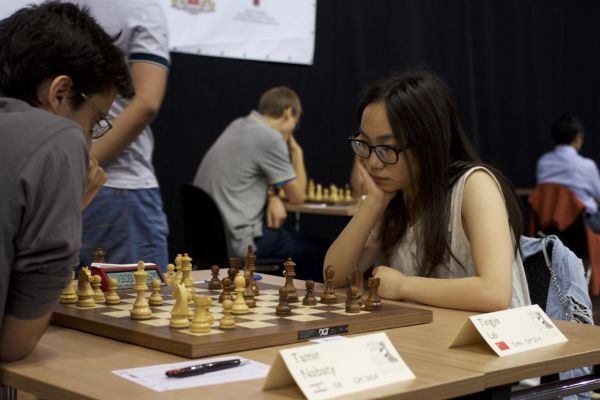
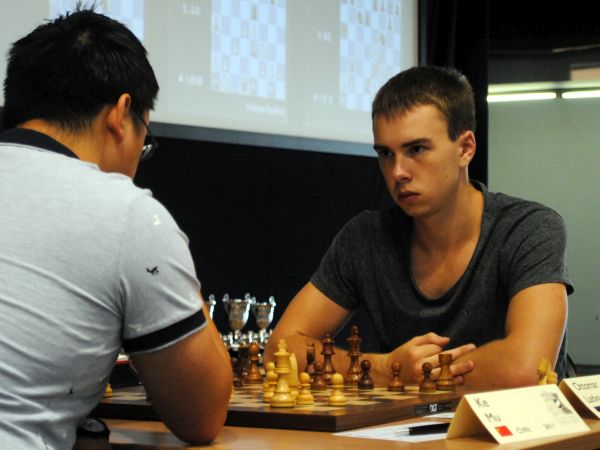
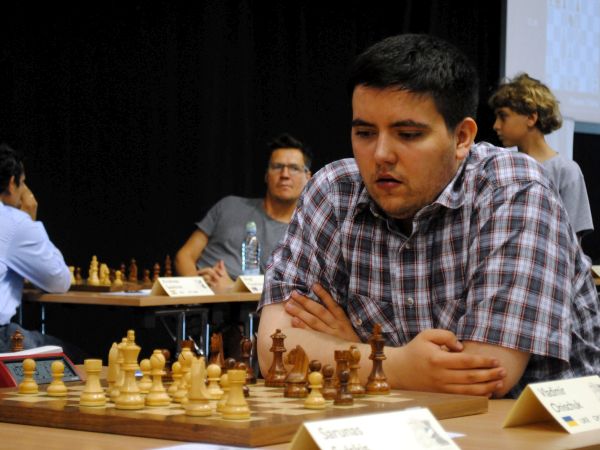
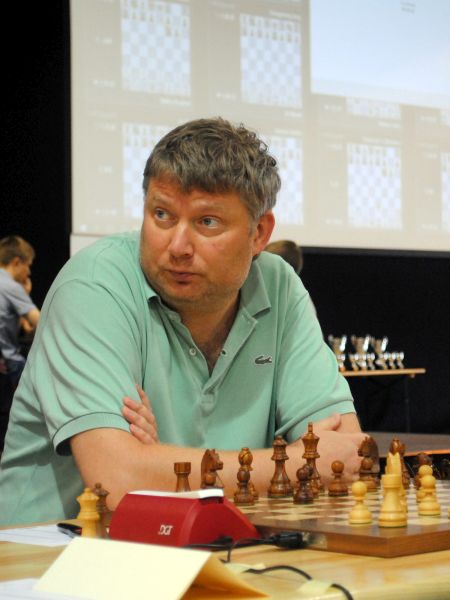
8/22/2017 – The RTU Open took place in Riga from August 7th to 13th, and was won by Ukrainian Grandmaster Vladimir Onischuk with 7½/9. Local hero Alexei Shirov couldn't show his best chess and finished 35th. Strong impressions were made by some youth players, including the world's current female No. 1 in the Under-18 category, Zhansaya Abdumallik | Photos: rtuopen.lv
new: Fritz 20
Your personal chess trainer. Your toughest opponent. Your strongest ally. FRITZ 20 is more than just a chess engine – it is a training revolution for ambitious players and professionals. Whether you are taking your first steps into the world of serious chess training, or already playing at tournament level, FRITZ 20 will help you train more efficiently, intelligently and individually than ever before.
How grandmasters win without fireworks: GM Jan Markos shows you 11 very practical tips from "How to play in a lost position" to "Be patient like Carlsen" that will improve your tournament chess.
€39.90
RTU Open
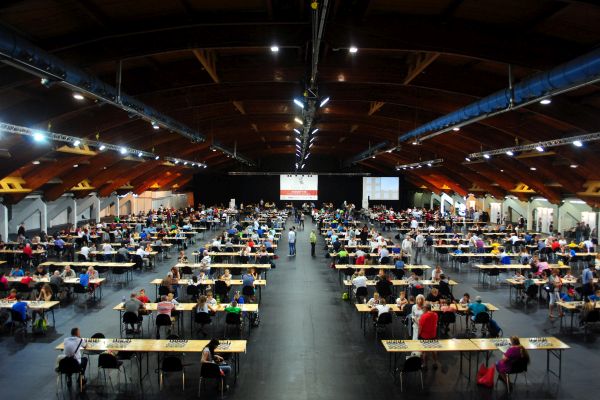
The 7th RTU Open ended last Sunday, August 13th. It has grown into a huge chess festival which takes place at the Kipsala Exhibition Center in Riga. 319 participants in the A Tournament — including 42 Grandmasters and 55 International Masters — fought for the substantial prize pool of €15,100.
Playing hall and format
The Playing Hall is located on the Kipsala island, which is on the left side of the river Daugava. Although separated from the beautiful center of Riga, it is just a short walk over a bridge to enter the historical center with all its bars and restaurants. The playing hall itself was very large, providing enough space for five tournaments and more than 500 participants.
A huge topic — at least from my perspective — was the time control. The players had 90 minutes for the whole game, plus an increment of 30 seconds per move. However, there was no second time control, meaning that after move 40, no additional time is added to the clock. Therefore, once in time trouble, always in time trouble.
Already a major factor at regular time controls, time pressure often became decisive in any given game. On the one hand, a lot of winning positions were spoiled, while on the other hand, players were forced to make use of any practical chances. One drastic example:
Onischuk on top
Ukrainian Grandmaster Vladimir Onischuk dominated the tournament from the very beginning, starting with six victories, before coasting to the finish with three draws. An all important game turned out to be the encounter between Onischuk and the Israeli Grandmaster Tamir Nabaty, who finished in third place.
Vladimir Onischuk was the deserved winner
Young Talents
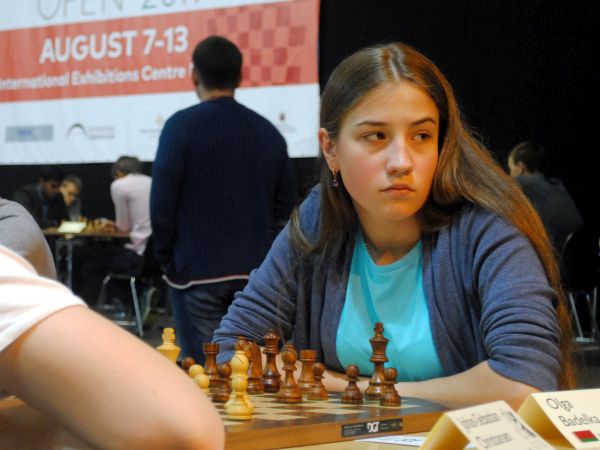
A huge amount of young and very talented players took part in the A Tournament. I for myself faced four youth players (out of nine games), including the female U16 player Olga Badelka, who is — in her rating category — No. 4 in the world. She is definitely a player to watch out for in the future. In round three she defeated the experienced Italian Grandmaster Michele Godena.
Belarusian U16 player Olga Badelka (2335 Elo)
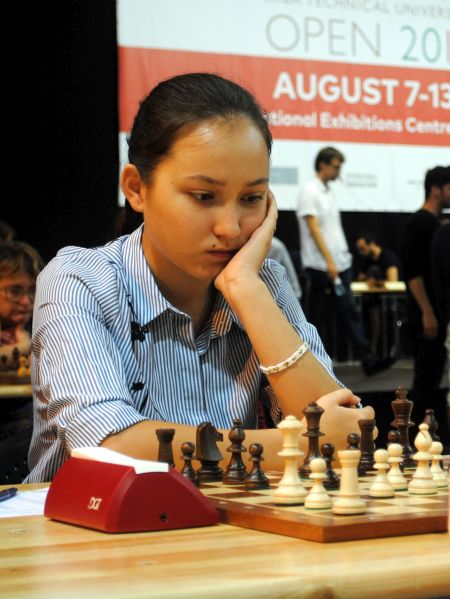
Another very strong female talent is Zhansaya Abdumallik from Kazakhstan. She won the World Youth Chess Championship twice and came to Riga with a rating of 2423. Two draws against the Russian Grandmasters Evgeny Vorobiov and Kirill Alekseenko, 5.5/9 in the overall standing and the third prize for best woman was her impressive score.
Zhansaya Abdumallik
David Miedema, an International Master from the Netherlands who also participated at the RTU Open, captured his impressions in a short video, where he also interviewed Zhansaya (starting at 1:40):
RTU Impressions by the Chessnomad David Miedema
17 years old Russian Grandmaster Alexey Sarana came from the "Match of the Millenials", where he contributed to the smashing 30.5 to 17.5 victory of the "World Team" against the USA. In Riga, he retained his shape and took the 8th place.
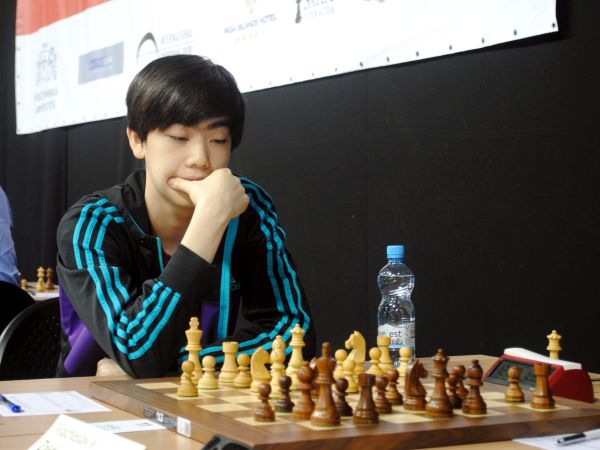
US-talent Andrew Tang left quite a strong impression on me. Although he missed the grandmaster norm in round nine, his play showed very deep understanding. Here is one example, in which he completely outplayed a strong grandmaster:
On this DVD Grandmaster Daniel King offers you a repertoire for Black with the QGD. The repertoire is demonstrated in 10 stem games, covering all White's major systems: 5 Bg5, 5 Bf4, and the Exchange Variation.
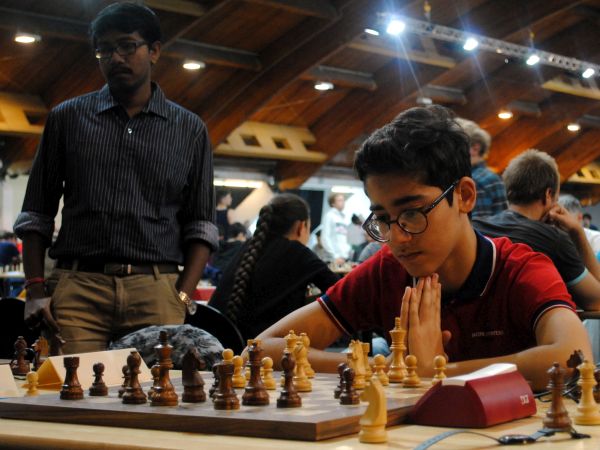
(Above) Andrew Tang (Below) Although drawing four Grandmasters, the Iranian U16 player Aryan Gholami missed the GM norm by half a point
Latvian Legend
Alexei Shirov is the Latvian No. 1 and needs no special introduction to any chess player. He was one of the world top players for many years and his ultra-aggressive style inspired tons of chess players. However, in the last years, his Elo went down and Shirov even dropped out of the 2700+ club, of which he was part of for decades. Riga wasn't a good tounament for him neither: with a score of 6.0/9 he finished in 35th place and missed the prize money.
Unfortunately, Alexei Shirov couldn't show all of his class | All photos: rtuopen.lv/en
Marco BaldaufMarco Baldauf, born 1990, has been playing since he was eight. In 2000 and 2002 he became German Junior Champion, in 2014 he became International Master. He plays for SF Berlin in the Bundesliga.
YOUR PERSONAL CHESS COACH - Whether you’re taking your first steps into the world of club chess, or already playing at a tournament level: with FRITZ, you can train more efficiently, intelligently and with a more personalised approach than ever before.
How grandmasters win without fireworks: GM Jan Markos shows you 11 very practical tips from "How to play in a lost position" to "Be patient like Carlsen" that will improve your tournament chess.
The Nimzo-Indian has stood the test of time for over a century: Still a top choice for elite players today, from Magnus Carlsen to Praggnanandhaa, it remains one of Black's most reliable ways to fight for real chances against 1.d4 2.c4 3.Nc3.
1.c4 e5 2.Nc3 Bb4!? is an opening idea well worth considering. Black immediately threatens to double the pawns on c3 in the style of the Trompowski or Sicilian Grand Prix attack.
Italian Game Powerbase 2026 is a database and contains 8571 top class games from Mega 2026 and the Correspondence Database 2026, of which 479 are annotated.
Videos: Nico Zwirs discusses the Sicilian with 2…e6 3.d4 cxd4 4.Qxd4 Nc6 5.Qe3 Nf6 6.Nc3. Mihail Marin examines Sindarov’s 6.Ne5 in the Queen’s Pawn Defence. Plus the ‘Lucky bag’ featuring 41 analyses by Berg, Ftacnik, Gupta and many others.
€14.90
We use cookies and comparable technologies to provide certain functions, to improve the user experience and to offer interest-oriented content. Depending on their intended use, analysis cookies and marketing cookies may be used in addition to technically required cookies. Here you can make detailed settings or revoke your consent (if necessary partially) with effect for the future. Further information can be found in our data protection declaration.
Pop-up for detailed settings
We use cookies and comparable technologies to provide certain functions, to improve the user experience and to offer interest-oriented content. Depending on their intended use, cookies may be used in addition to technically required cookies, analysis cookies and marketing cookies. You can decide which cookies to use by selecting the appropriate options below. Please note that your selection may affect the functionality of the service. Further information can be found in our privacy policy.
Technically required cookies
Technically required cookies: so that you can navigate and use the basic functions and store preferences.
Analysis Cookies
To help us determine how visitors interact with our website to improve the user experience.
Marketing-Cookies
To help us offer and evaluate relevant content and interesting and appropriate advertisement.