Historical riddle: Was Fischer’s 22.Nxd7 winning?

by Karsten Müller
11/18/2020 – One of the most amazing moves in Bobby Fischer’s rich career was 22.Nxd7+ in the seventh game of the Candidates final match against Tigran Petrosian. Endgame specialist Karsten Müller wonders whether the move was objectively the best in the position or if an alternative pawn push might have been a better try. You can help him solve the historical riddle!

Your personal chess trainer. Your toughest opponent. Your strongest ally.
FRITZ 20 is more than just a chess engine – it is a training revolution for ambitious players and professionals. Whether you are taking your first steps into the world of serious chess training, or already playing at tournament level, FRITZ 20 will help you train more efficiently, intelligently and individually than ever before. 

A crucial episode in chess history

Much has been written about the final match of the 1971 Candidates Tournament. Bobby Fischer came from demolishing two of the strongest grandmasters in the world, Mark Taimanov and Bent Larsen, while his rival, Tigran Petrosian, a former world champion, had the reputation of being the most resourceful defensive player of all time — he had lost only two of his 42 preceding games.

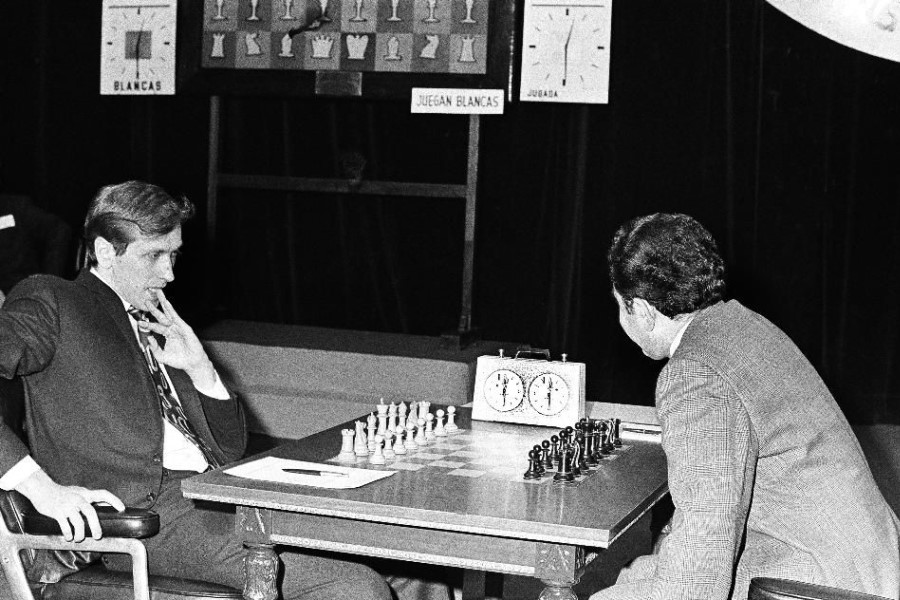
The stage was the Teatro General San Martín in Buenos Aires, located within walking distance from the venue where Capablanca and Alekhine had played the 1927 World Championship match. Grandmasters Hermann Pilnik and Miguel Najdorf were in charge of the commentary, explaining the moves to a large audience using a demonstration board. Would Fischer continue his perfect run? Or would Petrosian finally put a stop to the American’s bid to play Boris Spassky in a World Championship match?

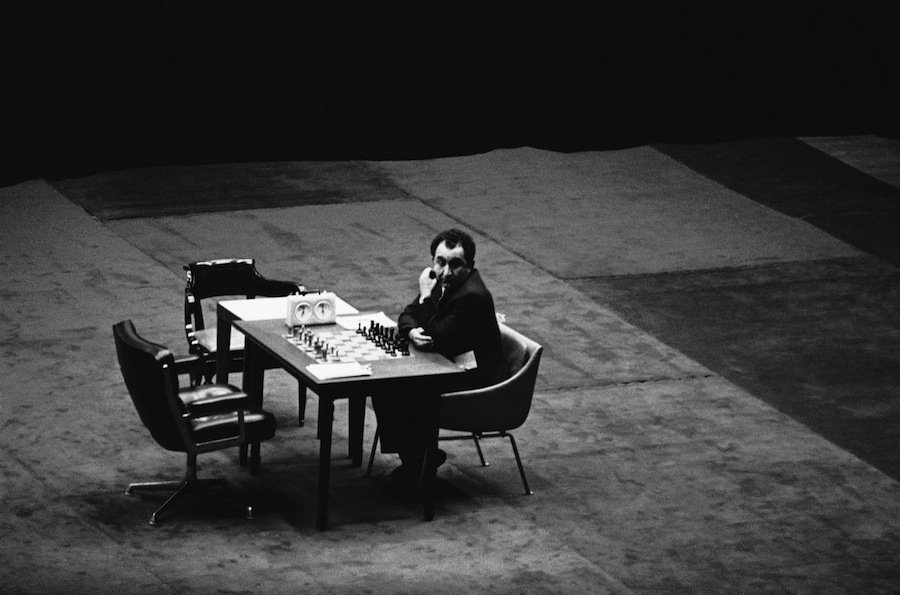
Tigran Petrosian

Tigran Petrosian at the Martín Coronado Auditorium of the Teatro General San Martín

The streak continued in the first game of the match, despite the fact that Petrosian had surprised his opponent in the opening — the Soviet star got short of time and ended up resigning on move 40. Petrosian quickly bounced back though and levelled the score in game 2, putting an end to Fischer’s streak while showing he was in better form than his famed rival. 

Petrosian got a better position in game 3 as well, but once again he got into time trouble and allowed Fischer to find a draw by repetition. Games 4 and 5 were drawn by agreement, while Fischer obtained the first of four consecutive wins in game 6 — we already looked into the critical encounter that turned the tables in favour of the American. 

Let us now move on to game 7, one that might be even more famous and still contains several deep riddles. We will examine Fischer’s 22.Nxd7+, one of the most amazing moves he played during his rich career.

But was the move really objectively the best and winning? Or was, for example, 22.a4 even stronger? This deep question is only the start of the mysteries surrounding this famous endgame.

So your job is: How many mistakes were made and which was Petrosian’s last mistake?


Please share any analysis you come up with on the comments section. You may also like to use more powerful engines to assist you in your efforts. Fat Fritz, for instance, goes for some unconventional continuations and surprises. I will evaluate your submissions and discuss them with you.


In over 4 hours in front of the camera, Karsten Müller presents to you sensations from the world of endgames - partly reaching far beyond standard techniques and rules of thumb - and rounds off with some cases of with own examples.


Links


Karsten Müller is considered to be one of the greatest endgame experts in the world. His books on the endgame - among them "Fundamentals of Chess Endings", co-authored with Frank Lamprecht, that helped to improve Magnus Carlsen's endgame knowledge - and his endgame columns for the ChessCafe website and the ChessBase Magazine helped to establish and to confirm this reputation. Karsten's Fritztrainer DVDs on the endgame are bestsellers. The mathematician with a PhD lives in Hamburg, and for more than 25 years he has been scoring points for the Hamburger Schachklub (HSK) in the Bundesliga.

Discuss

Rules for reader comments


Not registered yet? Register

Karsten Müller Karsten Müller 11/17/2020 09:07
brian8871: Yes this indeed seems to defend. And so surprisingly 22.Nxd7? probably only leads to a draw, while 22.a4! wins.
marcguy marcguy 11/17/2020 02:32
In a pamphlet on this opening issued about 45 years ago, Karpov analyzed this game. He gave 22. Nd7 a (!), and commenting on 22. a4 said "Black would have replied 22...Be6, preparing 23...Nd7." However, after 22...Be6 23. Ne6 fe 24. Re6 just looks winning for White. Thinking this a misprint, if 22...Bc6, then 23. Ree1 looks strong (Kasparov only gives 23.Rc1 Nd7 24.Nd7 Bd7 with chances to hold) because if 23...Nd7 (23...better Bb7 but still looks difficult for White after 24.Rab1 followed by Kf2) then 24.Na6 wins (if 24...Ra6 25.Ba6 Ra6 26.b5). Other tries for Black after 22.a4 (1) 22...Bc8 23.Rae1 g6 24.Kf2 Rb8 25.g4! (2) 22...g6 23.Kf2 h5 24.h4, both these lines look difficult for Black.

In the analyses below after 23...d4 (instead of Rd6), after 24.Ra5 Nd5 isn't 25.Be4 best? After 25...Nc3 (or 25...Rad8 26.Bd5 Rd5 27.Ra6 d3 28.Kf1 d2 29.Rd1 Rb8 30.a3 g6) 26.Ba8 Ne2 27.Kf2 Nc1 28.Ke1 Nd3 29.Kd2 Nb4 30.a3 Na2 31.Ra6 Ke7 White is better in both lines, but enough to win, I'll leave that to Karsten, its above my paygrade, LOL.

BTW, the pamphlet referenced above gave 33...Nb4 as does Frank Brady's book on Fischer's games.
brian8871 brian8871 11/16/2020 10:23
After 23...d4 24.Rcc5 Rdd8 25. Ra5 Rac8 looks best.
Karsten Müller Karsten Müller 11/16/2020 01:25
JoshuaVGreen: Now in the interactive board it has been corrected and 33...Nxf4 is given as Petrosian's move.
Karsten Müller Karsten Müller 11/16/2020 10:37
Many thanks for the fantastic feedback! It now seems that a sensation happens.
Fischer's 22.Nxd7? seems to be a mistake (many sources wrongly give 22.Nxd7!!), after which Black can defend while 22.a4! makes more pressure and wins. But over the board of course Black's defensive task is extremely difficult.
Or can a reader change that picture?
Karsten Müller Karsten Müller 11/16/2020 10:31
Charles Sullivan gives on this:
"Dear Karsten & Zoran,

I just took a closer look at the game scores you sent me for Fischer-Petrosian (g.7) and noticed 33...Nxb4. While some databases and the Kasparov book and the Wade-O'Connell book have 33...Nxf4 and 33...NxNP, I STRONGLY believe this is an error. I have attached the game score from the New York Times (October 20, 1971) and from Chess Life (February 1972) which shows that 33...NxBP (...Nxf4) was played. (By the way, my edition of Karsten's "Bobby Fischer" says 33...Nxf4 was the game move and notes that Kasparov gives 33...Nxb4).

To my mind, this is not another mystery -- somebody just mis-translated NxBP as Nxb4.

Best wishes,
Charles"
Karsten Müller Karsten Müller 11/16/2020 10:23
JoshuaVGreen: Fischer played 33...Nxf4 as given in ChessBase MEGABASE. Several sources wrongly give 33...Nxb4. So above in the interactive board it is wrong.
CharlesSullivan CharlesSullivan 11/16/2020 02:47
After 23...d4 24.Rcc5 Rdd8 I have been trying to break through Black's defense, but to no avail. After 25.Ra5 Rac8 26.Kf2 Rc1 27.Bxa6 Rb1 28.a3 g6 29.Re1 Rb3 30.Re2 h5 31.Rd2 h4 32.Bb7 Rd6 33.b5 Nd7 34.Ra6 Rxa6 35.bxa6 Rxa3 36.Rxd4 Nc5 37.Rd6 Ke7 38.Rb6 Nd7 39.Rc6 Ne5 40.Rc7+ Kd6 41.Rc8 Nd3+ 42.Ke3 Nc5+ 43.Kd2 Ne6 44.Rc6+ Kd7 45.g3 hxg3 46.hxg3 Nc7

the game looks pretty drawish to me.
albitex albitex 11/16/2020 02:00
The engines tell us that 22. a4 was clearly better, but even after 22. Nxd7 White is always ahead. However, my opinion is that eliminating the Black Bishop right away is humanly the best option. But, in this game I am surprised by Petrosian's inaccurate play. The great Petrosian was famous for his skill in endgame, it is curious that he played this endgames so badly.
McMillanEcon McMillanEcon 11/15/2020 09:47
If 24 Rcc5 (in the lines previously given), FF prefers Rad8 to Rdd8 with the idea that the a-pawn does not require direct protection:

24 Rcc5 Rad8
25 Bxa6 d3

with exchanges and simplifications coming quickly for Black. one example would be:

26 Re1 Rd4
27 Rc4 Rxc4
28 Bxc4 Rd4
29 Bb3 Rxb4

and we get this:

Robert James Fischer - Tigran Vartanovich Petrosian 1-0, Fischer - Petrosian Candidates Final 1971


Robert James Fischer - Tigran Vartanovich Petrosian 1-0, Fischer - Petrosian Candidates Final 1971


Which is similar to the position below, where White has kept the minor pieces on, but has not gained the d-pawn
McMillanEcon McMillanEcon 11/15/2020 09:23
I've been doing some playing around with the position with Fat Fritz.
Summary is that FF wants Petrosian to play d4 much quicker than he does, with the irony that when Petrosian finally does play d4 it is the wrong move.

Here is one line from FF:

23 Rc1 d4
24 Ra5 Nd5
25 b5 Nf4
26 Bf1 d3

(point here of playing d4 - to eventually play d3 so that the bishop no longer is connected with the a and b pawns).

27 Rxa6 Rxa6
28 bxa6 Ra7
29 Rc4 Rxa6

(black ignores - for the moment - the attack on his knight; he'll get the minor piece back by pushing and promoting the d-pawn)

30 Rxf4 Rd6
31 Kf2 d2
32 Be2 d1=Q
33 Bxd1 Rxd1

so we get this:

Robert James Fischer - Tigran Vartanovich Petrosian 1-0, Fischer - Petrosian Candidates Final 1971


where black is a pawn down, but the rook and pawn endgame is (likely - I haven't worked out all details) drawn.

At the position's initiation - after Nxd7 - the material is equal. I imagine that Petrosian was a little too materialistic in trying to maintain material equality. The FF key to a draw is to sacrifice a pawn in order to get to a rook and pawn endgame that white cannot convert.
JoshuaVGreen JoshuaVGreen 11/15/2020 07:12
@Karsten Müller, the interactive board above gives Petrosian's last move as 33. ... Nxb4, and that agrees with the score in "Chess Strategy in Action" (which I had handy and knew contained this game). It would be good to pin this down.
zoranp zoranp 11/15/2020 02:54
Turok: First of all, no one analyze can change chess history: Fischer is one of the best chess players forever. I admire his games and that’s why I want to analyze them as deep as it is possible. Still, there are a lot of annotators (more than 100) have analyzed this game practically on the same way – after 22.Nxd7 Fischer is winning, and he did not make any single mistake in it. What if this isn’t true? Personally, I enjoy analyzing such a games, and not so often happens that I find omissions in them. Chess changes, new ideas appear, and we should know that. New ideas have influence on old games as well. I am doing some kind of chess Hermeneutics. After such analyzes, nothing will change with Bobby – he will be still one of the best players forever. Only what will change is that chess understanding will improve a bit. That is my goal
Karsten Müller Karsten Müller 11/15/2020 02:12
brain8871: Good idea! I suggest to meet it with 25.Ra5 and will ask Charles Sullivan and Zoran Petronijevic. To me it still looks like good winning chances for White, but more analysis is needed of course.
brian8871 brian8871 11/15/2020 01:53
After 23...d4 24.Rcc5 Rdd8 looks like it holds.
JoshuaVGreen JoshuaVGreen 11/15/2020 01:42
@turok, I think you're missing the point of these exercises. The goal isn't to criticize the players; rather, it's to determine objective truth, something that humans naturally strive for and which actually has some meaning in chess. This particular endgame is often included in endgame books as an example of model play, so what's wrong with ensuring that the repeated narrative is accurate and/or determining how it should be corrected?
Karsten Müller Karsten Müller 11/15/2020 10:08
Derek880: After 26..d4 I suggest 27.a3 and I like White's chances. How to defend then?
In the next move it seems indeed to be even more interesting. Especially I like 27...Nb6! This should draw or?
turok turok 11/15/2020 09:46
sorry but I find it amazing how all of you with computers etc after all these years try and change history to show if Fischer was winning or not. Not sure why the chess community likes to do this but it is sad IMO. Just like commentators today who after a game get out their trusty computers and start criticizing the moves like if they could've done better at the time the game was going on. Chess games are a huge part of stress and not failing under pressure. How many times have we made a move to shake things and confuse an opponent under pressure? My point is cannot we just let all of us enjoy these past brilliant games without exhausting it to death with computers. I am sure if any of you were in that game and yes even the GMs of today Fischer would've crushed you as well without all your data bases etc. I am sorry it grows old as we bring up the past games and instead of enjoying them we try to use computers to show Fischer or what Spassky could've done. Or my favorite Fischer really wasn't wining hahaha. How many titles do all of you naysayers have to your name. Let us just enjoy these games and if we want to figure things out fine. Sorry it had to be said.
Karsten Müller Karsten Müller 11/15/2020 09:35
pmate: After 24.Rc5 (instead of your 3.Rc5?!) White should be winning with his extra pawn. And Petrosian played 33...Nxf4 (not 33...Nxb4) but was lost already in any case.
Karsten Müller Karsten Müller 11/15/2020 09:01
brian8871: Very good point! I agree that 23...d4!? is more tenacious. But does it draw? How to defend after Charles Sullivan's 24.Rcc5! ?
Poiny Trewq 1th comment: 29...Re8+ is met by 30.Kd4 and White wins.
Poiny Trewq 2nd comment: This is too passive. After e.g. 30.a4 in your line White wins.
Derek880 Derek880 11/15/2020 08:28
I don't know if 22 Nxd7 truly wins completely. I like the looks of 22 a4 while keeping the better-placed N on c5. I think playing possibly 26...d4 was a good try, with the hopes of playing ...Nb6. It allows Black to play for the d5 square, aiming for c3 or e3. I think 27...h4 seemed a little inconsistent. I think another attempt at 27...d4 would have been a good alternative. Though it may not be completely clear, I like the idea of 27...Nb6, (heading to c4) as well. Black will give up a pawn after something like 28 Rec2 Nc4!? 29 Bxc4 dxc4 30 R7xc4, but after 30...Re8, Black has activity for his pawn instead of the difficult defensive position he had earlier.
footloose4 footloose4 11/15/2020 01:22
Entire article, including bio, fails to mention Muller is a GM! :)
pmate pmate 11/15/2020 12:12
a4 is a better move as then black struggles to find a move that improves his position. Nxd7+ does not win as it allows Nxd7 2.Rxd5 Nf6 3.Rc5, I am not sure where the best square for the rook is, then 3... Rd7 followed by Nd5 and Nxb4 or possibly Rd2 followed by Rb2 and black draws. Petrosian's last mistake is Nxb4.
Poiuy Trewq Poiuy Trewq 11/15/2020 12:11
In fact, perhaps Black could have exchanged Rooks a couple of moves earlier: 27 ... Re8 28. Rxe8+ Kxe8 2. Ra7 Nb8 30. Ra8 Rb6 31. a3
Poiuy Trewq Poiuy Trewq 11/14/2020 11:59
Just playing over the game it appears each player made naturally strong moves until Petrosian missed the chance to trade rooks, which I think would have defanged Fischer's python-like squeeze [mixed metaphor alert!]: 29 ... Re8+ 30. Kd2 Rxe2+ 31. Kxe2 Ke8 32. Ra7 Nb8 33. Rh7 Rf6.
brian8871 brian8871 11/14/2020 10:10
23...Rd6 doesn't look like the best move. After 23...d4, White still has an advantage, but not as pronounced.
Karsten Müller Karsten Müller 11/14/2020 07:57
OK good. I am very curious, what the other readers think. I will not give my opinion now...
Karsten Müller Karsten Müller 11/14/2020 07:55
Yes I fully agree. Such endgames with rook(s) and bishop against rook(s) and knight are also called Fischer endgames. Bobby indeed had many very instructive wins in this material configuration. But does Nxd7 win or not?
Karsten Müller Karsten Müller 11/14/2020 07:45
Yes you have a point. But do your moves all win? Can you give more details? And does Nxd7 win or can Black defend?