More than a conventional chess event
The 12th Judit Polgar Global Chess Festival took place at the Hungarian National Gallery in Budapest on Saturday 26 September. Founded in 2015, the annual event again combined tournament chess with education, art, technology and activities aimed at families and younger visitors. The theme chosen for the 2026 edition was Critical Thinking, with much of the programme exploring how chess can be used to analyse information, test assumptions and make decisions.
The festival has gradually expanded beyond the framework of a conventional chess event. Earlier editions have included simultaneous exhibitions, professional competitions, conferences, artistic projects and programmes connecting chess with science and technology.
 In this video course, experts (Pelletier, Marin, Müller and Reeh) examine the games of Judit Polgar. Let them show you which openings Polgar chose to play, where her strength in middlegames were, or how she outplayed her opponents in the endgame.
In 2018, events linked to the festival were held at 250 venues in 23 countries, while the main gathering had already moved to the Hungarian National Gallery. Subsequent editions introduced conferences on chess and education, hybrid activities and discussions about artificial intelligence.
The event was held online in 2020 and in hybrid form in subsequent years before returning to a larger programme of on-site activities. Recent editions have addressed subjects including women in chess and science, decision-making and the relationship between chess and artificial intelligence.
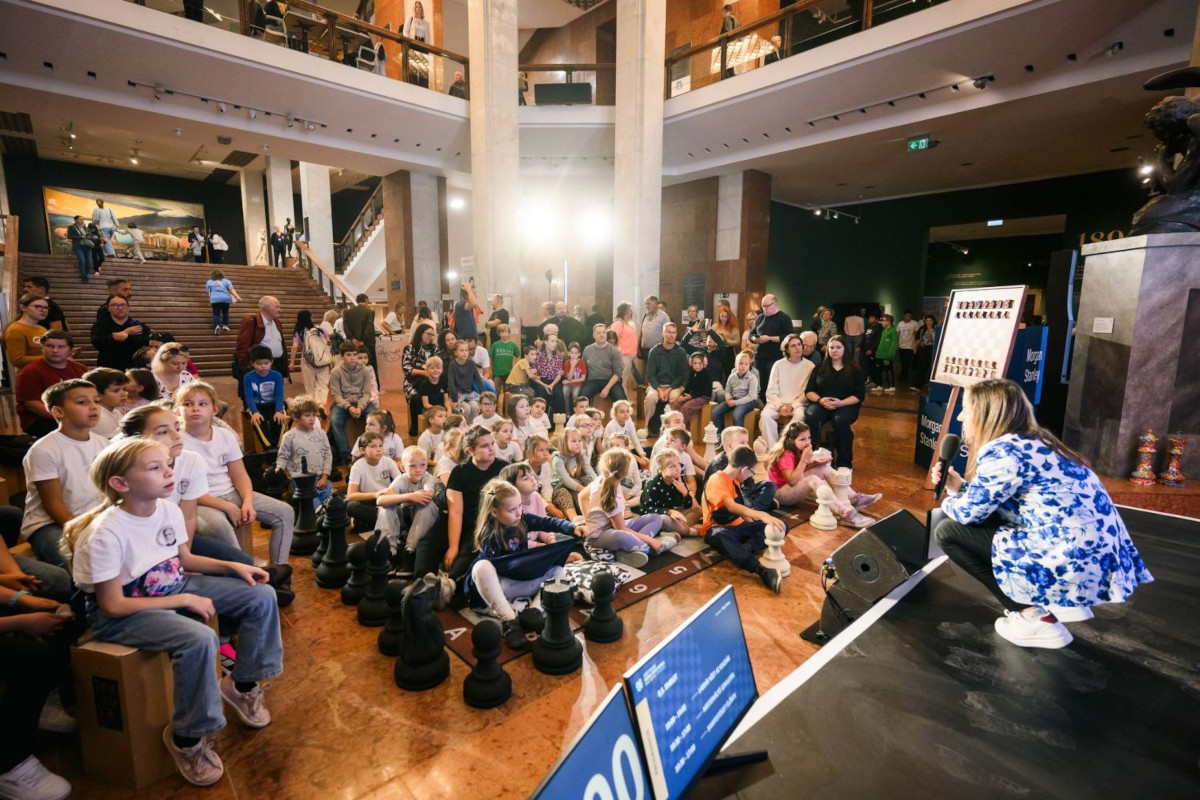
Attracting potential new generations of chess players! | Photos: Global Chess Festival
Chess, education and artificial intelligence
This year's programme ran from 10:00 to 17:30 and included both all-day activities and events at fixed times. Among the former were the Master Relay Simul, Live Chess Painting, the Chess Palace Adventure Trail, logic activities and opportunities for visitors to challenge experienced players. Timed events included tournaments, educational sessions, robot programming and a screening of the documentary Queen of Chess.
Several activities were directly connected to the festival's central theme. A session on Chess Palace and artificial intelligence in education was accompanied by programmes aimed at parents, while the main stage included a demonstration in which chess players faced AI models designed to reproduce aspects of their playing style. Other activities focused on observation, logic and distinguishing reliable information from misleading impressions.
 Become a master of chess strategy – get Robert Ris’s complete bundle now at a special price!
Become a master of chess strategy – get Robert Ris’s complete bundle now at a special price!Polgar also played a blindfold game against Hungarian grandmaster Gergely Antal, which ended in a draw. Her sister Sofia Polgar was among the guests and took part alongside Judit and GM Krisztian Szabo in the Master Relay Simul, in which several masters alternated in continuing the same games.
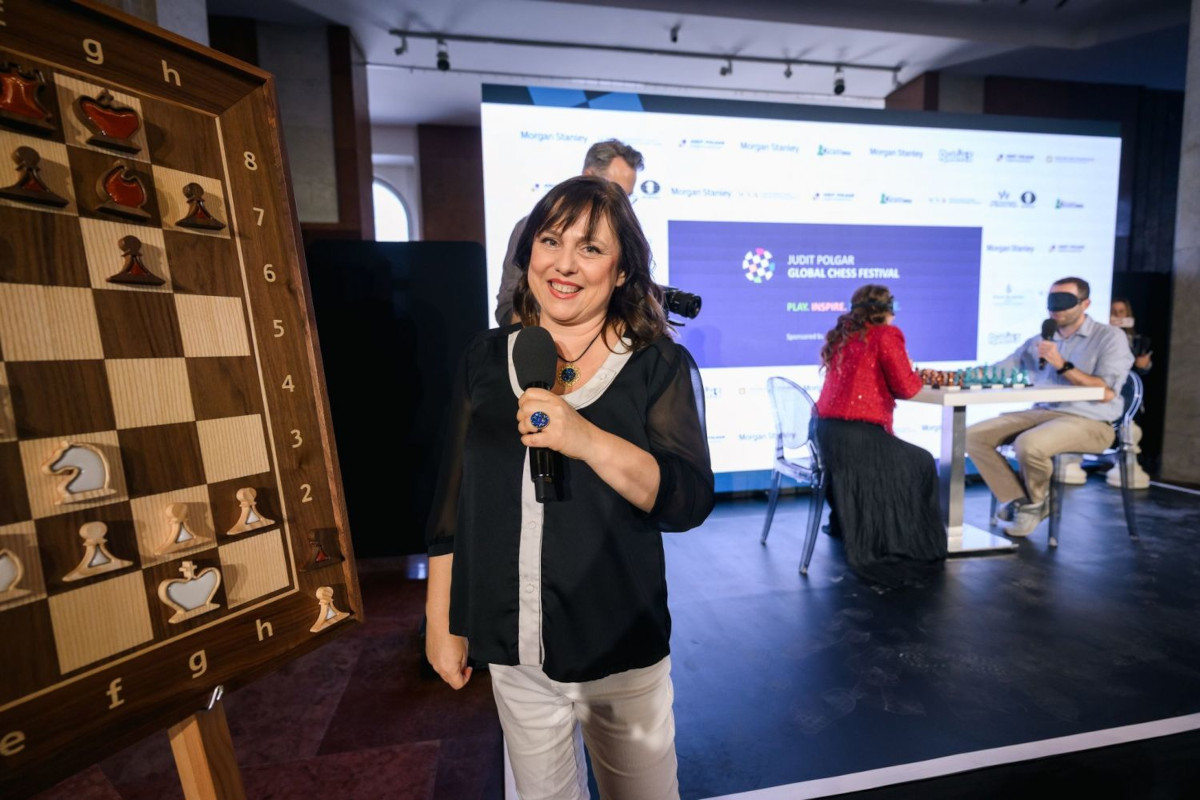
Sofia Polgar showing the moves of the blindfold encounter between her sister Judit and Gergely Antal | Photo: Global Chess Festival
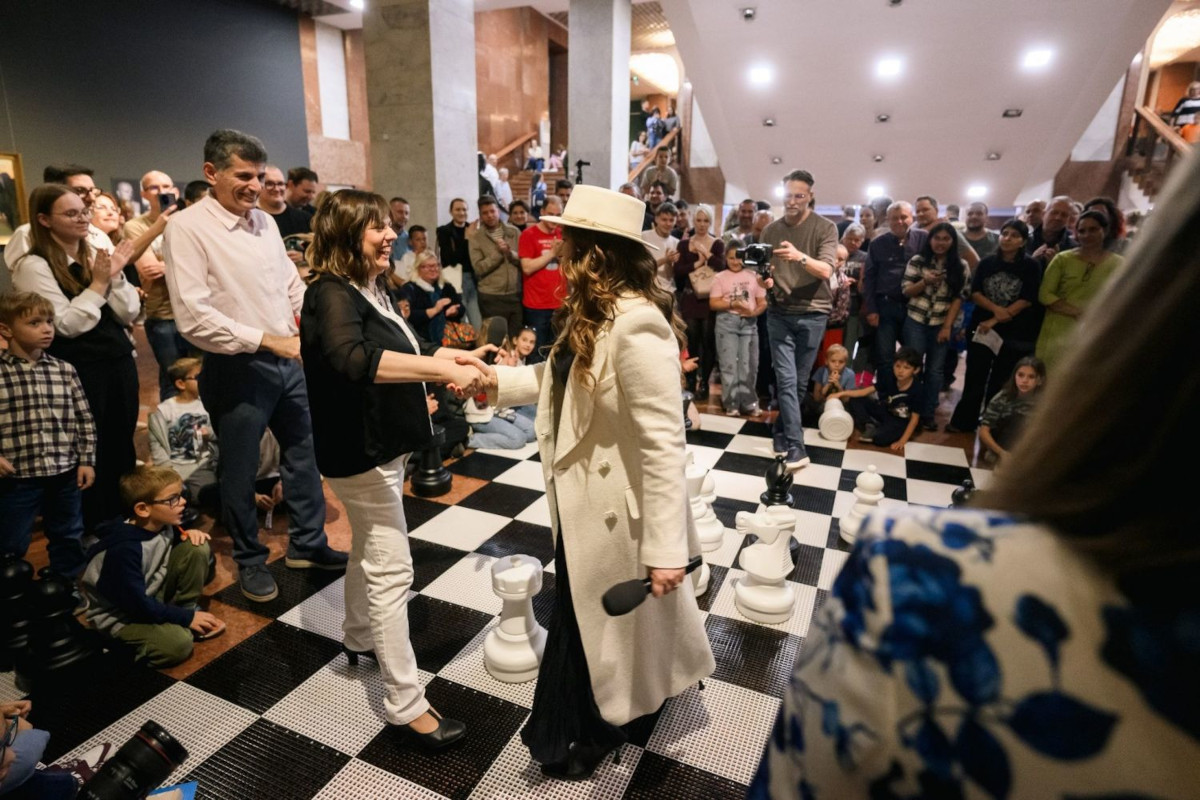
Two of the three Polgar sisters met in Budapest | Photo: Global Chess Festival
Five communities face Polgar
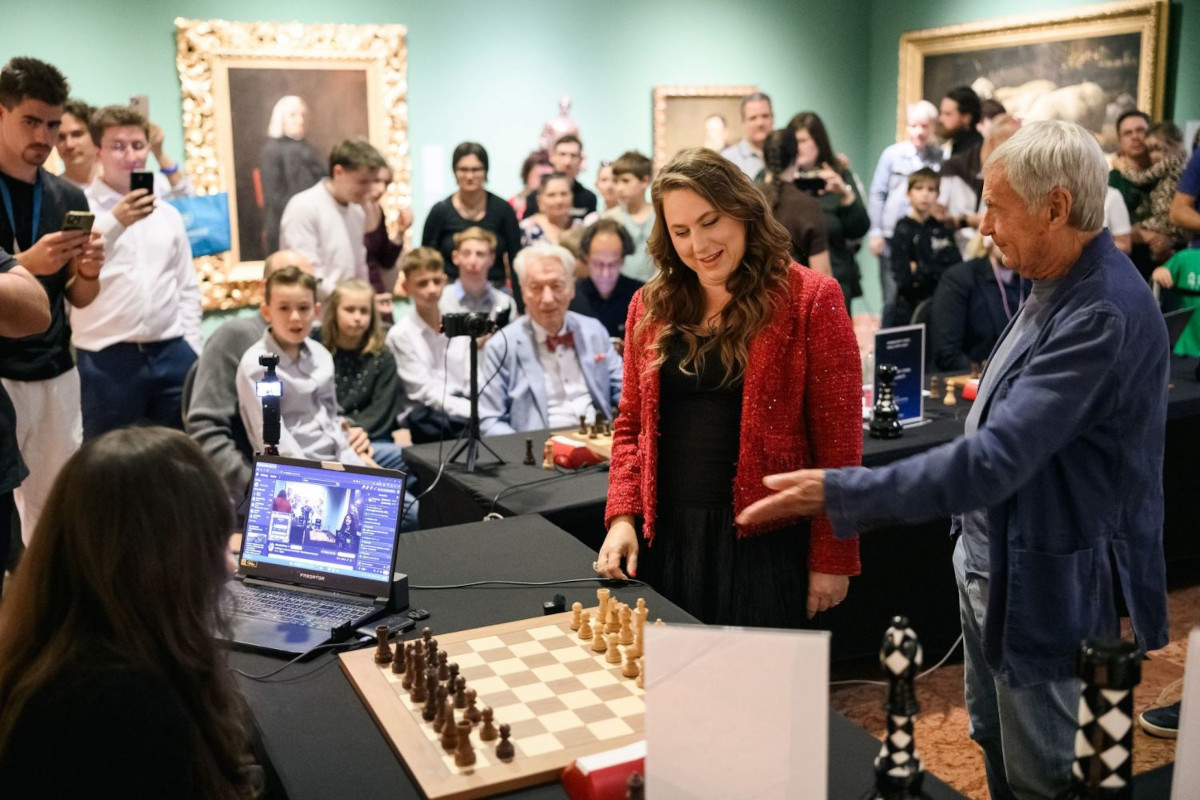
One of the main chess events of the day was the Community Chess Simul, staged on the first floor of the National Gallery. Rather than playing individual opponents in the usual simultaneous format, Polgar faced five communities, whose representatives could receive ideas and analysis from members following remotely. The event was broadcast online and hosted by IM Anna Rudolf.
Polgar finished the exhibition with 3½ points from 5 games, recording three wins, one draw and one defeat. Her only loss came against the Pietro Chess community, while the Chess Is For Everyone team held her to a draw. The other three encounters ended in Polgar's favour. The Hungarian Stars team, a group of intellectuals headed by neuroscientist Szilveszter E. Vizi, was unusual in that it played without assistance from an online community.
 In just 60 minutes, you will be well-equipped with a surprise weapon, which will take most of your opponents out of book right from the start.
The format continued an idea used in previous editions of the festival: combining players physically present in Budapest with much larger groups taking part remotely. The 2024 festival had already featured a hybrid community simul, while the 2026 version placed the participating groups directly opposite Polgar on five boards.
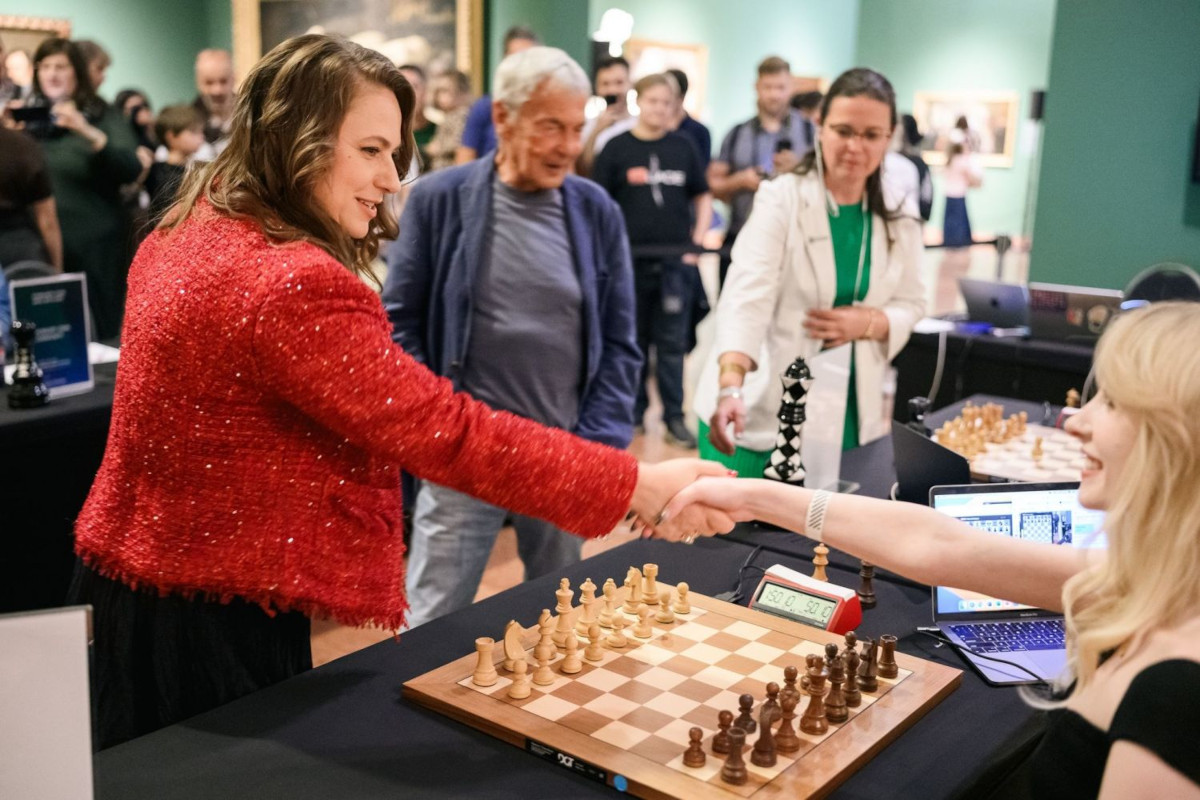
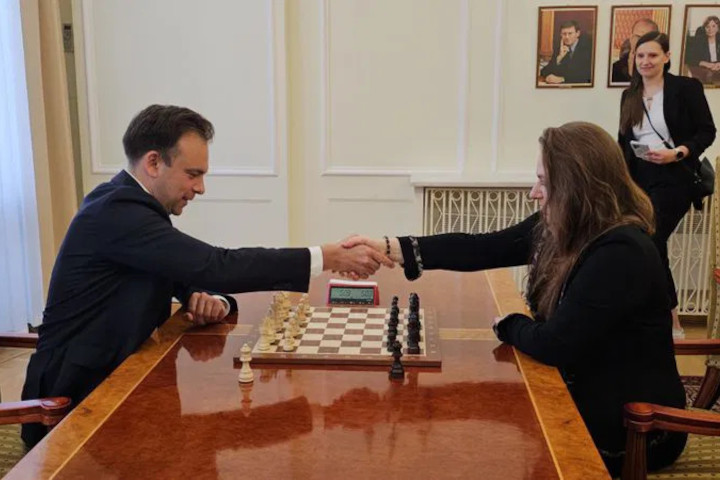
Judit Polgar shakes hands with Australian streamer Hannah Sayce ahead of their encounter (Sayce played with the help of her online community) | Photo: Global Chess Festival
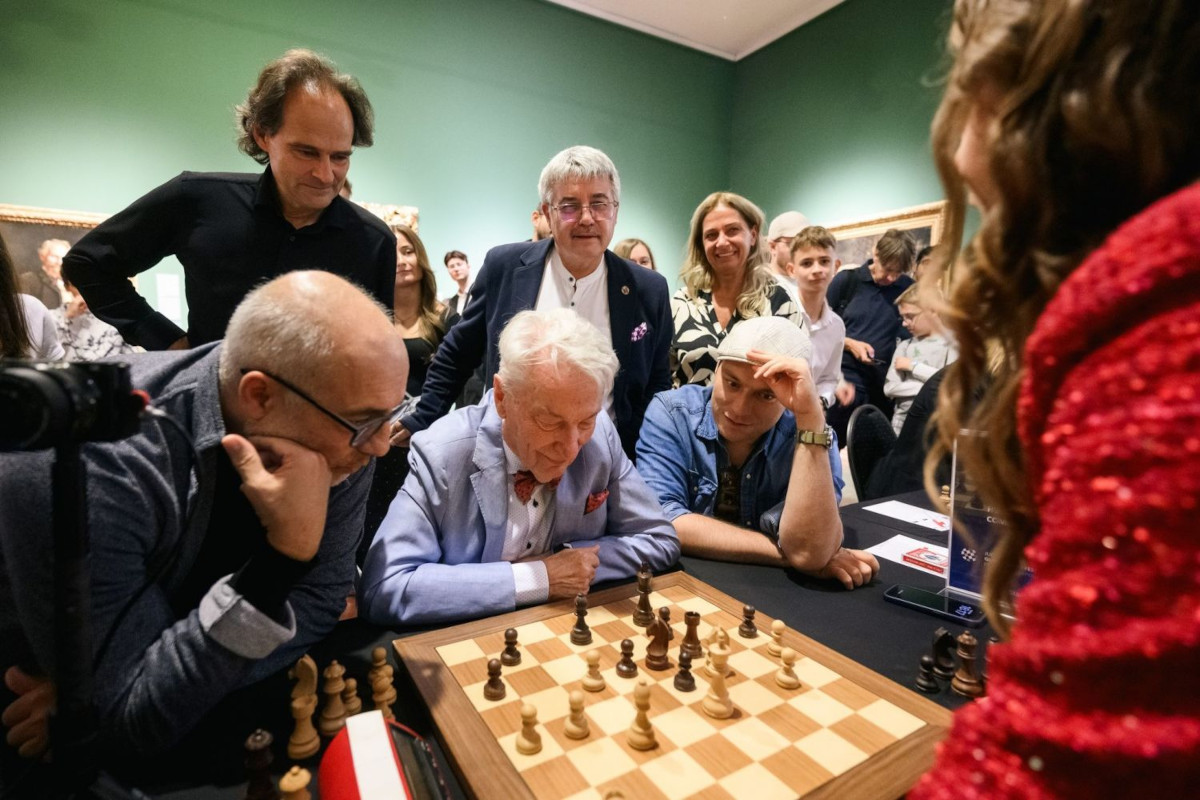
Neuroscientist Szilveszter E. Vizi leading the Hungarian Stars team in the simultaneous exhibition | Photo: Global Chess Festival
All games - Community Simul
Chess meets the Rubik's Cube
Another distinctive part of the programme was the RubikChess Tournament, which was opened to the general public for the first time. Organised in cooperation with the FIDE Commission for Women's Chess and with support from Rubik's, the competition brought together two activities closely associated with logic and pattern recognition.
Players competed in two-person teams over five rounds. In each round, one member played chess while the other solved a 3×3 Rubik's Cube, with the teams deciding beforehand which player would perform each task. The event was aimed primarily at amateur chess players, with a maximum rating of 1800, as well as cube enthusiasts. Ernő Rubik and Sofia Polgar were present for the opening.
 From Mating with a queen; a rook; two bishops; a knight and a bishop; to the basics of pawn endgames – here you will gain the necessary know-how to turn your endgame advantages into victories!
The tournament followed the introduction of RubikChess at the previous festival and was also represented on the main stage, where winners of the first competition demonstrated the format with commentary from Judit Polgar.
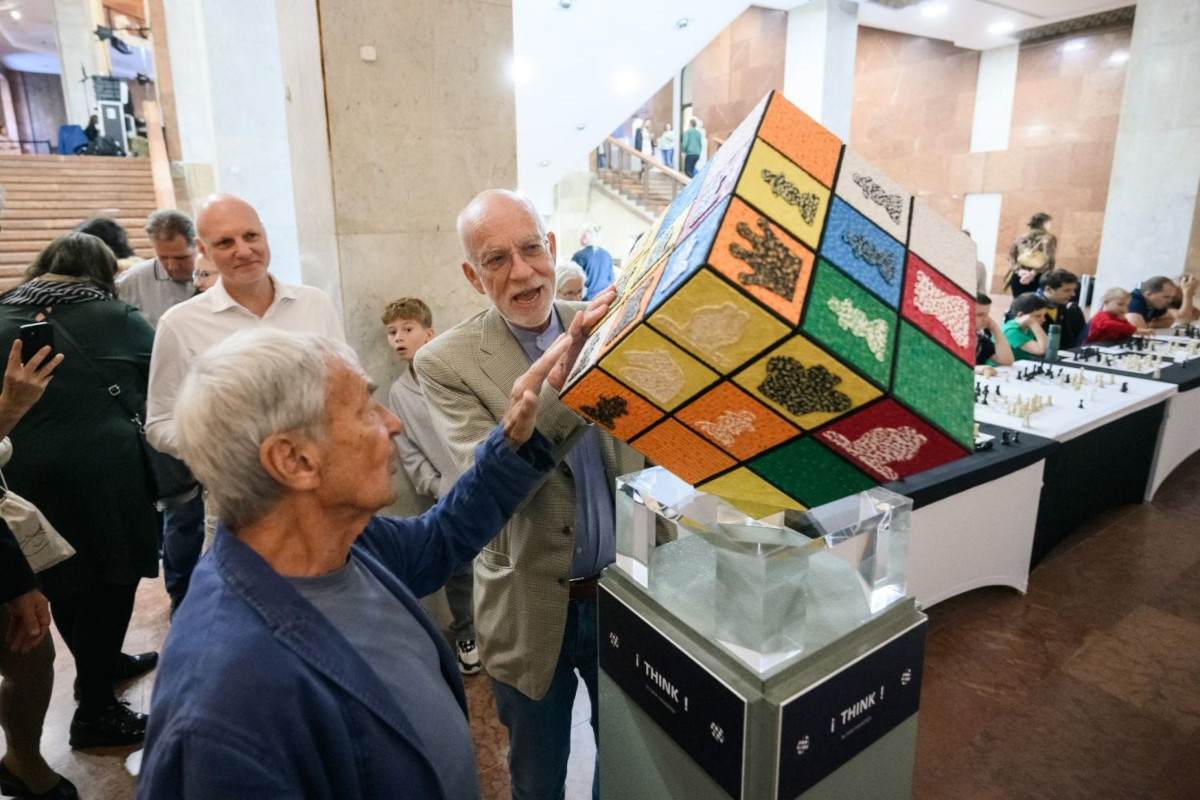
Rubik's Cube meets chess in Budapest | Photo: Global Chess Festival
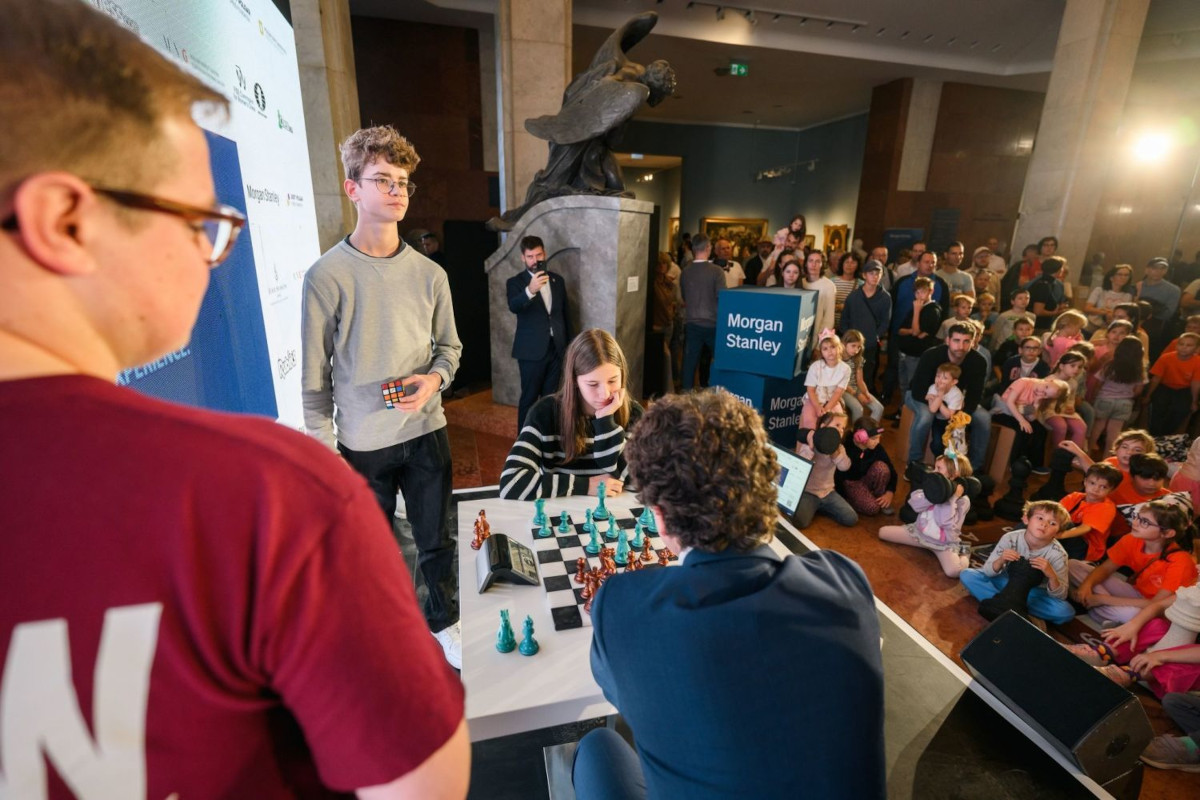
The RubikChess Tournament in progress | Photo: Global Chess Festival
Links