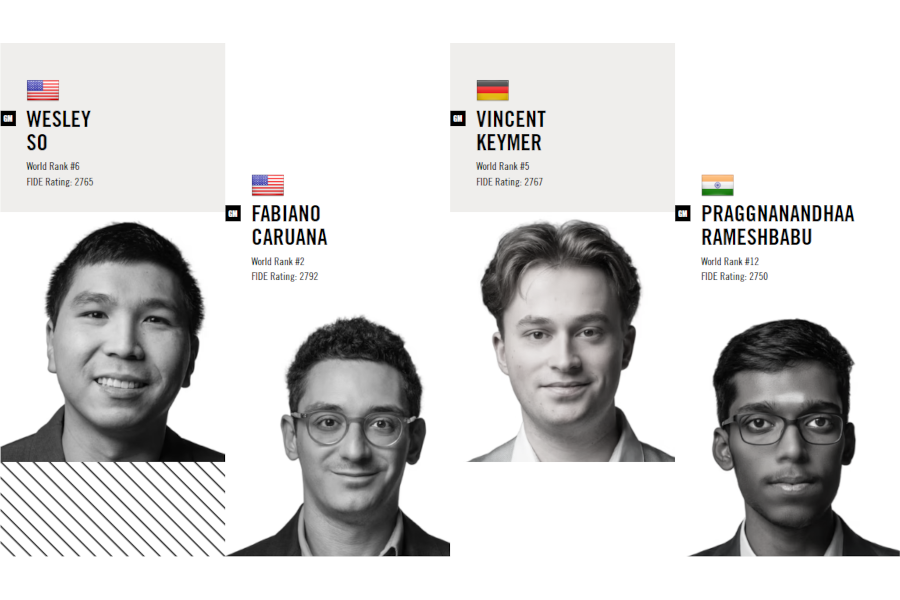
Classical games in the Grand Chess Tour Finals typically end in draws, and the first round of this year's edition once again followed that pattern. Both games played on Saturday evening ended drawn, although the outcome was not always so clear-cut over the course of the games.
Semifinals: Classical games #1
Both draws earned the players three points each in the tournament standings.
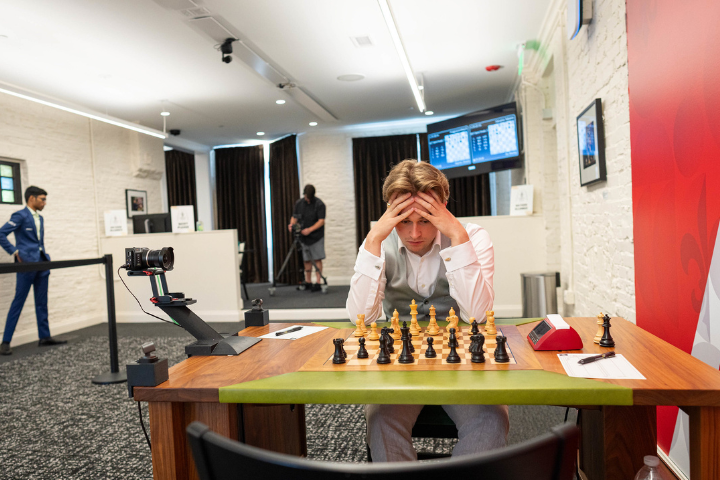
While the position between Wesley So and Fabiano Caruana remained largely balanced, matters became dramatic on the board between Vincent Keymer and Praggnanandhaa Rameshbabu.
Vincent Keymer 3 - 3 Praggnanandhaa
 Become a master of chess strategy – get Robert Ris’s complete bundle now at a special price!
Become a master of chess strategy – get Robert Ris’s complete bundle now at a special price!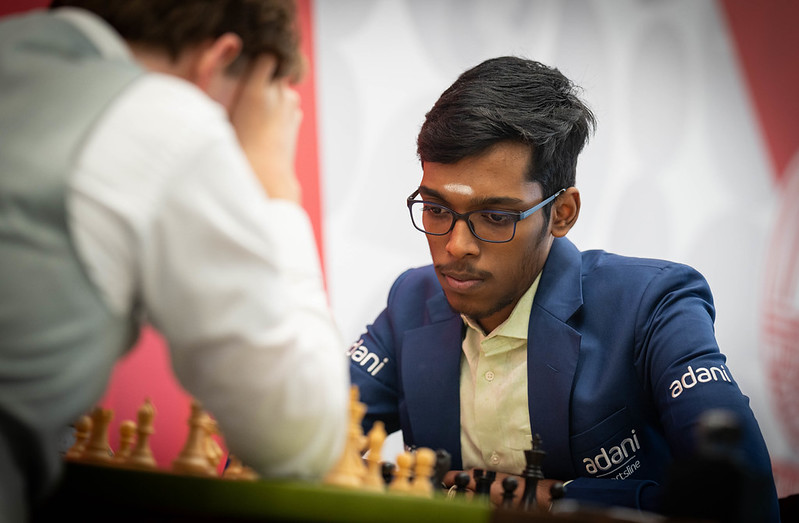
Praggnanandhaa Rameshbabu let his advantage slip in the endgame | Photo: Lennart Ootes
Keymer opened the game with the English Opening 1.c4. In the Symmetrical Variation, the players reached a position that has not been seen very often.
Keymer - Praggnanandhaa
 The Trompowsky is especially suited for faster time controls as you don‘t have to memorise endless lines of theory, and you push your opponent out of their comfort zone after your second move.
Nowadays, the list of requirements for an opening repertoire is long: being sound and sustainable; not requiring much memorisation; offering great attacking chances; making your opponent think early on etc… The time of finding a minimal advantage from the opening has passed, and we are better off with a more practical approach - simply understanding the position better than our opponent does. The Repertoire for White 1.d4 ... 2.Bg5! from IM Robert Ris answers all these requirements!
Free video sample: Introduction
Free video sample: 1.d4 Nf6 2.Bg5 e6 3.e4 Be7/d5/c5
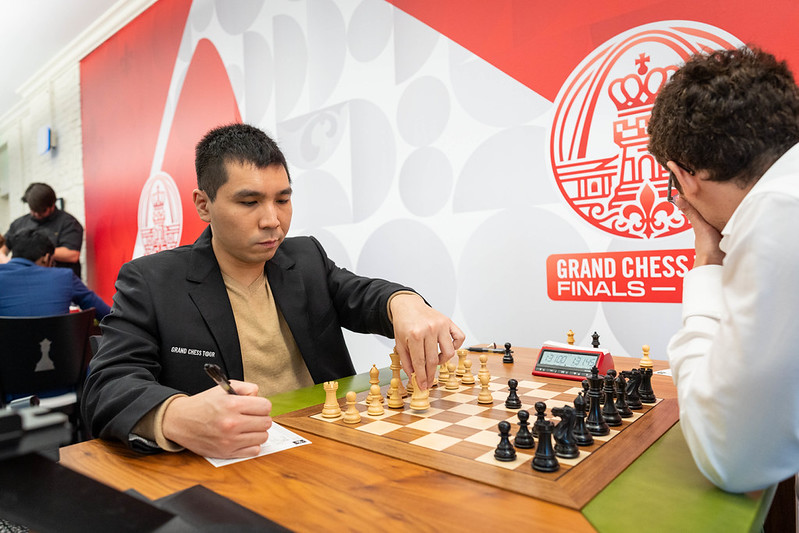
Wesley So and Fabiano Caruana exchanged material until the game ended in a draw (3-3) | Photo: Lennart Ootes
All games
Links
















.jpeg)