Alekhine Defense Four Pawns Attack
The Alekhine Defense is one of the most provocative opening systems for Black against 1.e4. By developing the knight to f6 as early as move 1, Black invites his opponent to occupy the centre with his pawns, in order to challenge it and exploit the weaknesses created by the earlier expansion. Although White can chose between various setups, the Four Pawns Attack (1.e4 Nf6 2.e5 Nd5 3.d4 d6 4.c4 Nb6 5.f4) is considered to be critical test for its viability.
In the Lindores Abbey Rapid Challenge World Champion Magnus Carlsen used this weapon with Black in his game vs. Fabiano Caruana. In this episode of the Fast & Furious show I will have a closer look at the current state of this particular variation and explain the main ideas for both sides of this ambitious system.
 The Philidor structure (White pawns on d4 and e4, Black pawns on d6 and e5), is a fundamental position in the open games. In his new training course, IM Sam Collins shows you just how much explosive power is packed into this apparently simple structure.
But first a warm-up exercise: Which move best fits with Black's opening strategy? Back it up with some concrete calculation!?
Move the pieces on the live diagram – solution below!
This week's show
 When choosing an opening repertoire, there are days when you want to play for a win with Black, when you want to bear down on your opponent’s position with a potentially crushing attack. The Najdorf is perfect for just such occasions. Strategy, combinations, attack and defence, sacrifices and marvellous manoeuvres — exciting chess is all about the Najdorf!
Robert is on air every other Thursday at 17:00 UTC (19:00 CEST / 15:00 EST)
Watch previous shows
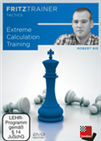 Special attention will be paid to Intermediate Moves, Quiet Moves, Sacrifices on Empty Squares, Mating Patterns, Ignoring Opponents Threat, Calculation in Defence and Method of Comparison. Plus 50 interactive examples to test your knowledge.

Many more Fast and Furious episodes are available in ChessBase Videos
Solution to today's problem
Links