
Press release by FIDE
The ChessMom Project has doubled in size since its debut in Budapest, giving 12 players the opportunity to compete at the 2026 Chess Olympiad while travelling with their young children and caregivers.
When the 46th Chess Olympiad got underway in Samarkand, more than 3,000 players, captains and officials from around the world came together for one of the biggest events worldwide.
After team Angola was finally able to join for the third round, the confirmed official numbers are outstanding: 205 open and 189 women teams. A record number of teams and the biggest FIDE Chess Olympiad in history!
Among them are a group of players whose challenge extends beyond the chessboard: they are competing at the highest level while also caring for very young children.
An Olympiad is an intense three-week experience. Players spend long hours preparing, competing and recovering between rounds, often travelling thousands of kilometres from home. For a mother with a baby or toddler, those demands add another layer of organisation to an already rigorous professional environment.
The ChessMom Project is designed to remove at least one of those barriers: the need to choose between being present for one's child and representing one's country on the international chess stage.
Launched as a pilot initiative at the 2024 Chess Olympiad in Budapest, ChessMom was created to address a practical but often overlooked challenge facing professional women chess players: how to continue competing internationally after becoming a mother.
"It's a huge challenge for me to be a mother and at the same time continue competing in chess events. Playing an Olympiad is very important for me: it's not easy, but it can be done thanks to the support of programs such as ChessMom", said WIM Zenia Corrales, from Mexico.
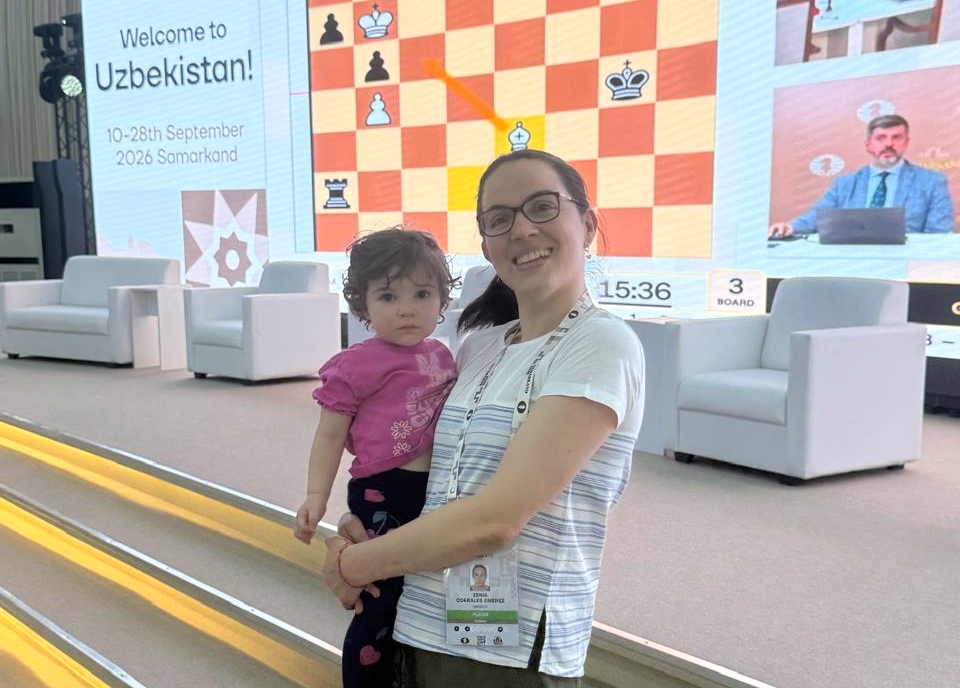
Zenia Corrales
The principle behind the project is straightforward. FIDE provides financial support towards the travel costs of a caregiver accompanying the player and her child, and the expansion has also been visible in the number of beneficiaries.
The response to the pilot was overwhelmingly positive. Additionally, for Samarkand 2026, the age limit was extended to children under two, recognising that the practical challenges of combining elite competition and childcare do not disappear after a baby's first birthday.
"The ChessMom project has allowed me to use my time more wisely and to train more effectively. I have realised that becoming a mother doesn't mean giving up my dreams as a chess player", said WIM Bayarmaa Bayarjargal from Mongolia.
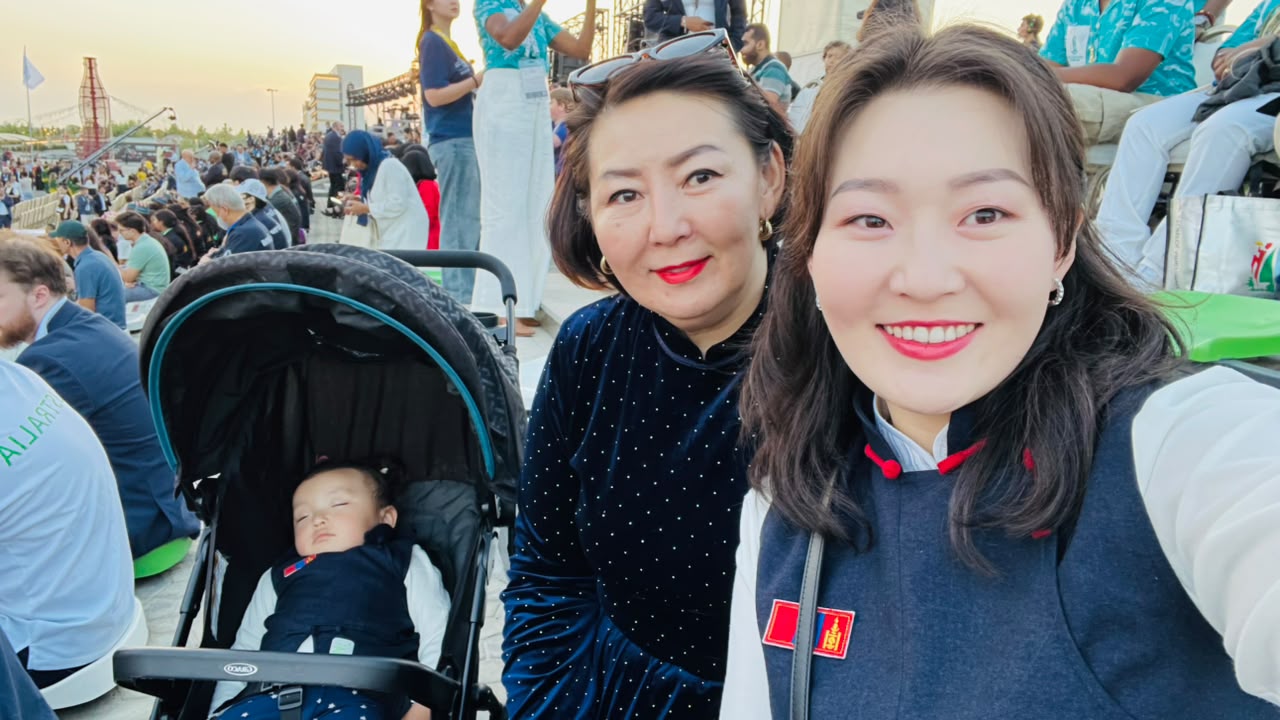
Bayarmaa Bayarjargal
Twelve players from different parts of the world have been selected:
For the players themselves, the experience is about much more than having a caregiver nearby. It is about being able to remain part of the international chess community during an important stage of both their sporting and personal lives.
"It's very difficult to travel with a baby and keep the motivation to play chess. Motherhood has changed my view on chess in a way – before, when I would lose a game, I would be very upset, and now it's not so important. Even so, when I lose, it's still not easy to go to sleep!" said GM Marie Sebag (France).
"The program is very important to mothers: ten years ago, I couldn't play the Baku Olympiad because my first baby was only three months old", Sebag added.
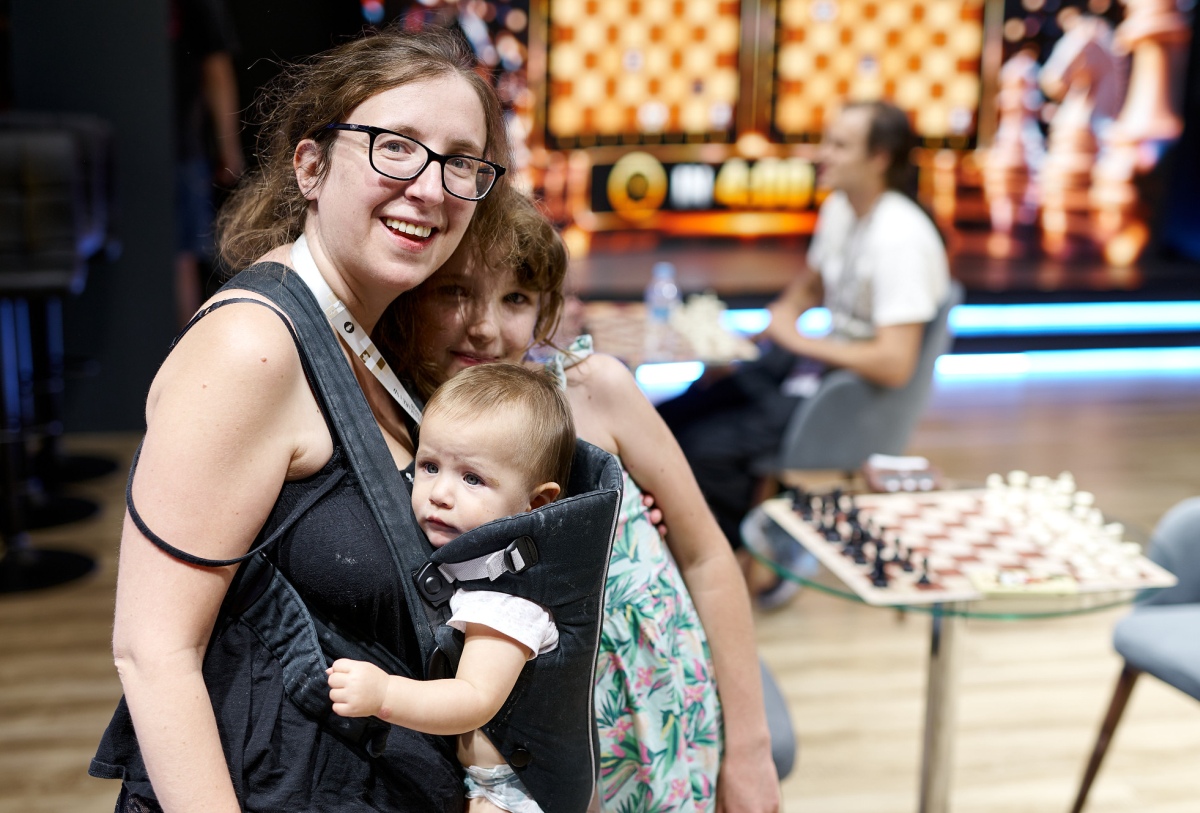
Marie Sebag | Photo: Rafal Oleksiewicz / FIDE
At the end of the day, ChessMom is built around a simple idea: the chessboard and family life should not have to be competing priorities – motherhood does not have to mark the end of a professional chess journey. One of the mothers, WIM Elisabeth Hapala, from Austria, is married to GM Fernando Peralta, representing Argentina, and both of them are participating in the Olympiad!
There is also an important message for the generations coming through behind them. The presence of mothers with their children at one of the world's largest sporting events demonstrates that a professional chess career does not necessarily have to follow a single path - and that becoming a parent does not have to mean stepping away from elite competition.
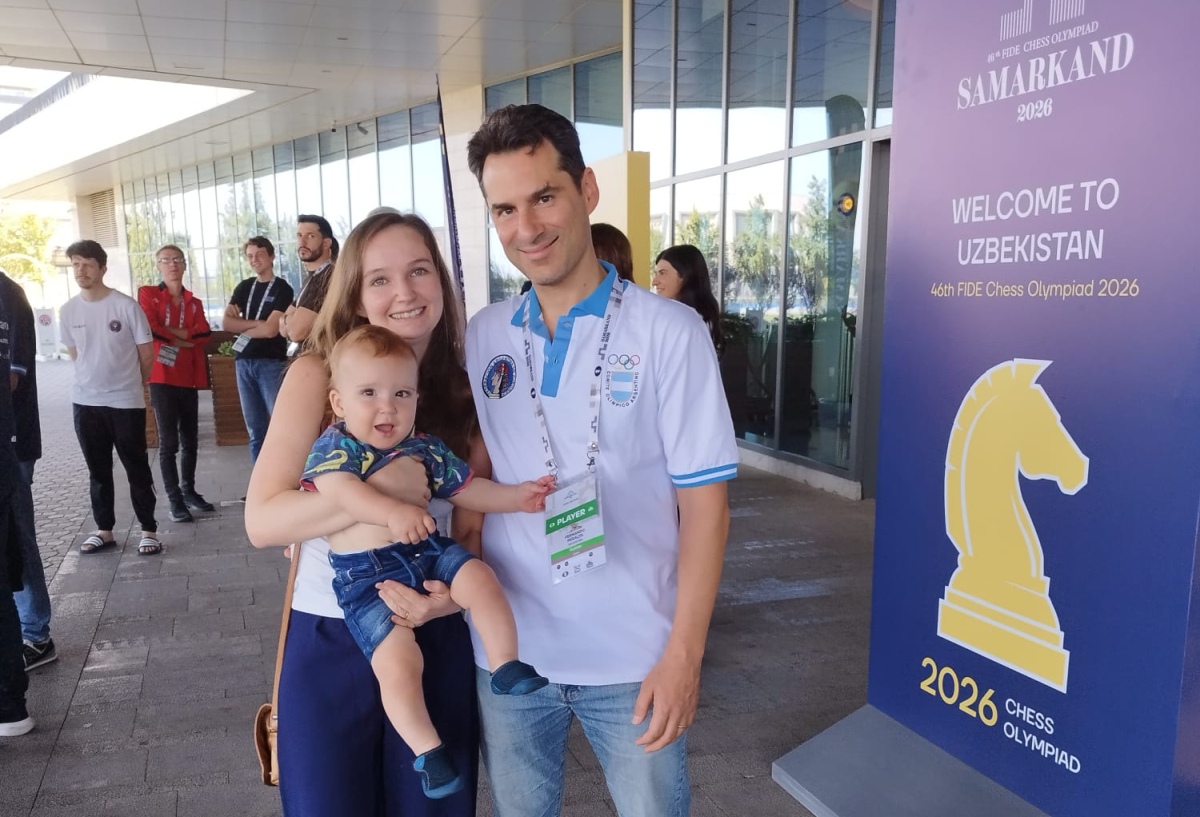
Elisabeth Hapala and Fernando Peralta


| Advertising |










.jpeg)