.jpeg)

Three of the four matches between the co-leaders produced decisive results in round five of the open section at the Chess Olympiad in Samarkand, leaving India, Uzbekistan and Germany tied for first place on a perfect 10/10 match points.
India defeated the Netherlands 3–1, Uzbekistan swept Hungary 4–0 and Germany beat top seeds United States 2½–1½. The remaining clash among the leaders, China v. Armenia, ended 2–2 after all four games were drawn.
Germany's victory was the standout result of the day. Despite entering the Olympiad as the fifth seeds, they were lower-rated on all four boards against the United States. The largest rating gap came on board four, where Alexander Donchenko was exactly 100 points below Levon Aronian.
Vincent Keymer v. Fabiano Caruana and Aronian v. Donchenko both ended relatively quickly in draws. The latter nevertheless featured an interesting theoretical battle in the opening.
The decisive result for Germany came on board two, where Frederik Svane defeated Hans Niemann. Svane demonstrated strong opening preparation, obtaining a favourable position before finding the key tactical blow 27.Nc5!
Black was already busted before this good-looking knight jump, but this is the most efficient way to make the most of White's advantage. 27...dxc5 fails to 28.dxc5+, with a discovered check and two remarkable strong connected passed pawns. Instead, Niemann went for 27...Qc8, but in this case, White gets to play the forced 28.Rxe7 Bxe7 29.Ne6+, with a dominating position.
The 22-year-old German GM later explained that he was pleased to see the system appear on the board, having previously used the same setup to defeat Michael Adams in the Bundesliga - a game he considers as perhaps the best of his career.
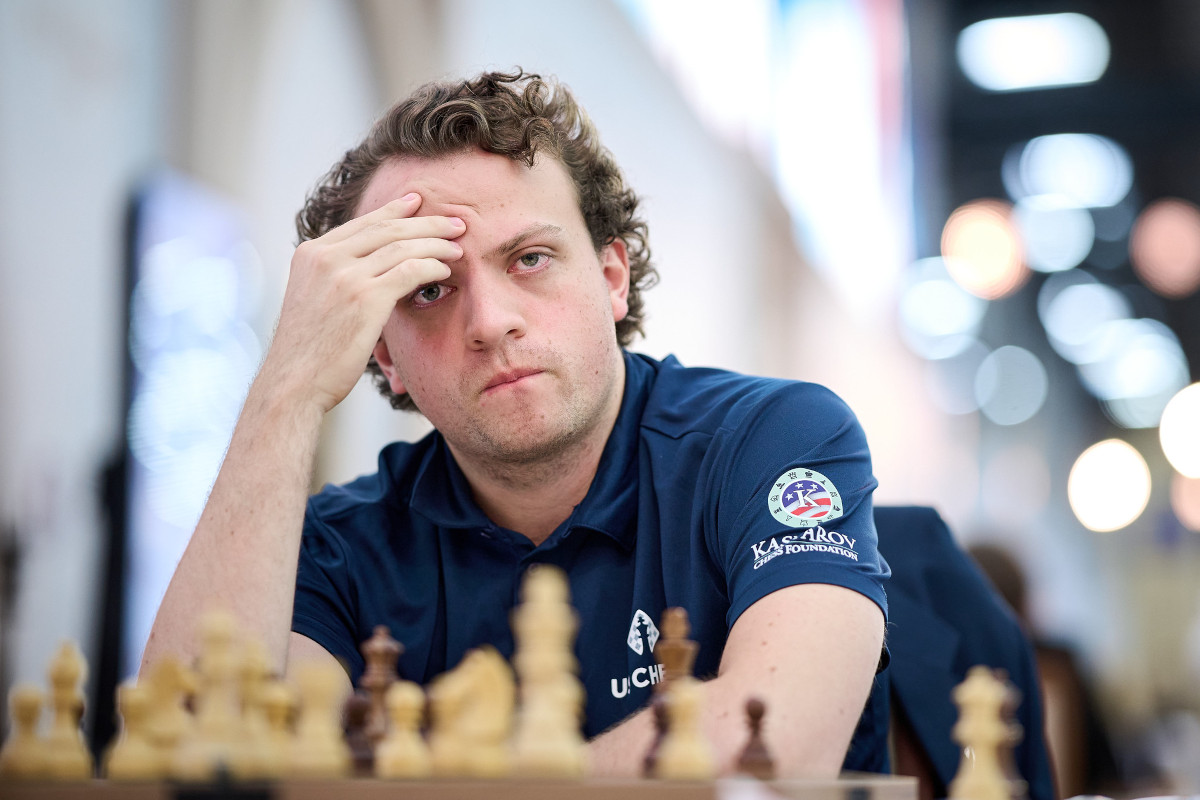
Hans Niemann | Photo: Rafal Oleksiewicz / FIDE
By the time Niemann resigned on move 40, the remaining game between Wesley So and Matthias Bluebaum was still in progress. So continued pressing in an endgame with queen and three pawns against rook, bishop and two pawns, but the position was objectively balanced.
Bluebaum, a strong technical player, maintained the fortress and secured the draw on move 54, giving Germany the 2½–1½ victory.
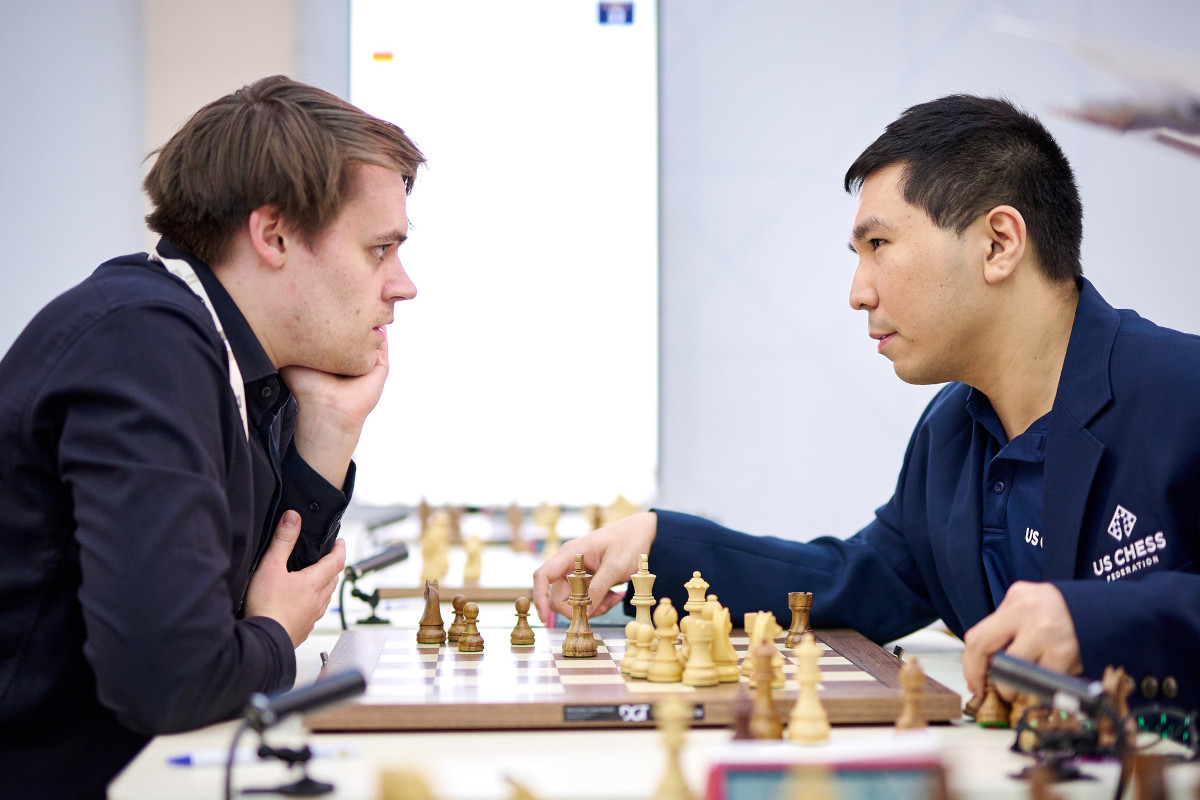
Matthias Bluebaum and Wesley So soon after agreeing to a draw on board two of the crucial Germany v. United States match | Photo: Rafal Oleksiewicz / FIDE
India collected a more comfortable 3–1 win over the Netherlands, with victories from Praggnanandhaa Rameshbabu and Gukesh Dommaraju.
Pragg defeated Anish Giri, who had entered the round with a perfect 4/4 score. Their game developed into a sharp struggle in which Giri at one stage generated strong attacking chances after correctly sacrificing a bishop on h3, but Praggnanandhaa eventually prevailed.
Gukesh scored India's other win against Erwin l'Ami on board four, taking advantage of a middlegame blunder that cost the Dutch player the exchange.
23.f4? is bad due to 23...c3, attacking the bishop while vacating the c4-square for the bishop. There followed 24.fxe5 Bc4 25.Qe3 fxe5 26.Bxc3 (26.Rxb1 is worse due to 26...cxb2 27.Rxb2 Ra1+ -+) Bxf1 27.Kxf1 Ra1+ 28.Ke2 and Black emerges with an exchange to the good and the safer king.
The reigning world champion has played in all five rounds for India, with four wins and a draw to his name. After briefly falling below the 2700 rating mark in the live ranking, he is now the top scorer for the defending champions and a favourite to get individual gold on board four.
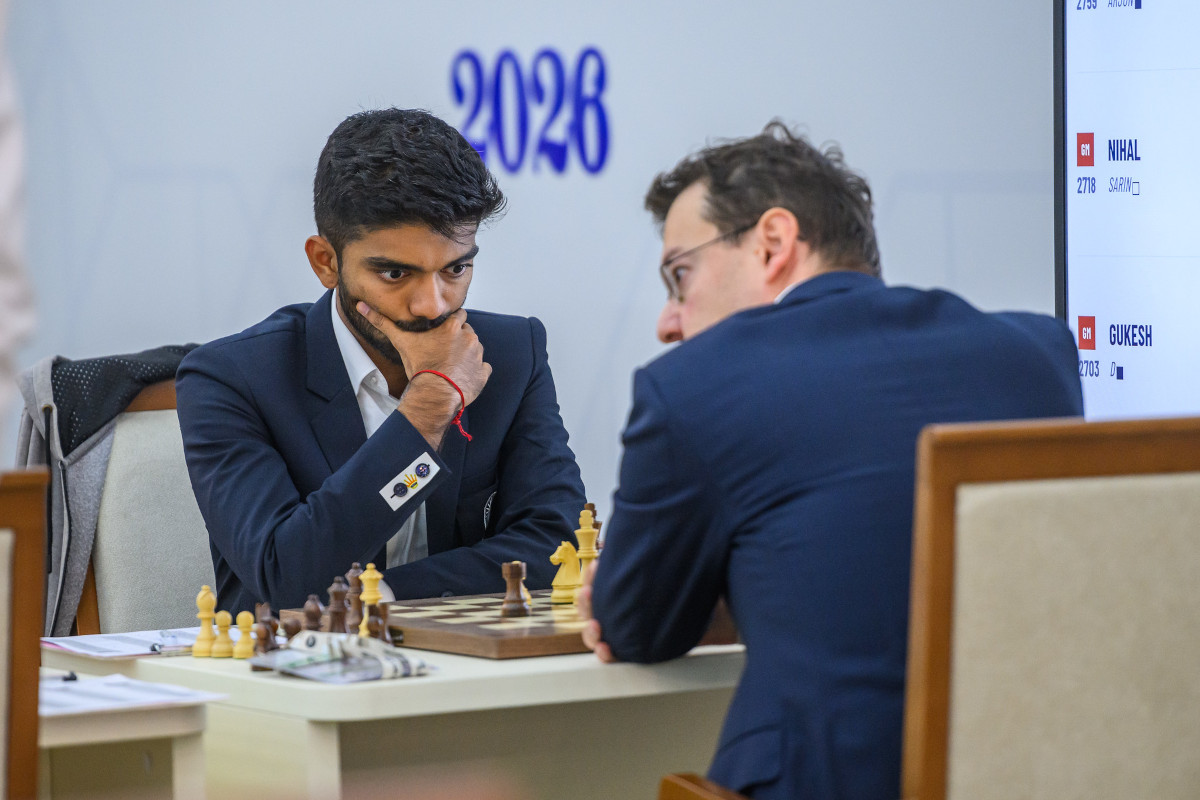
Gukesh Dommaraju converting his advantage | Photo: Michal Walusza / FIDE
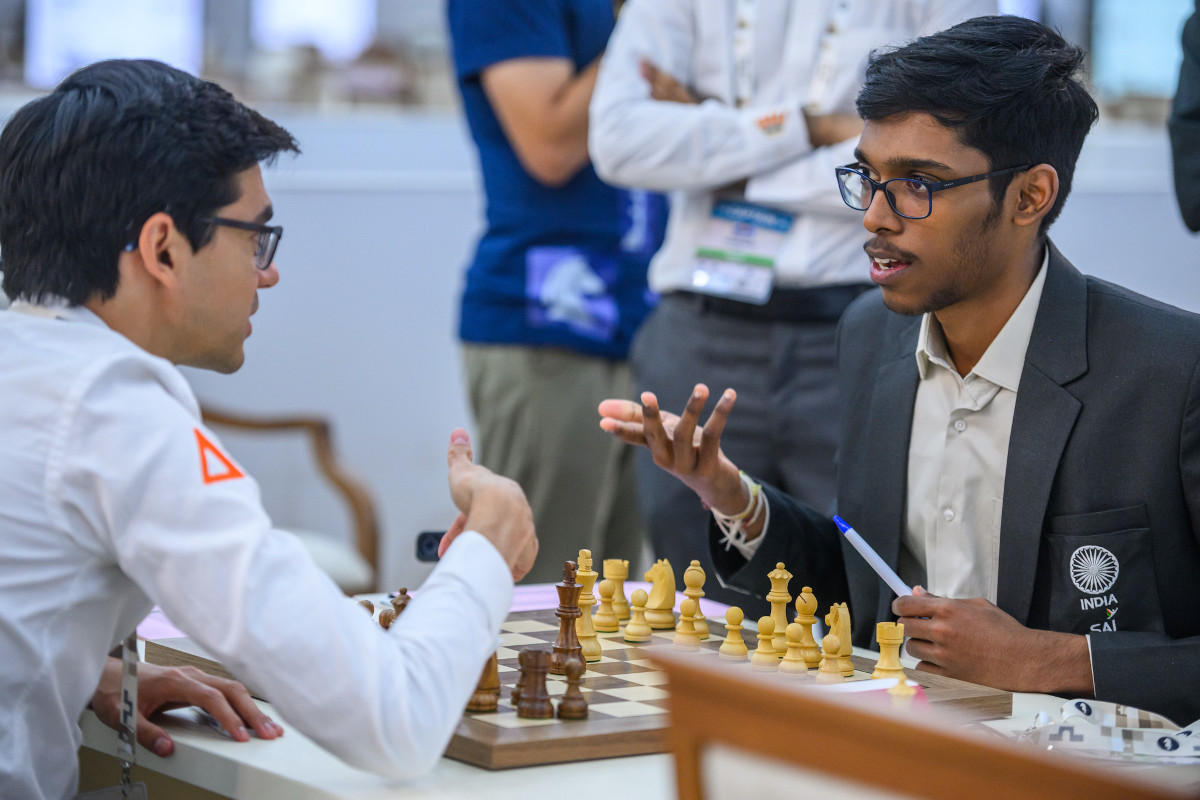
Elite GMs Anish Giri and Praggnanandhaa Rameshbabu | Photo: Michal Walusza / FIDE
Uzbekistan were even more convincing, beating Hungary 4–0. The two Nodirbeks struck first in games that seemed headed to end with Uzbek wins rather quickly. They both had the black pieces: Nodirbek Abdusattorov defeated Richard Rapport, while Nodirbek Yakubboev beat Benjamin Gledura.
Those early defeats put additional pressure on Peter Leko and Gleb Dudin, who were playing black on the remaining boards. Both eventually lost as Uzbekistan completed the clean sweep.
Javokhir Sindarov had little trouble converting this materially balanced yet superior endgame against Peter Leko. Coincidentally, Sindarov will be the challenger for the World Championship in the first match for the crown taking place in Switzerland since Peter Leko challenged Vladimir Kramnik in 2004 (that match ended drawn and, according to the rules still in place back then, Kramnik kept the title).
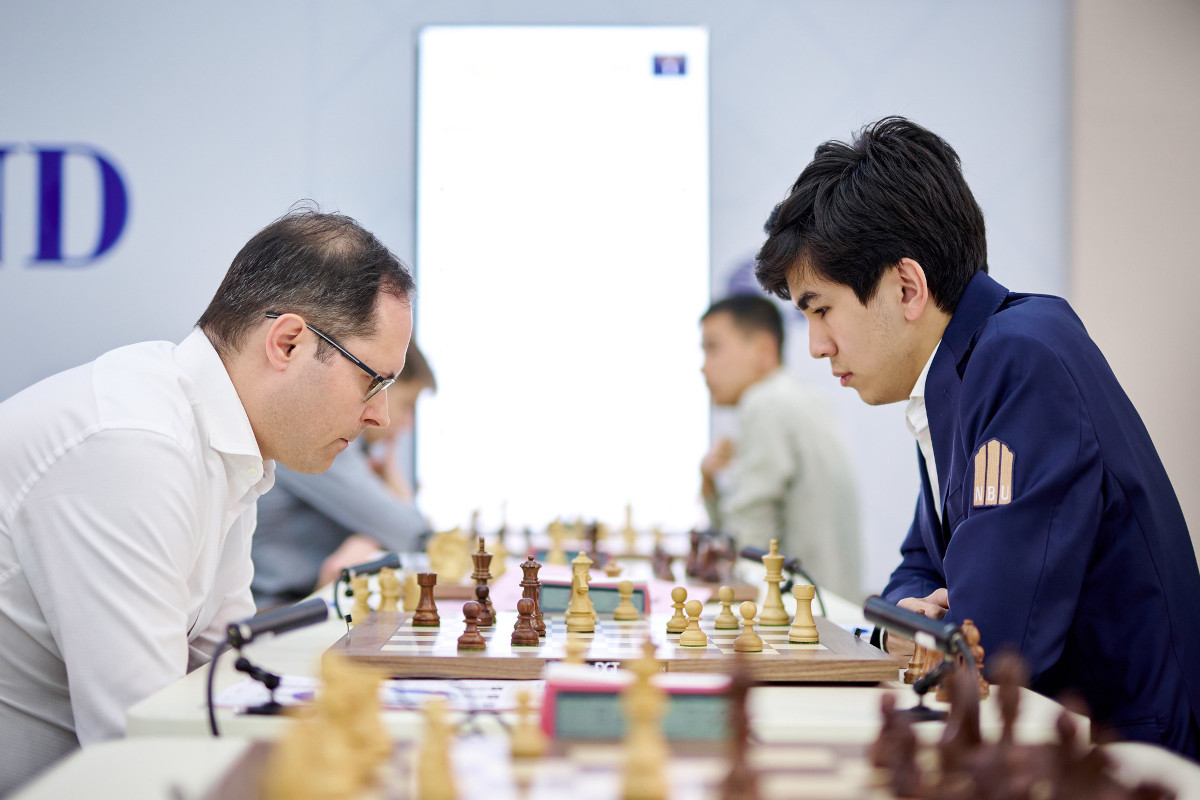
Clash of generations: Peter Leko v. Javokhir Sindarov | Photo: Rafal Oleksiewicz / FIDE
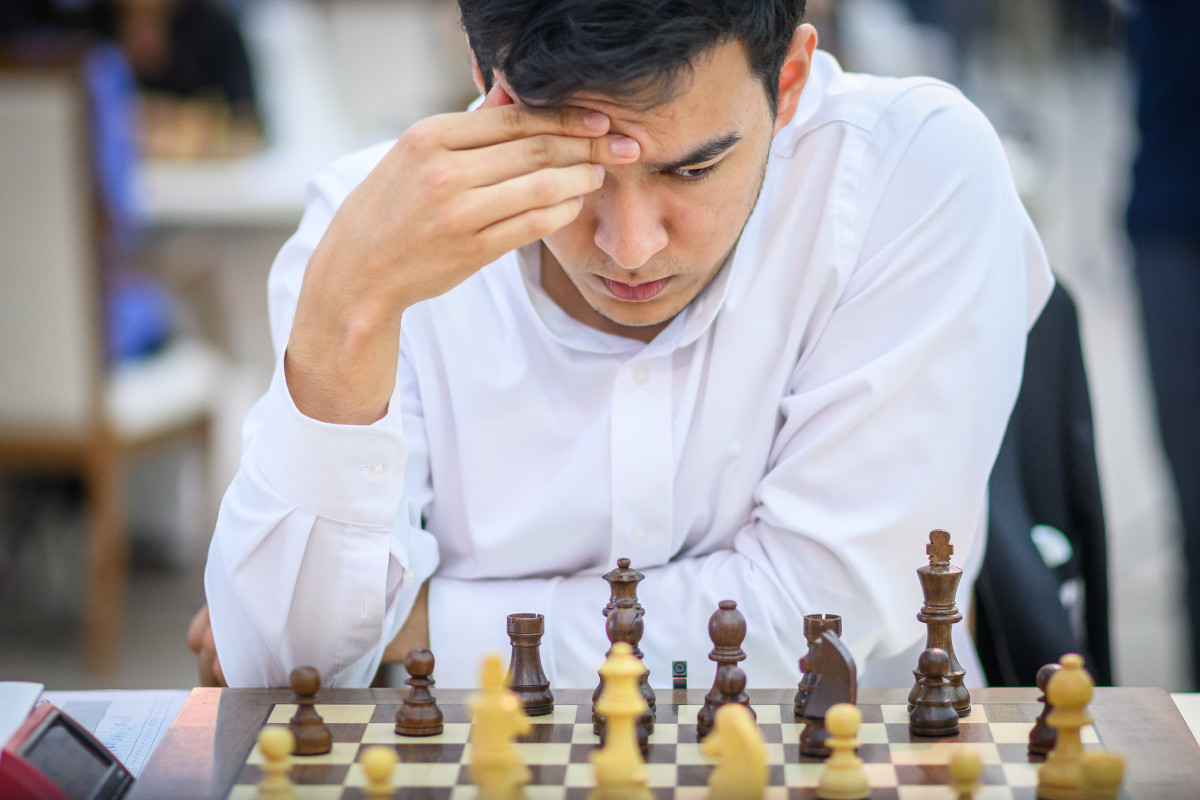
Nodirbek Abdusattorov | Photo: Michal Walusza / FIDE
China and Armenia remained unbeaten after drawing all four games in their match.
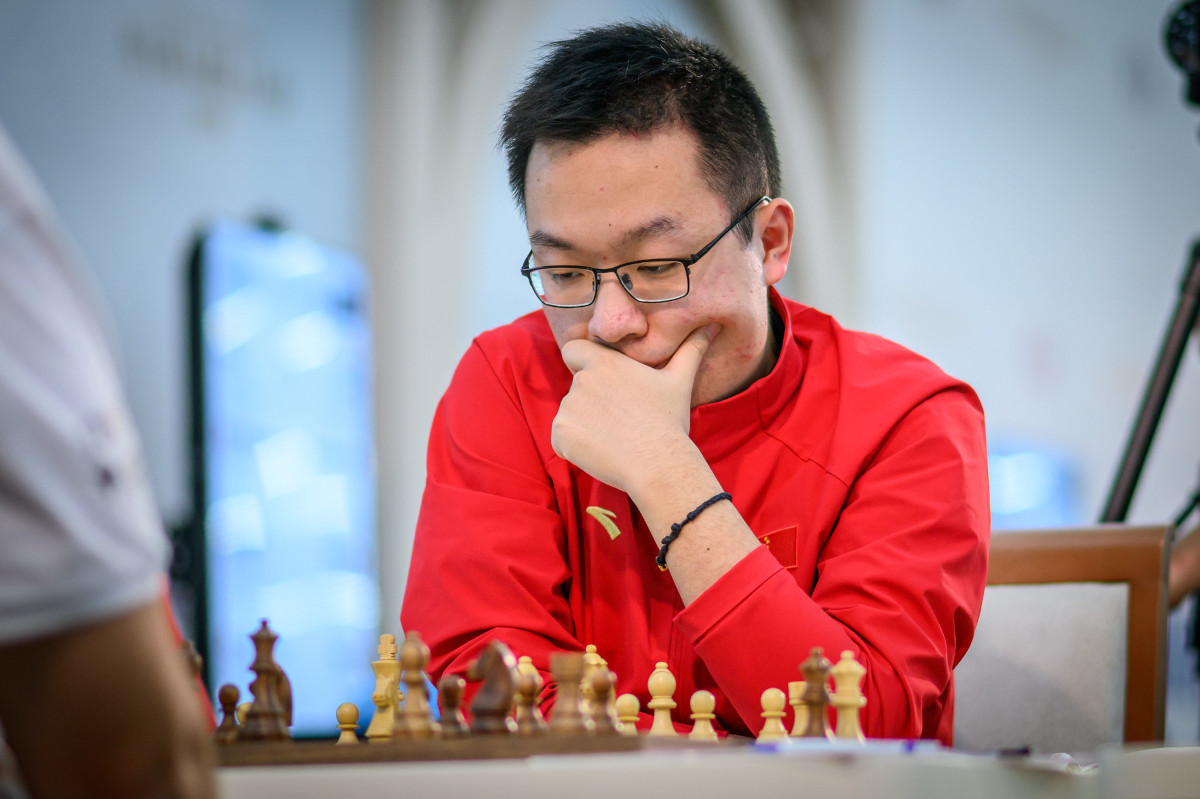
The closest encounter to producing a decisive result came on board one, where Ding Liren gained the upper hand against Haik Martirosyan in the late middlegame. Martirosyan defended resourcefully, however, and eventually secured the half-point Armenia needed to keep pace just behind the leaders.
Here Ding decided to give up the exchange on d4 and Martirosyan ended up demonstrating that Black can defend the position with the two rooks against the queen. Instead, 34.b3 was playable according to the engines, keeping the tension, but surely playing such a move is difficult for a human being, with the bishop defending the crucial f2-square.
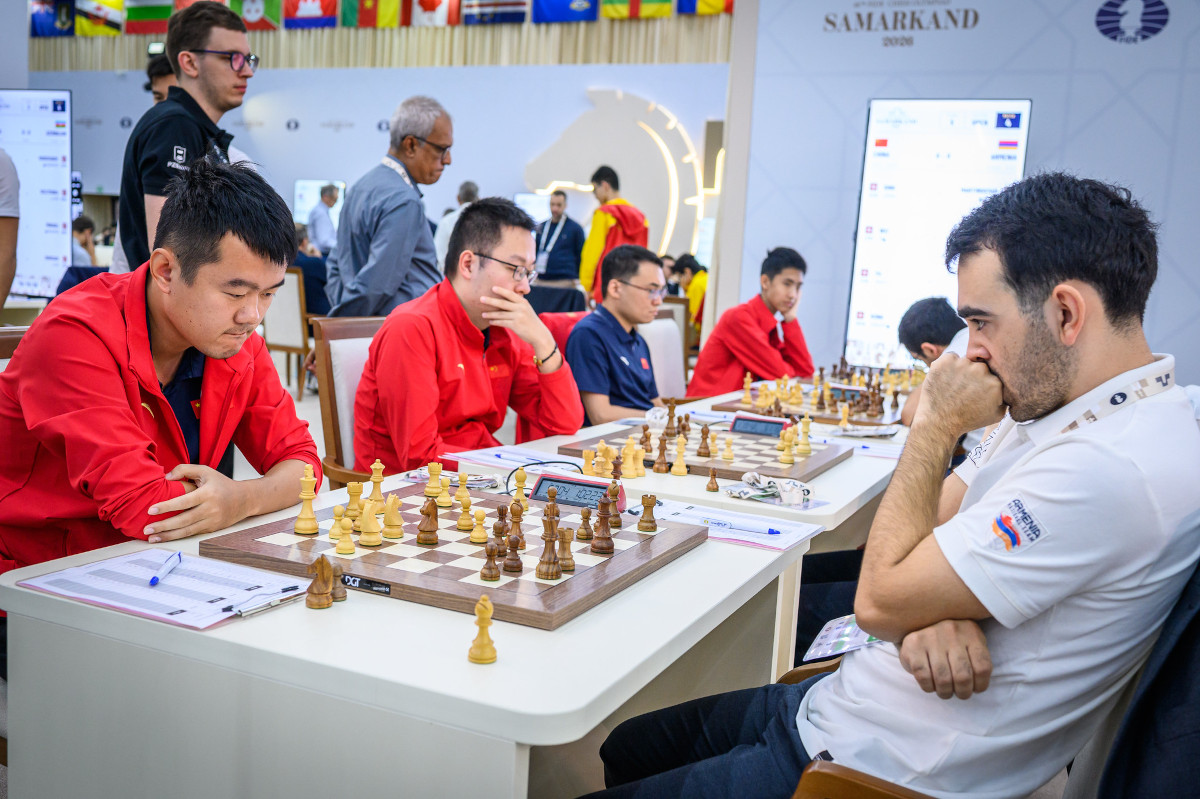
China v. Armenia with Ding Liren v. Haik Martirosyan on the first board | Photo:Michal Walusza / FIDE
China and Armenia are now on 9/10 match points as the closest chasers behind the leaders, alongside France, Iran and England.
France defeated Czechia 2½–1½ thanks to Jules Moussard's victory on board four. Iran beat Lithuania 3–1, with wins from Bardiya Daneshvar and Mahdi Gholami, while England edged Georgia 2½–1½ after Luke McShane scored the only decisive result on board four.
A further 21 teams stand another match point behind. The lowest-seeded sides in that group are 61st-seeded Tajikistan, who defeated Slovakia 2½–1½ in round four, and 52nd-seeded Indonesia, who beat Italy 3–1 in the same round.
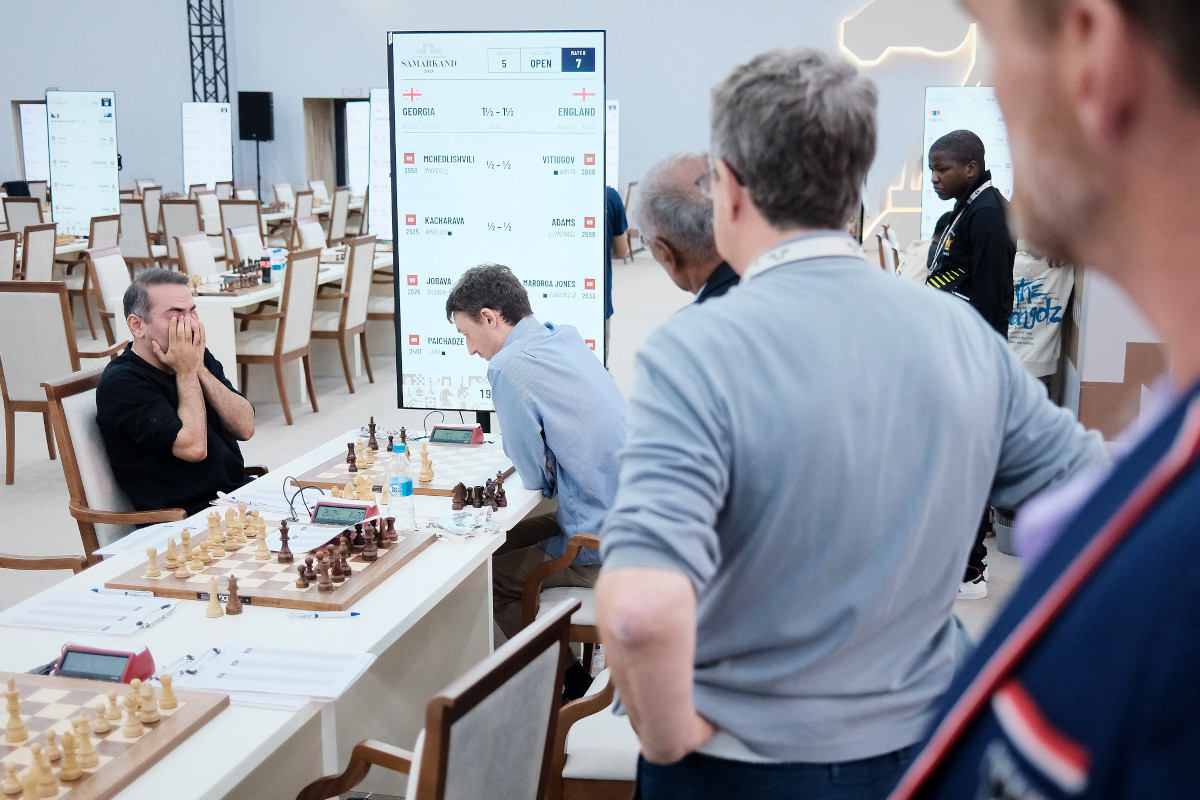
Georgia's Luka Paichadze knows that he could have kept the balance in a tension-filled endgame against Luke McShane - the one which decided the match in England's favour | Photo: Michal Walusza / FIDE
Monday's sixth round, the last before the rest day in Samarkand, will feature a direct clash between the winners of the previous two Olympiads.
Uzbekistan will face defending champions India on the top board, while Germany, the third team still on 10/10, will meet China on board two.
| Rk. | SNo | FED | Team | Group | Games | + | = | - | TB1 | TB2 | TB3 | TB4 | |
|---|---|---|---|---|---|---|---|---|---|---|---|---|---|
| 1 | 3 | UZB | Uzbekistan | A | 5 | 5 | 0 | 0 | 10 | 94 | 17 | 29 | |
| 2 | 2 | IND | India | A | 5 | 5 | 0 | 0 | 10 | 86 | 14,5 | 30 | |
| 3 | 5 | GER | Germany | A | 5 | 5 | 0 | 0 | 10 | 84,5 | 15 | 31 | |
| 4 | 4 | CHN | China | A | 5 | 4 | 1 | 0 | 9 | 88 | 15,5 | 31 | |
| 5 | 9 | FRA | France | A | 5 | 4 | 1 | 0 | 9 | 82,5 | 15,5 | 29 | |
| 6 | 18 | IRI | Iran | A | 5 | 4 | 1 | 0 | 9 | 80,5 | 16,5 | 26 | |
| 7 | 10 | ARM | Armenia | A | 5 | 4 | 1 | 0 | 9 | 79 | 14,5 | 31 | |
| 8 | 11 | ENG | England | A | 5 | 4 | 1 | 0 | 9 | 73,5 | 14,5 | 28 | |
| 9 | 23 | ROU | Romania | A | 5 | 3 | 2 | 0 | 8 | 82 | 15,5 | 29 | |
| 10 | 13 | ESP | Spain | A | 5 | 4 | 0 | 1 | 8 | 76 | 14,5 | 30 | |
| 11 | 1 | USA | United States of America | A | 5 | 4 | 0 | 1 | 8 | 73 | 13,5 | 30 | |
| 12 | 7 | AZE | Azerbaijan | A | 5 | 3 | 2 | 0 | 8 | 72 | 14 | 29 | |
| 13 | 52 | INA | Indonesia | B | 5 | 4 | 0 | 1 | 8 | 71 | 16 | 26 | |
| 14 | 39 | BLR | Belarus | A | 5 | 4 | 0 | 1 | 8 | 71 | 15,5 | 26 | |
| 15 | 6 | NED | Netherlands | A | 5 | 4 | 0 | 1 | 8 | 69,5 | 12 | 31 | |
| 16 | 14 | TUR | Turkiye | A | 5 | 4 | 0 | 1 | 8 | 69 | 14,5 | 28 | |
| 17 | 30 | UZB | Uzbekistan 2 | A | 5 | 4 | 0 | 1 | 8 | 69 | 13,5 | 28 | |
| 18 | 16 | POL | Poland | A | 5 | 4 | 0 | 1 | 8 | 68 | 15 | 27 | |
| 19 | 36 | SWE | Sweden | A | 5 | 4 | 0 | 1 | 8 | 67,5 | 14,5 | 27 | |
| 20 | 12 | UKR | Ukraine | A | 5 | 4 | 0 | 1 | 8 | 67 | 13,5 | 28 | |
| 21 | 24 | ARG | Argentina | A | 5 | 4 | 0 | 1 | 8 | 65 | 14,5 | 26 | |
| 22 | 22 | ISR | Israel | A | 5 | 4 | 0 | 1 | 8 | 65 | 14 | 25 | |
| 23 | 19 | GRE | Greece | A | 5 | 4 | 0 | 1 | 8 | 64,5 | 14,5 | 25 | |
| 24 | 28 | BUL | Bulgaria | A | 5 | 4 | 0 | 1 | 8 | 64,5 | 14 | 27 | |
| 25 | 15 | SRB | Serbia | A | 5 | 4 | 0 | 1 | 8 | 63 | 13 | 28 | |
| 26 | 21 | NOR | Norway | A | 5 | 4 | 0 | 1 | 8 | 62,5 | 15 | 23 | |
| 27 | 33 | SUI | Switzerland | A | 5 | 4 | 0 | 1 | 8 | 62 | 13,5 | 26 | |
| 28 | 61 | TJK | Tajikistan | B | 5 | 4 | 0 | 1 | 8 | 55 | 13,5 | 25 | |
| 29 | 8 | HUN | Hungary | A | 5 | 4 | 0 | 1 | 8 | 52,5 | 10 | 31 | |
| 30 | 37 | LTU | Lithuania | A | 5 | 3 | 1 | 1 | 7 | 75 | 14 | 30 |
Find all games on Live.ChessBase.com


| Advertising |










.jpeg)