11/16/2014 – Strange things happened in the sixth game of the World Championship in Sochi: Magnus Carlsen and Vishy Anand both suffered from an attack of chess blindness and overlooked a combination a lot of amateurs would have seen in a blitz game. In the end Carlsen was lucky and won the game. But has such a double blunder ever occurred in a World Championship match? Have a guess!
new: ChessBase Magazine 225
Chess Festival Prague 2025 with analyses by Aravindh, Giri, Gurel, Navara and others. ‘Special’: 27 highly entertaining miniatures. Opening videos by Werle, King and Ris. 10 opening articles with new repertoire ideas and much more. ChessBase Magazine offers first-class training material for club players and professionals! World-class players analyse their brilliant games and explain the ideas behind the moves. Opening specialists present the latest trends in opening theory and exciting ideas for your repertoire. Master trainers in tactics, strategy and endgames show you the tricks and techniques you need to be a successful tournament player! Available as a direct download (incl. booklet as pdf file) or booklet with download key by post. Included in delivery: ChessBase Magazine #225 as “ChessBase Book” for iPad, tablet, Mac etc.!
YOUR PERSONAL CHESS COACH - Whether you’re taking your first steps into the world of club chess, or already playing at a tournament level: with FRITZ, you can train more efficiently, intelligently and with a more personalised approach than ever before. FRITZ is more than just a chess engine – it’s a training revolution! Whether you’re taking your first steps into the world of club chess, or already playing at a tournament level: with FRITZ, you can train more efficiently, intelligently and with a more personalised approach than ever before.
If you're looking for a dynamic alternative to the Slav, Queen's Gambit Declined, or other mainstream systems, the Chigorin Defence offers exactly what modern tournament players need.
€34.90
Chess blindness of the Champions
It was an exciting moment. In the sixth game of the World Championship match between reigning World Champion Magnus Carlsen and challenger Vishy Anand in Sochi, Russia, Carlsen had the better position, but after thinking for a minute before his 26. move he committed a serious blunder.
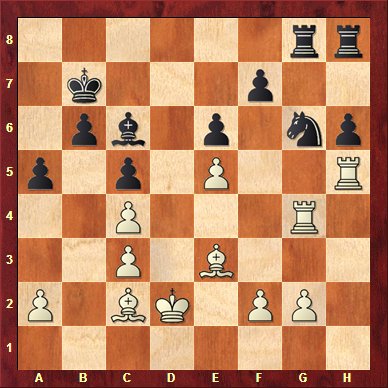
Position after 26.Kc1-d2? (With 26.Kc1-d1 White avoids all tactical tricks.)
A blunder which easily could have cost Carlsen the title. Because now Anand had the tactical trick 26...Nxe5!. After the practically forced 27.Rxg8 the knight on e5, which is attacked by the rook on h5, saves itself with the zwischenzug 27...Nc4+ and after 28.Kd3 Nb2+ the beast is totally safe - but has won two pawns en route. Black is winning.
But in the game something incredible happened. Anand apparently got infected by Carlsen's chess blindness and missed the chance to win the game and to take the lead in the match. He thought for about a minute and then played 26...a4? to pursue his strategic plan to create counterplay on the queenside.
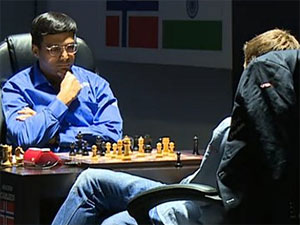
The live-transmission shows the crucial moment.
Norwegian fans were probably relieved, fans in India probably shocked. Carlsen and Anand were also relieved and shocked because immediately after having made their moves they realized what they had done or not done.
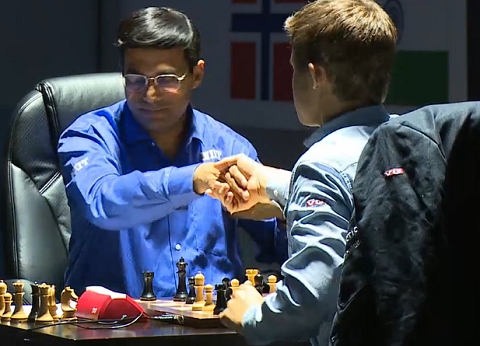
The end of the game: Anand resigns, visibly frustrated.
A mistake that raises questions: Has there ever been a similar case of mutual chess blindness in World Championship matches? And, a bit more soul-searching, why do such mistakes occur?
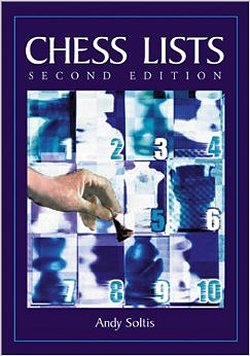
Well, at least the first question can be answered rather quickly. You only need to have a look at the entertaining book Chess Lists by Andy Soltis, which was first published in 1984 and republished in an edited and revised version in 2002. In more than 70 short articles and under headings such as "Tragic Losses", "Nobel Prize for Literature Players", "Nineteen Master Games with Illegal Moves", etc., the American Grandmaster and prolific writer here lists trivia, facts, and interesting coincidences from the world of chess.
Andy Soltis, Chess Lists
The heading "The Nine Worst World Championship Games" promises an answer to the question of mutual chess blindness in World Championship matches. However, in most of the games Soltis quotes one side commits a serious blunder which the opponents exploits, and which thus leads to an immediate loss. Pretty normal, after all. But Soltis also gives two World Championship games with remarkable cases of mutual chess blindness. One is the 16. game from the World Championship match between Alexander Alekhine and Max Euwe in 1937.
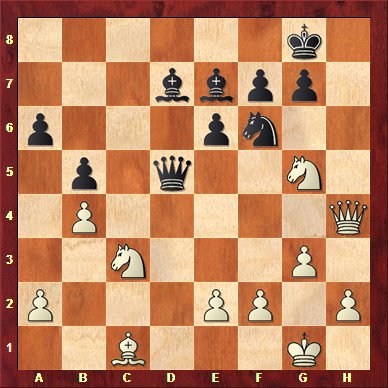
A. Alekhine-M.Euwe, 1937, position after 25.Nc3
Black now made a mistake and played 25...Qe5 allowing White a simple tactical trick. Well, Alekhine was everything but a tactically weak player, yet he nevertheless overlooked this opportunity and returned the compliment with 26.Bb2?. But Euwe still did not see the threat and played 26...Bc6?. Alekhine again refused the present and played 27.a3?, after which Euwe replied 27...Bd6, finally relieving all his fans who were present in Rotterdam from anguish. The game later ended in a draw. Both Alekhine and Euwe had overlooked that White after 25...Qe5? could have won a pawn with 26.Qh8+ Kxh8 27.Nxf7+ followed by 28.Nxe5. Black is two pawns down in the endgame, has no compensation and is clearly lost.
Alexander Alekhine
However, this game had hardly any influence on the outcome of the match. Alekhine, who in 1935 had unexpectedly lost his title in the first match against Euwe, losing 14.5-15.5, won the rematch in 1937 convincingly 15.5-9.5
Max Euwe
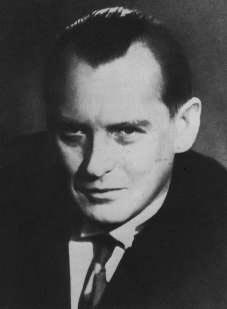
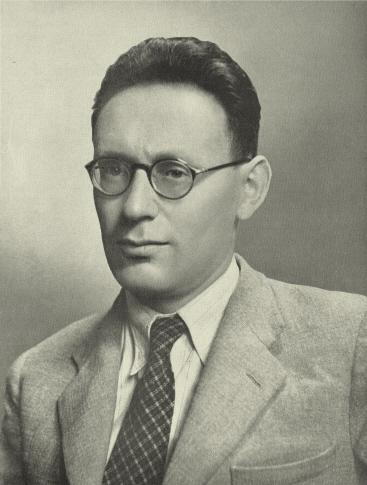
Another comedy of errors was the 18. game of the World Championship match between Mikhail Botvinnik and Vasily Smyslov in 1958. It was their third match. The first, in 1954, had ended 12:12 but because the reigning World Champion defended his title in case of a tie Botvinnik remained World Champion. Three years later, in 1957, Smyslov again challenged Botvinnik and this time he won 12.5-9.5. However, in the rematch in 1958, in which the following game was played, Botvinnik regained the title.
Mikhail Botvinnik
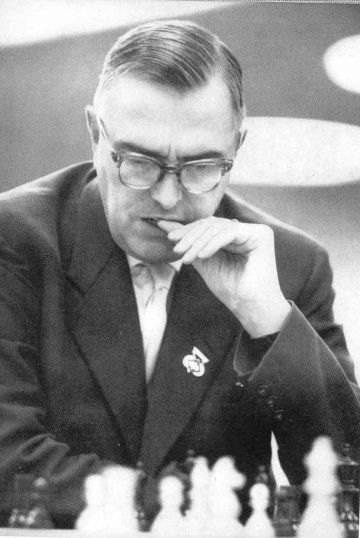
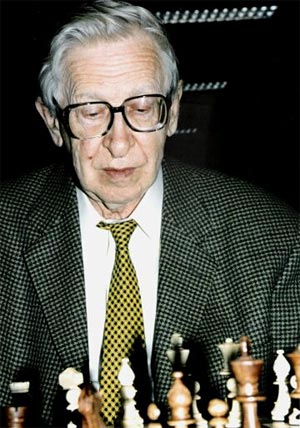
Had he won this game Smyslov would have had good chances to win or draw the match, but as it was, he lost 10.5-12.5.
Vasily Smyslov
Anand will also find it difficult to turn the tables after losing the sixth game and missing a golden opportunity. But who knows? Anand has already staged more than one surprising comeback in his career. Maybe he will strike again. His next chance to do so will come on Monday, 17th November, 3 pm local time. The game will be broadcast and commentated live on the playchess.com server. Don't miss it!
Score
Game:
Rtg
01
02
03
04
05
06
07
08
09
10
11
12
Score
M. Carlsen
2863
½
1
0
½
½
1
3.5
V. Anand
2792
½
0
1
½
½
0
2.5
Live comments on playchess.com
Our team of commentators will analyse and comment the games of the match live on the playchess.com server. In four languages: English, German, French, and Spanish.
Schedule
Monday
17.11.2014
Round 7
Simon Williams, Loek van Wely
Tuesday
18.11.2014
Round 8
Daniel King, Loek van Wely
Wednesday
19.11.2014
Rest day
Thursday
20.11.2014
Round 9
Simon Williams, Irina Krush
Friday
21.11.2014
Round 10
Daniel King, Simon Williams
Saturday
22.11.2014
Rest day
Sunday
23.11.2014
Round 11
Chris Ward, Parimarjan Negi
Monday
24.11.201
4 Rest day
Tuesday
25.11.2014
Round 12
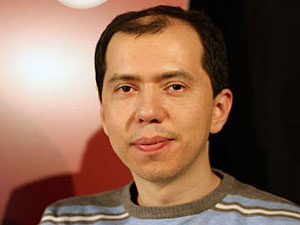
Simon Williams, Rustam Kasimdzhanov
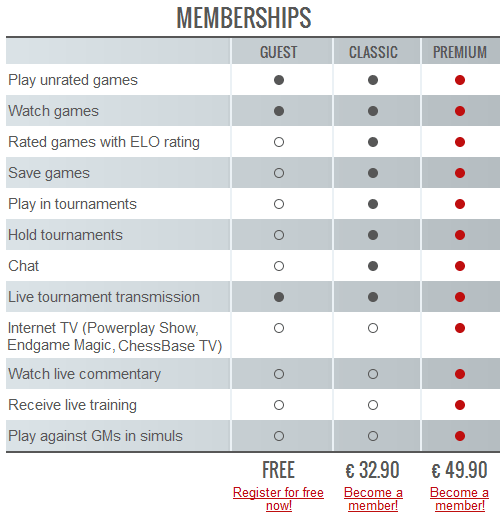
All playchess.com premium members have free access to the live commentary.
Playchess.com is Europe's largest chess server, as well as being the official server of the German Chess Federation. More than 4,000 players are logged on every evening, and you can play, chat, watch grandmaster games or take part in free chess training with friends from anywhere in the world. There is even a special room for beginners and hobby players where you can play games without a clock.
The games will be broadcast live on the official web site and on the chess server Playchess.com with full GM commentary. If you are not a member of Playchess get instant access, but you can also use ChessBase 12 or any of our Fritz compatible chess programs to log on.
Johannes FischerJohannes Fischer was born in 1963 in Hamburg and studied English and German literature in Frankfurt. He now lives as a writer and translator in Nürnberg. He is a FIDE-Master and regularly writes for KARL, a German chess magazine focusing on the links between culture and chess. On his own blog he regularly publishes notes on "Film, Literature and Chess".
YOUR PERSONAL CHESS COACH - Whether you’re taking your first steps into the world of club chess, or already playing at a tournament level: with FRITZ, you can train more efficiently, intelligently and with a more personalised approach than ever before.
1.c4 e5 2.Nc3 Bb4!? is an opening idea well worth considering. Black immediately threatens to double the pawns on c3 in the style of the Trompowski or Sicilian Grand Prix attack.
Italian Game Powerbase 2026 is a database and contains 8571 top class games from Mega 2026 and the Correspondence Database 2026, of which 479 are annotated.
Videos: Nico Zwirs discusses the Sicilian with 2…e6 3.d4 cxd4 4.Qxd4 Nc6 5.Qe3 Nf6 6.Nc3. Mihail Marin examines Sindarov’s 6.Ne5 in the Queen’s Pawn Defence. Plus the ‘Lucky bag’ featuring 41 analyses by Berg, Ftacnik, Gupta and many others.
If you're looking for a dynamic alternative to the Slav, Queen's Gambit Declined, or other mainstream systems, the Chigorin Defence offers exactly what modern tournament players need.
Michael Kotyk presents a complete repertoire after 1.e4 e5, built around creative ideas, surprising move orders, and practical weapons designed to catch your opponents off guard.
€69.80
€59.90
We use cookies and comparable technologies to provide certain functions, to improve the user experience and to offer interest-oriented content. Depending on their intended use, analysis cookies and marketing cookies may be used in addition to technically required cookies. Here you can make detailed settings or revoke your consent (if necessary partially) with effect for the future. Further information can be found in our data protection declaration.
Pop-up for detailed settings
We use cookies and comparable technologies to provide certain functions, to improve the user experience and to offer interest-oriented content. Depending on their intended use, cookies may be used in addition to technically required cookies, analysis cookies and marketing cookies. You can decide which cookies to use by selecting the appropriate options below. Please note that your selection may affect the functionality of the service. Further information can be found in our privacy policy.
Technically required cookies
Technically required cookies: so that you can navigate and use the basic functions and store preferences.
Analysis Cookies
To help us determine how visitors interact with our website to improve the user experience.
Marketing-Cookies
To help us offer and evaluate relevant content and interesting and appropriate advertisement.