

It all started on a rather ordinary day while studying one of the games in Ludek Pachman’s great trilogy, “Complete Chess Strategy”. I had been rereading it in an effort to ‘reboot’ my chess, so as to ground my game once more on solid concepts before trying to steer it forward.
In the chapter on blockading pawns, expertly taught by the Czech grandmaster, he brings up a game he played against Viktor Korchnoi in 1954. This is not done out of hubris but, as he aptly explains, it is one with which he will have a much deeper and more intimate knowledge of what took place and why.
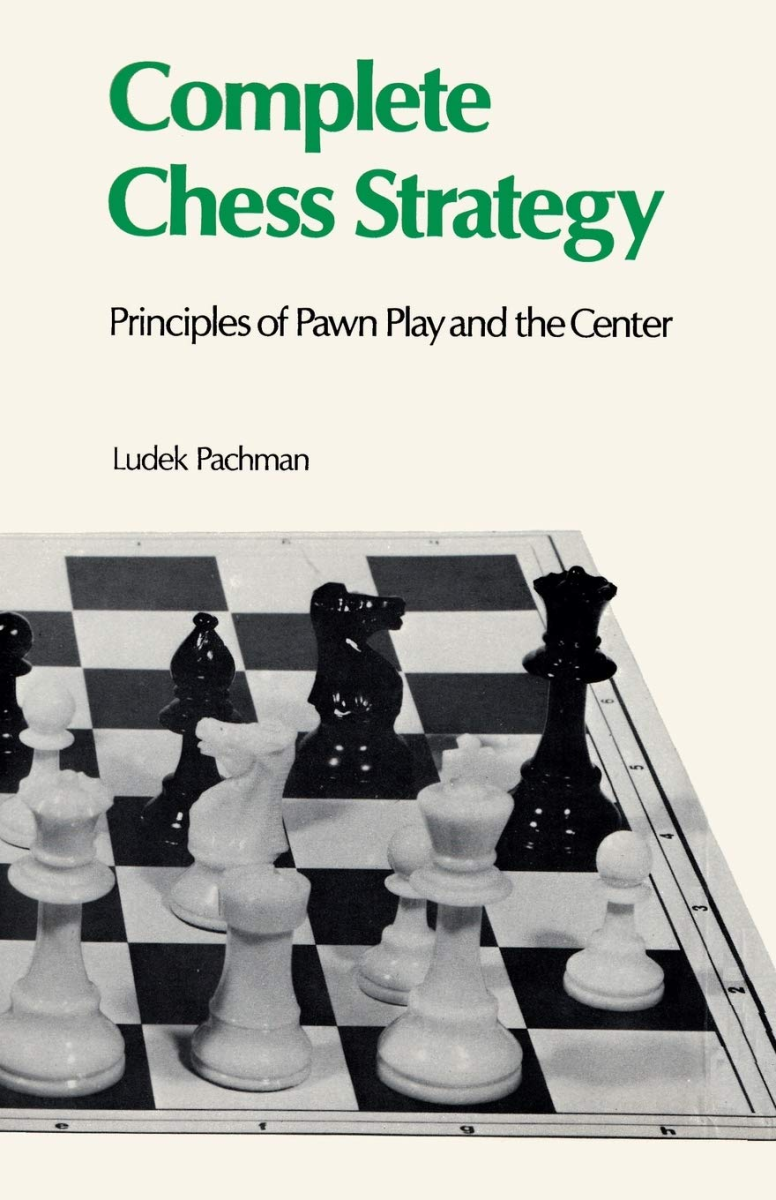
A modern classic on positional play, this is volume two of "Complete Chess Strategy"
It is a decidedly unusual opening in which things go sour for the author. Trying to explain where he went astray, he gives a position and short line with the conclusion, “would give Black a good game.” Normally I would not spend too much time on a sidenote, which is not crucial to the lesson, but it was so contrary to what I thought of it, I stopped and scratched my head. Black has a good game? Really?
Since I was playing through the game and notes on ChessBase, I could easily just fire up an engine with a quick click on the keyboard, but it is one principle I do not deviate from: no engines when studying. I need to develop my brain and skill, and not my dependency on engines. So I spent a full minute analyzing and my conclusion was “I think Pachman is off his rocker”. Delusional? Arrogance? Hardly. It was simply my impression based on what I saw. I could easily be dead wrong, and I accepted that.
I decided to message a GM friend. Not Yermo. Not yet. I explained my consternation, my confusion. I also explained my refusal to ask an engine. Without even bothering to wait for me to send the position, he exclaimed, “Let us be honest, those guys knew nothing about chess. Pachman was like what? 2200?” "Now you are being excessively harsh too. He was not 2200", I replied. "He was", my friend insisted. I copy-and-pasted some of Pachman's CV from Wikipedia into our chat, but he was not dissuaded.

Ludek Pachman was a hard-working grandmaster who wrote and published no fewer than 80 books throughout his career. He considered his book on strategy to be his best work.
Spending a lot of time arguing this was obviously pointless, and he was entitled to his opinion after all. Not being anything near a GM myself, I was on shaky ground to debate this with him anyhow. Still, this made me wonder: do modern grandmasters really look down their noses on the skill of their predecessors like that?
I now messaged the veteran grandmaster whose strong views never left any doubts where he stood, Alex Yermolinsky. I explained the story and why I was asking him this. He told me he had an opinion on the matter, and asked me to give him a few minutes while he prepared some material to answer me. Some minutes later he sent me a small database with eight games in it. A bit confused as there was no explanation accompanying them. Was I supposed to study this? “No study. Just see them.” I did and all became clear.
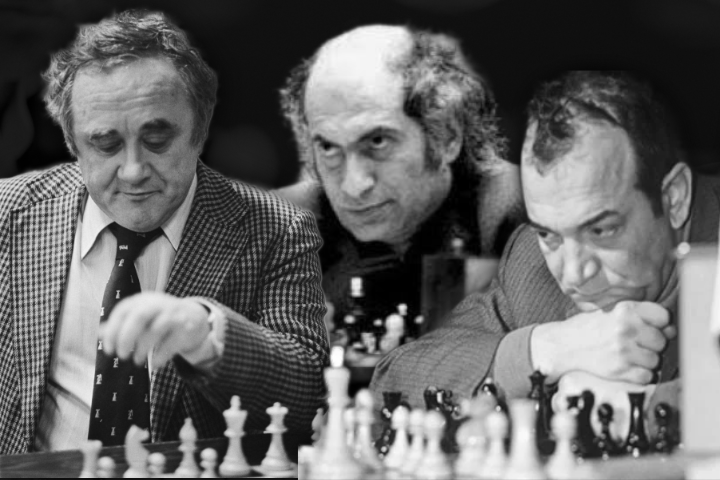
The first three games were played by Tal, Korchnoi, and Geller in 1955, all in different events, and they all reached this position with white:
With no knowledge of the theory of the position, nor any need to consult 3500-Elo programs, the move that immediately draws one’s attention is the straightforward 12. e5! Since the line 12… dxe5 13. fxe5 Nd5 14. Nxd5 winning a pawn seems irrefutable. The point, as you may have surmised, is that none of the three legends played it. Tal won his game as a result of a concerted effort at hara-kiri by his opponent, though not from any special play in the opening, while Korchnoi and Geller each got nothing and drew.
These are the first three games out of the eight. The next games are played in the 50s and 60s by players of far lesser note, all of whom played 12. e5! and all of whom won their respective bouts.
“Incredible, isn't it?”, he told me. “A 2200 of today would play 12. e5 with no hesitation. Shall we conclude that Tal, Korchnoi and Geller were 2200 strength?” It is a rhetorical question. “My point is, it's impossible to estimate the strength of a player by small sample.”
It is a valuable lesson, even when it is one we think we have learned and mastered. Does this mean we should cease to question and analyze moments of disagreement? Of course not, but nor should we be too quick to dole out judgement based on that person’s lapse.
A special thank you to GM Alex Yermolinsky for the generous lesson, and to my unnamed GM friend whose comments led to this discussion, lesson, and article.
You can see my personal on-the-fly analysis of the position in the video above at 21:03. The video also includes a missed tactic (4:28) as well as a successful solution of one of Dvoretsky's endgame study exercises ending after which I go a bit nuts (42:50)