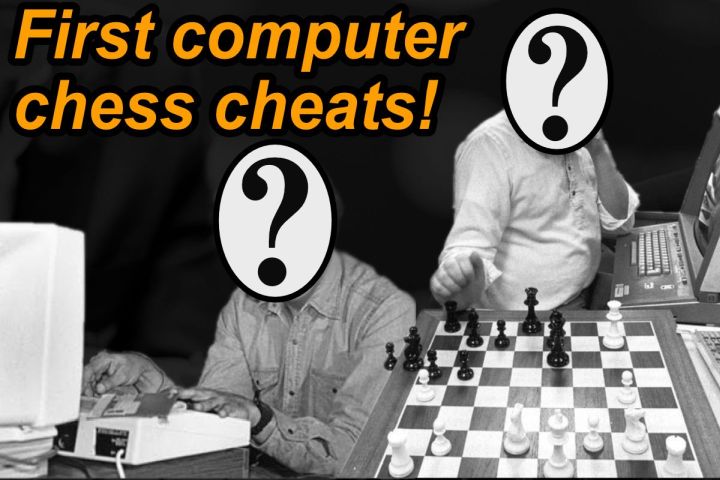

10/28/2022 – In the last several weeks, the world of chess has been rocked by the accusations and allegations of cheating with the help of a computer. The idea is not new of course, but it might shock you to know the very first case of surreptitiously using a computer in a game against a grandmaster dates all the way back to 1980. You won't believe who were responsible! Here is the original video footage of the pioneers in action.
new: ChessBase Magazine 225
Chess Festival Prague 2025 with analyses by Aravindh, Giri, Gurel, Navara and others. ‘Special’: 27 highly entertaining miniatures. Opening videos by Werle, King and Ris. 10 opening articles with new repertoire ideas and much more. ChessBase Magazine offers first-class training material for club players and professionals! World-class players analyse their brilliant games and explain the ideas behind the moves. Opening specialists present the latest trends in opening theory and exciting ideas for your repertoire. Master trainers in tactics, strategy and endgames show you the tricks and techniques you need to be a successful tournament player! Available as a direct download (incl. booklet as pdf file) or booklet with download key by post. Included in delivery: ChessBase Magazine #225 as “ChessBase Book” for iPad, tablet, Mac etc.!
Your personal chess trainer. Your toughest opponent. Your strongest ally. FRITZ 20 is more than just a chess engine – it is a training revolution for ambitious players and professionals. Whether you are taking your first steps into the world of serious chess training, or already playing at tournament level, FRITZ 20 will help you train more efficiently, intelligently and individually than ever before.
World Chess Championship 2024 - all games with analyses by Giri, Shankland, So and others. Kasimdzhanov, King and Ris show new opening ideas in the video. 10 repertoire articles from the English Opening to the King's Indian and much more.
€21.90
To be fair, there was no way to know that such a seemingly innocent incident would lead to a plague that has spread around the world, infecting players' shoes, shirts, and even World Championship toilets. The main culprit has since dedicated a great portion of his life to combatting this pandemic. Who is this evildoer to make even Sauron blush?
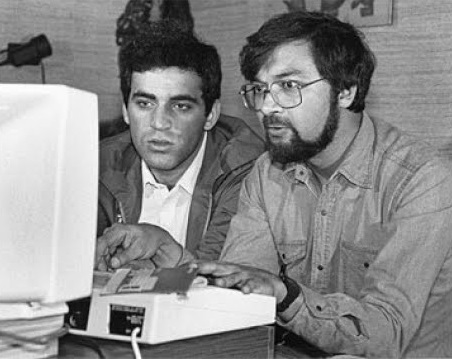
Garry Kasparov and Frederic Friedel in the summer of 1985
Yes, it is hard to believe, but it was the co-founder of the chess software company, ChessBase who was the mastermind of the first instance of cheating in chess. Actually, it was an experiment in a science documentary, a Turing Test to see if one can instantly identify a computer in a game of chess. The experiment was carried out with a like-minded partner, and this brings in the second player in the experiment.
Ken Thompson, the renowned computer scientist, had just finished his third and final version of the chess computer, Belle. It was a revolutionary development, since at the time consumer chess playing machines were weak amateurs at best. Even the large experimental projects running on mainframe computers of the time were no threat to master players, never mind grandmasters.
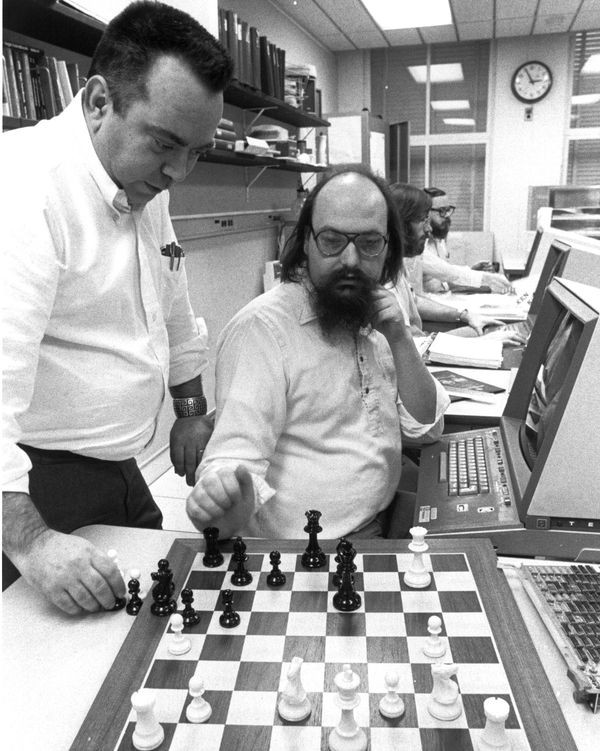
Ken Thompson (seated), the inventor of Unix, as he worked on Belle with James Condon.
Belle was in a league of its own. This machine, which contained dedicated hardware for its chess calculations, looked more like a small refrigerator, and would later serve as the inspiration for Chiptest, the precursor to Deep Thought and Deep Blue.
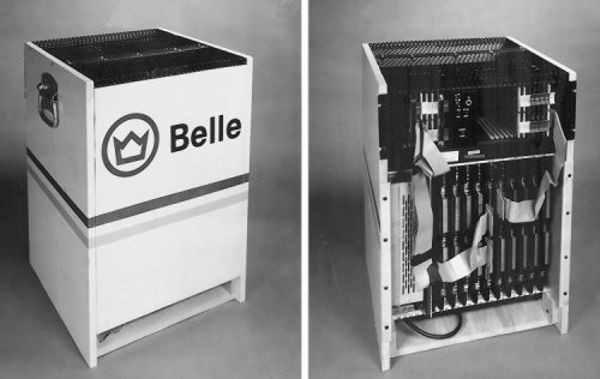
Belle's skill was unprecedented for the time. It would later score 8.5/12 in the US Open, when machines were still allowed to compete in such events, and it became the first machine ever to be certified Master by the US Chess Federation.
The first time (to the best of my knowledge) that a computer was used to clandestinely help a human player during a game, occurred in Hamburg, Germany, in August 1980. Frederic was in the process of producing a second documentary on computer and chess for German television. Ken actually recorded the show, and we have extracted the part pertaining to the Turing Test. The documentary is in German, but we have embedded English subtitles, so you can understand what is being said. The victim of the prank was grandmaster Dr Helmut Pfleger, one of the most talented German players at the time.
Full video (original 1980 footage)
This footage underwent some slight retouching to improve overall image quality, but is otherwise unchanged
Dr Pfleger was giving a simultaneous exhibition at the Hamburg Chess Festival, and Frederic decided to secretly play a computer against him. He hid a radio receiver under the hair of a young colleague, Dieter Steinwender, who was a participant in the simul. Dieter executed moves that Belle calculated.
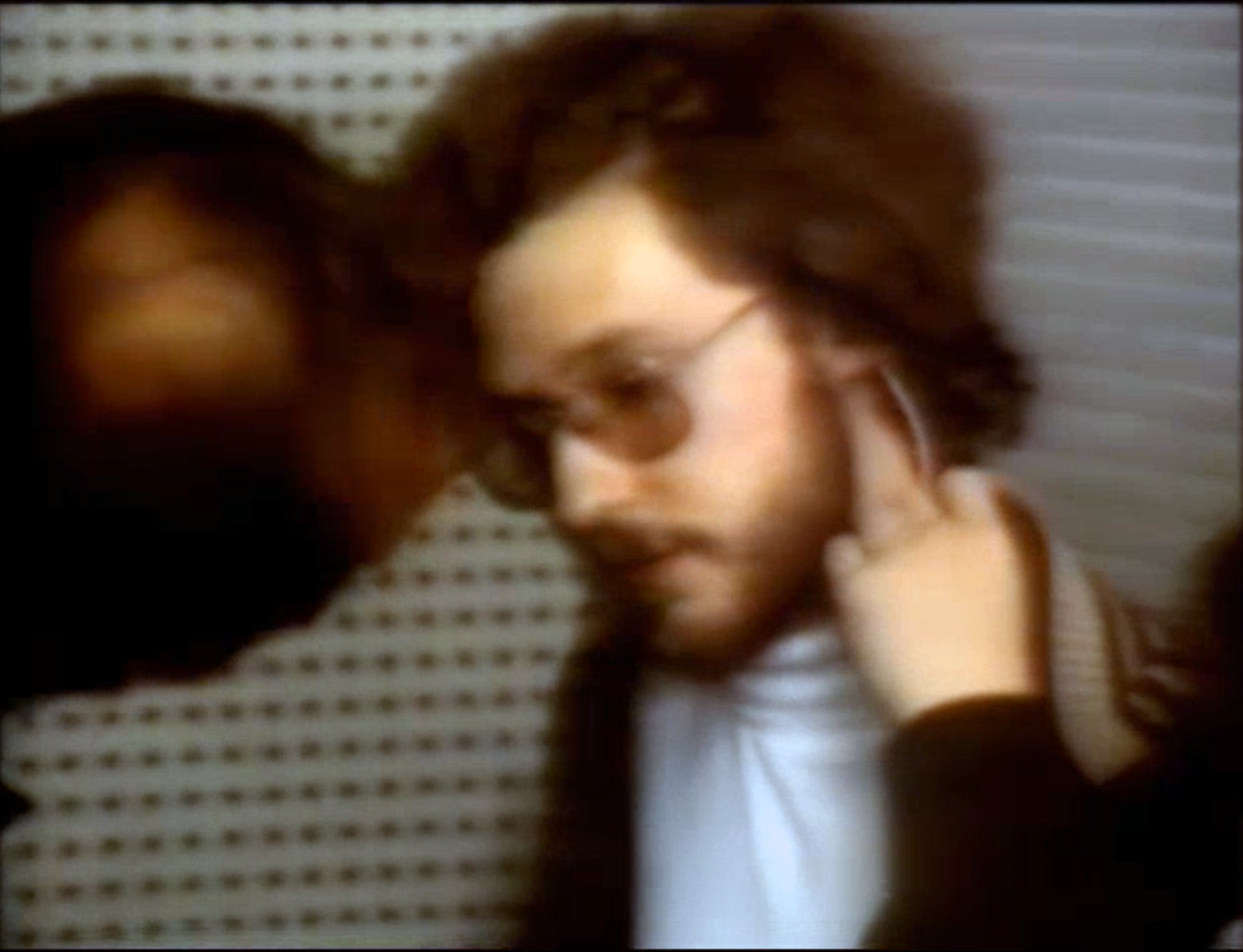
Frederic was able to talk to Dieter from a vantage point high above the tournament hall. Ken was standing by in New Jersey to deliver the moves by phone.
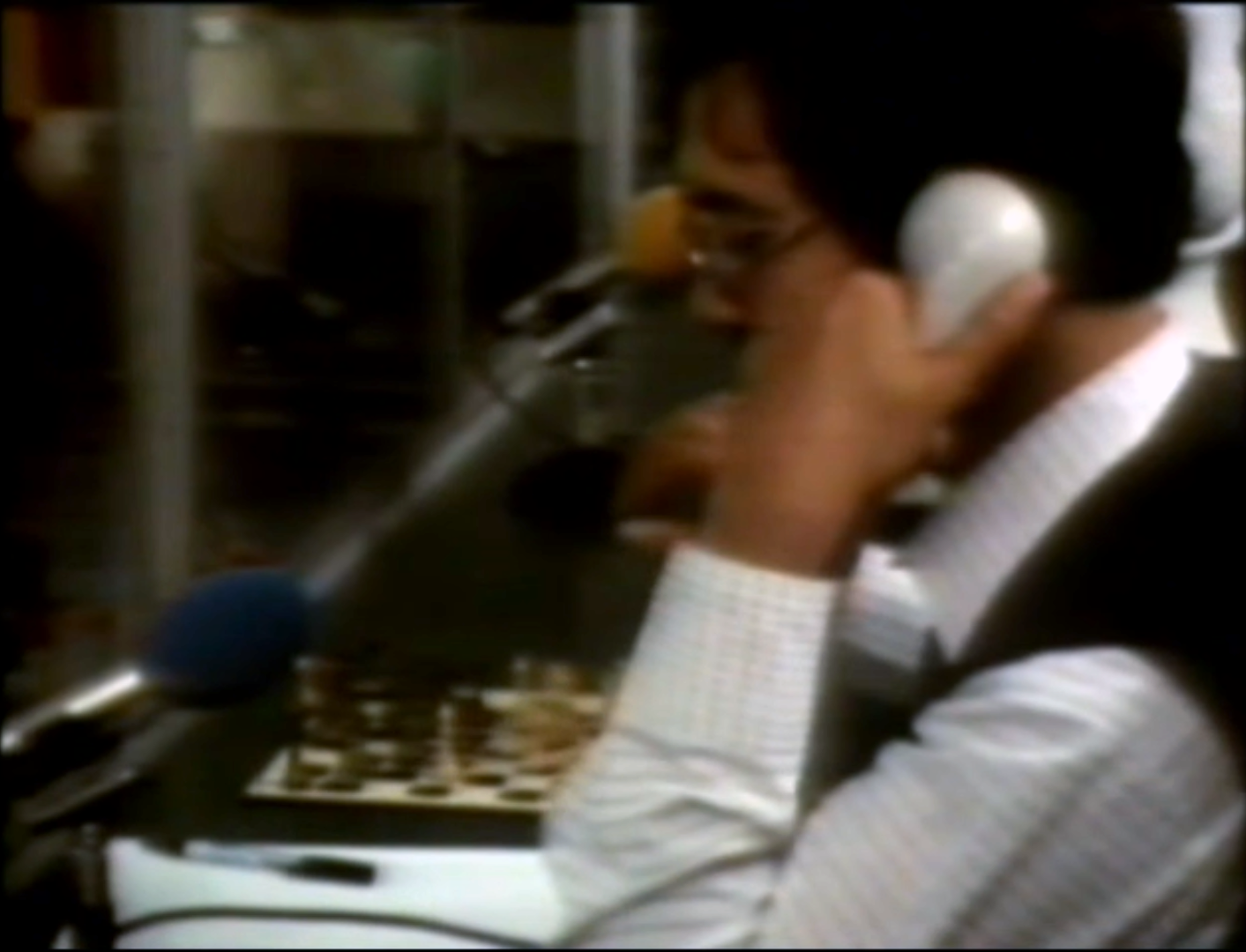
Using a pair of binoculars, Frederic followed the moves on Dieter’s board. As soon as the grandmaster made a move, he relayed it by phone to Ken, who entered it into the computer.
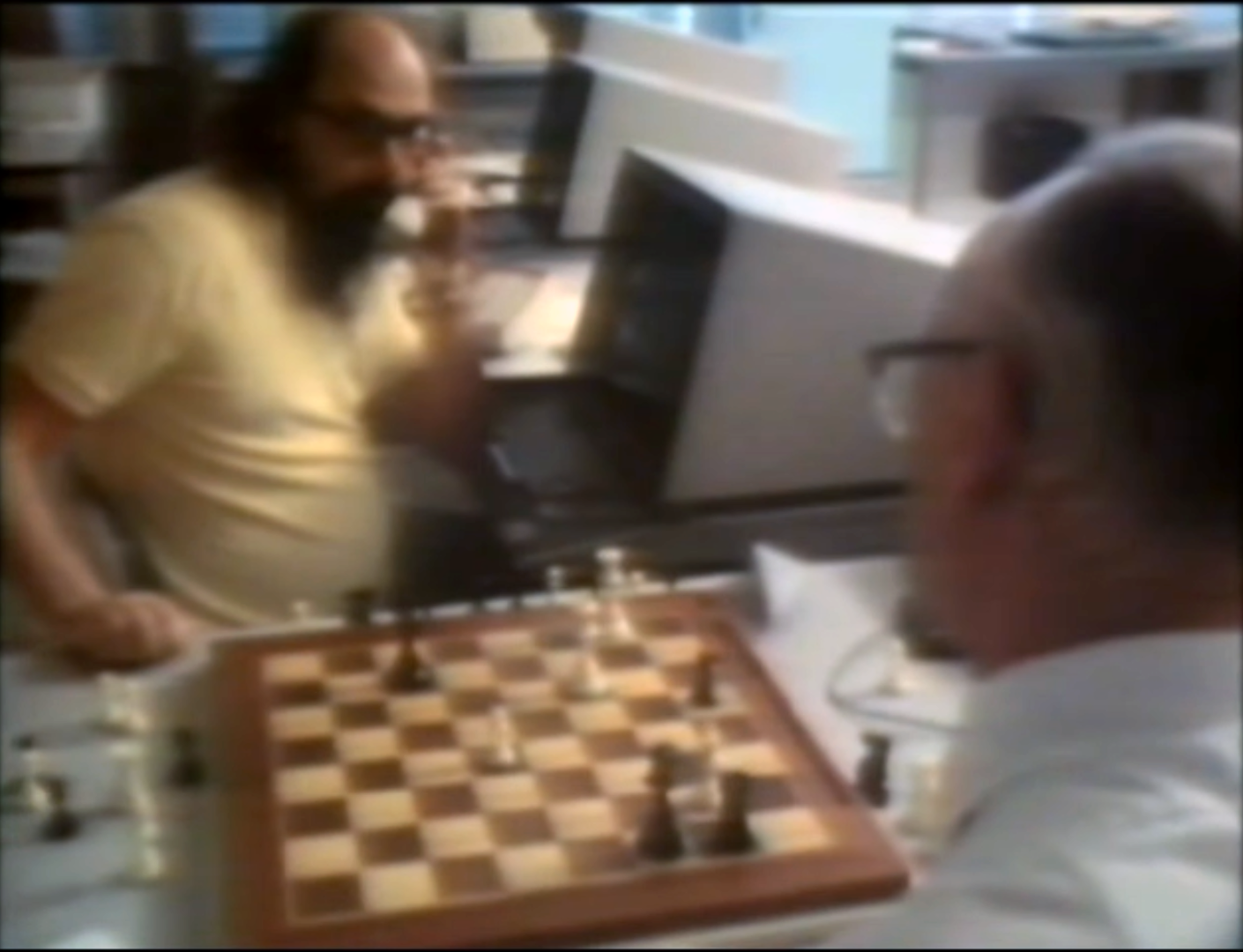
When Helmut approached the board again, Frederic would warn Ken, who would give him Belle’s current best move. This was then dictated by radio transmission to Dieter’s earphone, and he executed it as naturally as possible on the board.
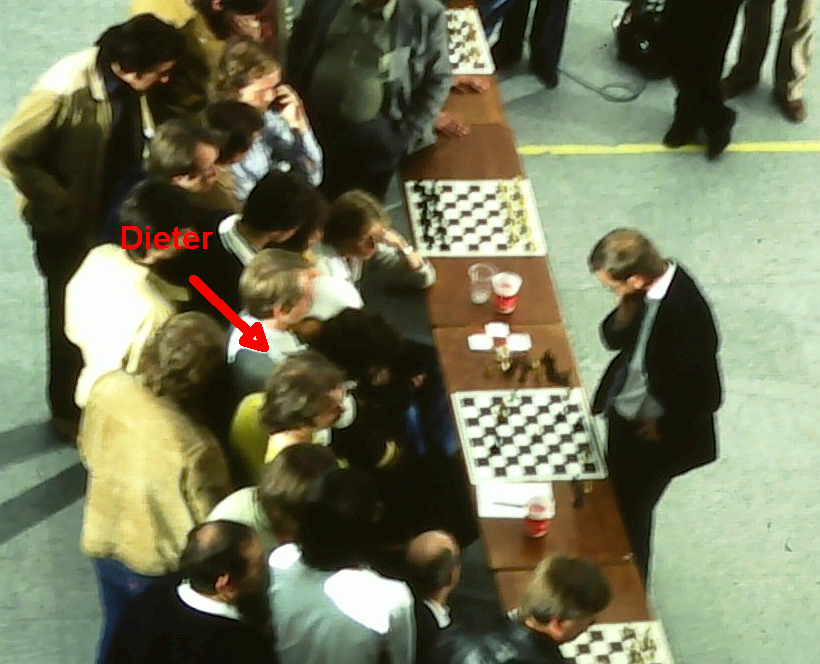
After some hours, Helmut Pfleger was winning all his games, including the one against Belle! However, at move 49 he missed a clear way to end it.
Immediately after the game the producers pointed a camera at Helmut Pfleger and asked him whether he had noticed anything unusual. Nothing. One of the games, they told him, had been played by a machine. Helmut was very surprised. “Which game was that?” He was amazed to hear it was the one he lost. “I really noticed nothing. Wow, these things are really playing quite well these days.”
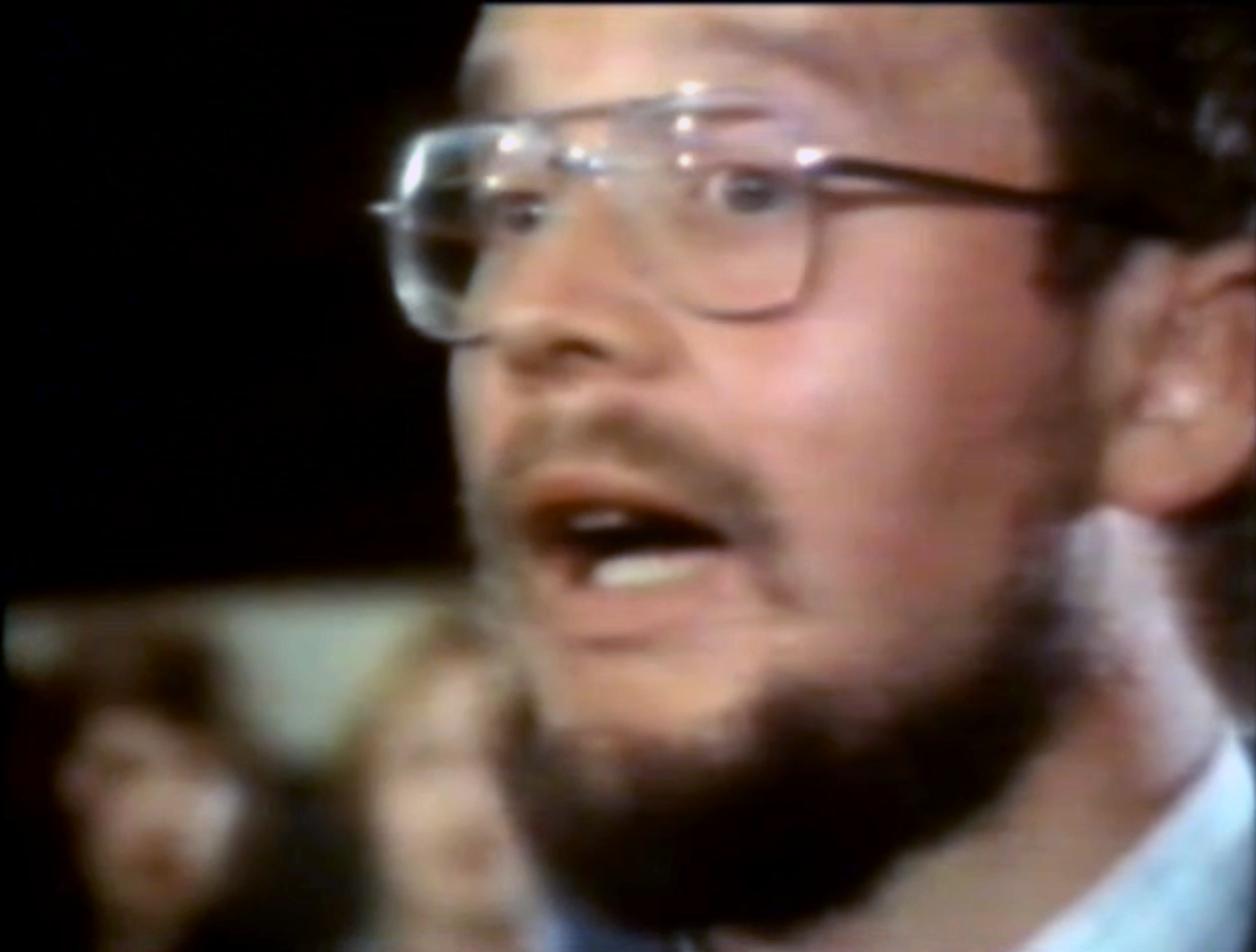
The sheer surprise: GM Pfleger is stunned that a mere machine could beat him.
The Friedel-Thompson-Belle game was of course not an example of cheating. It was an experiment in which the deception was immediately revealed. The same cannot be said about the later cases, in which the perpetrators tried to hide their activities as best they could.
Acknowledgements
Warmest thanks to Frederic Friedel for sharing the tale and footage, buried in history for so many decades. The footage is from a 1980 documentary on German TV in a series called 'Bilder der Wissenschaft' and was produced by Albrecht Fölsing and Frederic Friedel.

Albert SilverBorn in the US, he grew up in Paris, France, and after college moved to Rio de Janeiro, Brazil. He had a peak rating of 2240 FIDE, and was a key designer of Chess Assistant 6. In 2010 he joined the ChessBase family as an editor and writer at ChessBase News. He is also a passionate photographer with work appearing in numerous publications, and the content creator of the YouTube channel, Chess & Tech as well as the author of Typing Tomes, a powerful typing program.
GM Blohberger presents a complete two-part repertoire for Black: practical, clear, and flexible – instead of endless theory, you’ll get straightforward concepts and strategies that are easy to learn and apply.
Opening videos: Sipke Ernst brings the Ulvestad Variation up to date + Part II of ‘Mikhalchishin's Miniatures’. Special: Jan Werle shows highlights from the FIDE Grand Swiss 2025 in the video. ‘Lucky bag’ with 40 analyses by Ganguly, Illingworth et al.
In this video course, Grandmaster Ivan Sokolov explores the fascinating world of King’s Indian and Pirc structures with colours reversed, often arising from the French or Sicilian.
EXPAND YOUR CHESS HORIZONS
It doesn't get any better than this: the premium equipment perfect for tournament players and professionals: with ChessBase program '26, Mega Database, CORR-Database and much more.
EXPAND YOUR CHESS HORIZONS
Your entry into the great world of ChessBase with ChessBase Program '26, Big Database, CBM and Premium Account.
€249.90
We use cookies and comparable technologies to provide certain functions, to improve the user experience and to offer interest-oriented content. Depending on their intended use, analysis cookies and marketing cookies may be used in addition to technically required cookies. Here you can make detailed settings or revoke your consent (if necessary partially) with effect for the future. Further information can be found in our data protection declaration.
Pop-up for detailed settings
We use cookies and comparable technologies to provide certain functions, to improve the user experience and to offer interest-oriented content. Depending on their intended use, cookies may be used in addition to technically required cookies, analysis cookies and marketing cookies. You can decide which cookies to use by selecting the appropriate options below. Please note that your selection may affect the functionality of the service. Further information can be found in our privacy policy.
Technically required cookies
Technically required cookies: so that you can navigate and use the basic functions and store preferences.
Analysis Cookies
To help us determine how visitors interact with our website to improve the user experience.
Marketing-Cookies
To help us offer and evaluate relevant content and interesting and appropriate advertisement.