In memory of Daniel Naroditsky

by Rune Vik-Hansen
11/4/2025 – Naroditsky's tragic passing, details still unclear, though with serious allegations levelled at a now-named former top player, invites us to look beyond the parish pump of chess. FIDE itself states in connection with the case: ‘Human life and dignity are fundamental values shared by all of us. While we hold deep respect and love for the game of chess that unites our community, these values must always come first." A philosopher comments.

Your personal chess trainer. Your toughest opponent. Your strongest ally.
FRITZ 20 is more than just a chess engine – it is a training revolution for ambitious players and professionals. Whether you are taking your first steps into the world of serious chess training, or already playing at tournament level, FRITZ 20 will help you train more efficiently, intelligently and individually than ever before. 

Reactions to the young and highly regarded grandmaster's passing have poured in, compassionate and generous, as people have willingly shared their encounters and experiences with Naroditsky, both online and in person.

The statement invites deeper questions about the (alleged) community (Gens una Sumus): What are we doing, why and how? We often hear about the many excellent qualities chess is said to teach, but perhaps attendance was thin the day virtue, with roots in Aristotle's arete and the Romans' virtus, was on the syllabus.

Virtue originally referred to what makes something function well, for example how a sharp knife is able to cut. It is not innate but can be learned; everyone has, at least in principle, the potential for it. Today, the concept occurs mainly within ethics.

Examples of specific virtues include courage, generosity, honesty, judgement, moderation (sophrosyne), prudence, objectivity, righteousness and truthfulness – qualities many responses testify Naroditsky himself embodied, in life as well as in teaching (no, no one is an angel). Virtues describe not just actions but character, who we are as human beings. For example, honesty as a virtue involves not only refraining from lying but also a way of thinking and feeling, such as valuing truthfulness.

Lasker famously said that chess is a battle between minds, but what is the relationship between chess' stated norms, ideals and practices? Is chess merely a peaceful competition or is perhaps something else hiding behind our neurons and synapses?
Some reactions in the wake of Naroditsky's death, not only against the aforementioned former top player but also among those responding, suggest that chess, perhaps more than other activities, is in essence tribal warfare by other means: Pawns and knights replace spears and slingshots, but the motivation is the same; defeat your opponent, whatever the cost.

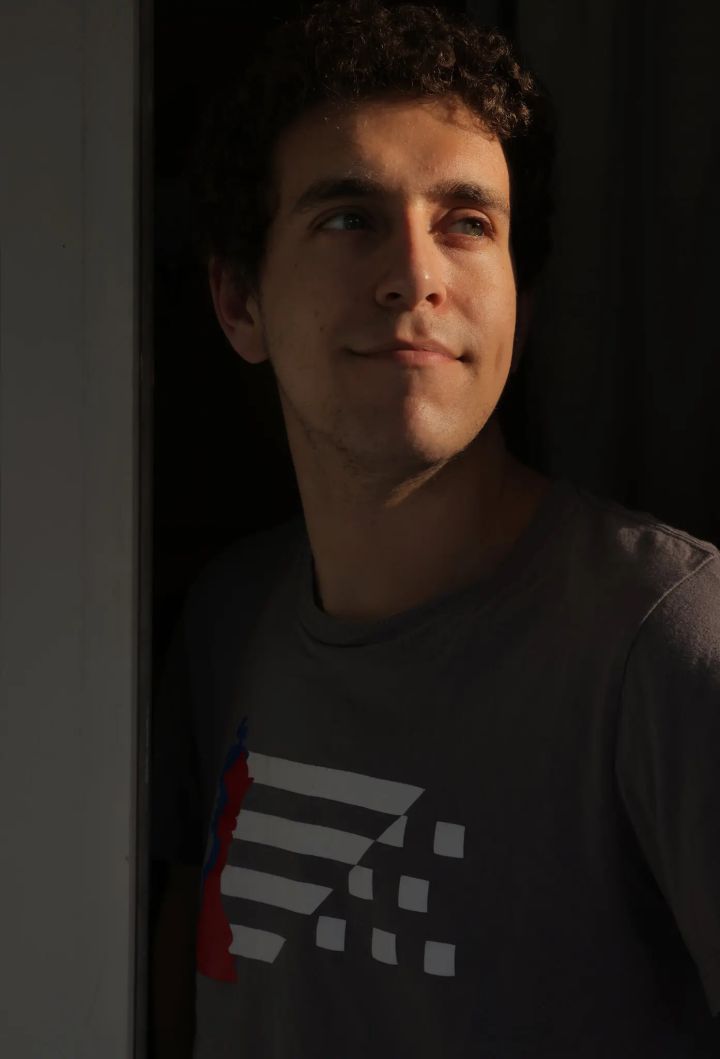
Picture: Daniel Naroditsky at his home in Charlotte, N.C. Credit...Travis Dove for The New York Times.

Reactions and behaviour, before and after Naroditsky's passing, on and off the board, from bickering and carping, to misinterpretations, misunderstandings, and ad hominem attacks, testify that something is at stake, in Gadamer’s words, but what? Do chess games mirror the comments sections, or vice versa? Do chess players have a greater need for self-assertion than other athletes, although other sports are no strangers to inflated egos? What about social media and their keyboard warriors – another extension of the tribal fight? It has been suggested that what you wouldn't say to someone face to face, you should keep to yourself.

If chess is our only source of income, it's understandable that things can get heated from time to time, but what is a man profited, if he shall gain the whole world, yet forfeit his soul?

Because we never know what our opponents or online debaters have been through before our game or our encounter with tonight's comments section, it might be worth reminding ourselves why we play chess or comment online: Ego pampering? Aesthetics and mysticism? Honour and glory? To learn? +Trophies and rating points? Self-affirmation? Self-assertion? Creating something we can remain proud of afterwards?

The situation is reminiscent of today's mantra where store employees send their customers off with a cheerful, ‘Have a (still) nice day!’ But what do they know? ‘Today the wife filed for divorce, the car stolen, the house burned down, the kids kidnapped, and the dog ran off. Have a nice day!?’

One day we might realise that we'll never be world champion anyway, and it might be reasonable to adjust our approach, while our shoulders and ambition level are lowered, but do the virtues of chess really have to give way in the heat of battle?

However, once the damage is done (as we all know, few people are angels), if we still have time to become conscious of what we’re about to, we could try to catch ourselves before shooting from the hip, over as well as outside the board.

Could the loss of Naroditsky serve to broaden our perspective, or are we living in a time when we know the price of everything, but the value of nothing?

Previous articles by Rune Vik-Hansen


Born in 1968, Rune graduated from the University of Tromsø in 1999 with a thesis on Heidegger's concept of Dasein. Other fields of interests are metaphysics, ontology, theory of science, philosophy of mind, free will and morality.
Discussion and Feedback Submit your feedback to the editors


Discuss

Rules for reader comments


Not registered yet? Register

shivasundar shivasundar 11/6/2025 08:12
I know why I comment here, or look at r/chess or why I am on chess twitter: for the love of the game. And for justice: New details (MORE worrying) keep emerging. Of course justice MUST be served on Kramnik, but what about the others?!: https://x.com/shivahappens/status/1986287064128889299 Will chess ever "become again" the gentleman's game?! (CC: @Frederic) I BOTH fear for, and worry about HOW the pervasive online-chess boom has polluted even top minds! (FIDE may NEVER be able to regulate the major platforms - bcos we are talking private orgs. who have their own algos. AND they may not have the DESIRE or BANDWIDTH. ALSO, POWER is in the hands of the BIG names mentioned in the X thread! A MORE serious players' UNION (THAN ACP) with ALL players (NOT JUST titled) AND FIRING Emil as CEO wud be a start..!!)
jampi jampi 11/6/2025 01:20
The real question now, can you blame Hans Niemman for fighting back and standing his ground?
In an interview - and I paraphrase - he said that if he didnt defend himself his whole career would be over.
Good for him being the "Bad Boy of Chess." I wish him success and hope he pushes thru, because if one anylizes his behavior like a chess game - then his variation would be a great stonewall defense.
Frits Fritschy Frits Fritschy 11/6/2025 12:06
Very mixed feelings about this article.
A well-loved chessplayer has died, another well-known chessplayer acted in a way that might have contributed to his dead. Many people are sad about the first and angry about the second. They get the opportunity to react and they do. It happens within their community, so emotions can run high. It's a natural thing, and people might overstep boundaries. Some go way to far and they are corrected, or better: ignored. Maybe some people also reacted because they wouldn't like to see things like this happen again.
Here at chessbase, people did get emotional and sometimes maybe overreacted, but I think the majority of comments came from either the heart or the brains or both, and not from the underbelly, like in other (non-chess) communities. Suggesting this is some kind of tribal warfare, or a proof of inflated egos, is unfair. If this article is or is not directed at the chessbase forum, say what you have to say face to face - as suggested in the article. By writing this article the author is part of the discussion, however cloudy he is trying to be.
calvinamari calvinamari 11/5/2025 08:57
I suppose, as the title suggests, this is intended to be a type of memory of Daniel, so I will repeat mine. Presumably like the author, I did not know Daniel in person. Like countless others, I knew him from his online content, which I considered the best of what was available. I was always grateful for that. He did not merely instruct; he invited his audience to partake directly in his vision of the game as a reflection of order and reason itself. As such, his nature came through in his chess content, so much so that I, a mere admirer from afar, am deeply saddened by his death. In Daniel Naroditsky, the modern world was offered a rare consolation: that intellect need not be cruel, that genius may yet be kind, and that beauty, though often hidden beneath the veil of calculation, still yearns to disclose itself to those with eyes clear enough to see. The modern world, with its restless need for noise, also could not have asked for a more patient teacher, one willing to illuminate rather than merely astonish and entertain. He possessed that rare union of precision and charity, the balance of analytic brilliance with a soul hospitable to beauty. These qualities noted by friends and colleagues, absolutely came through in his "virtual" outreach to those like me. It is a strange and sorrowful grace to write of Daniel in the past tense, for his presence in the larger chess community — his voice, his precision, his wit, his humility, his gentleness — still lingers and the sense of loss increases. To hear him unfold the inner logic of a position with his unhurried lucidity was, one assumed, to glimpse a mind at peace with itself. But of course that was not the case. Tragically, Daniel spoke openly about what and who, in his words, was literally ruining his life. Requiescat in pace.
JoeMomma JoeMomma 11/5/2025 07:28
The first sentence of this article may be the most uncomfortably/poorly worded sentence in history.
Tedz Tedz 11/5/2025 10:09
Thanks to Mr Hansen for his thoughtful and reflective article, and for giving us a guide on how to conduct ourselves. Thanks ChessTalk for your Post.
SimonReinhard SimonReinhard 11/5/2025 05:58
What a great post, ChessTalk. I fully support what you wrote.
ChessTalk ChessTalk 11/5/2025 03:11
I don't play online chess much. But there has been a resurgence of chess in bars and cafes where I live. The gatherings remind me of the old days when chess was fun and social. And surprisingly, it's much more civil than online posting. One thing seems unanimous, everyone knew and liked Naroditsky. No one believed or believes he was a cheater.

On the dark side, I don't see how accusing/implying people of cheating without proof or even a smidgeon of evidence can be seen as taking a stand against cheating. It's quite the opposite. Undermining the reputation of someone we all know wasn't cheating is facilitating the actual cheaters by creating chaos in chess competition through unwarranted suspicion. It actually hides the cheaters while it impugns the reputation of the innocent.
1