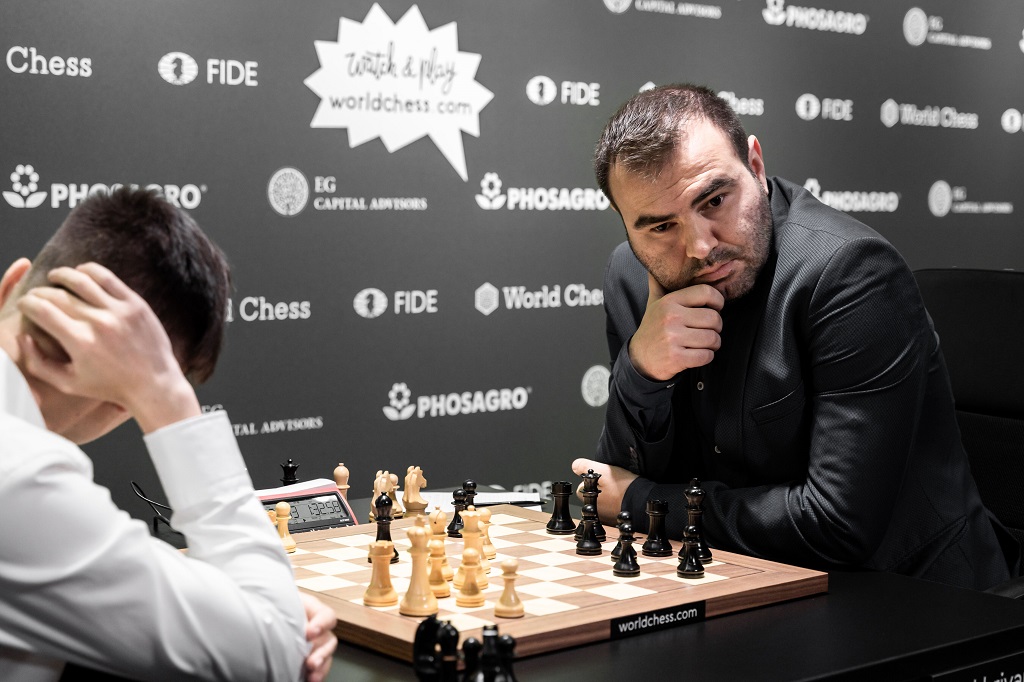
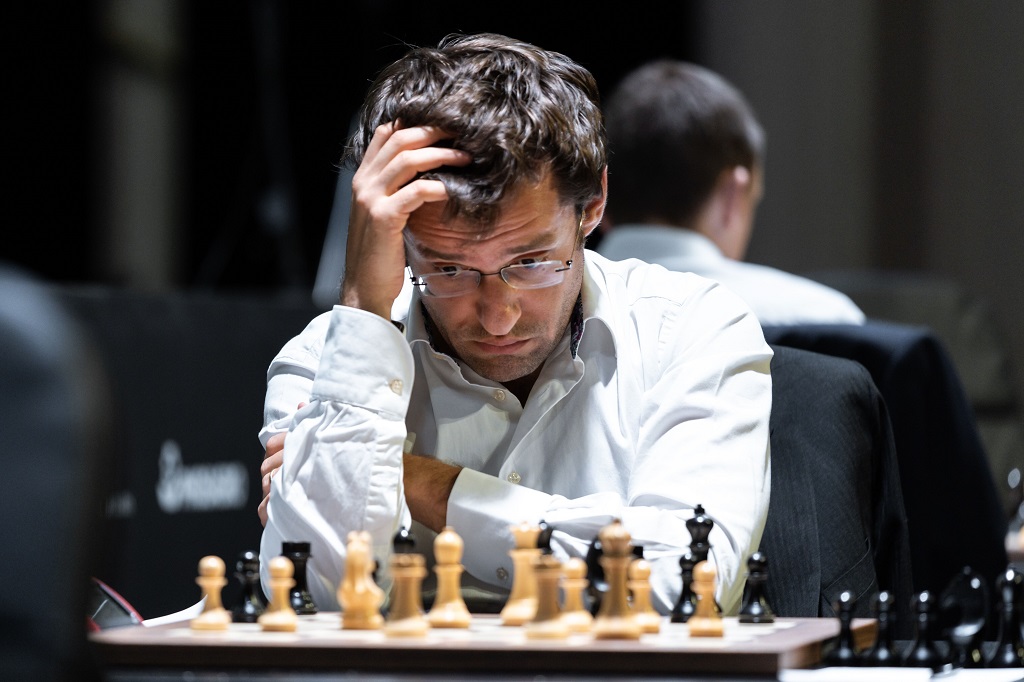
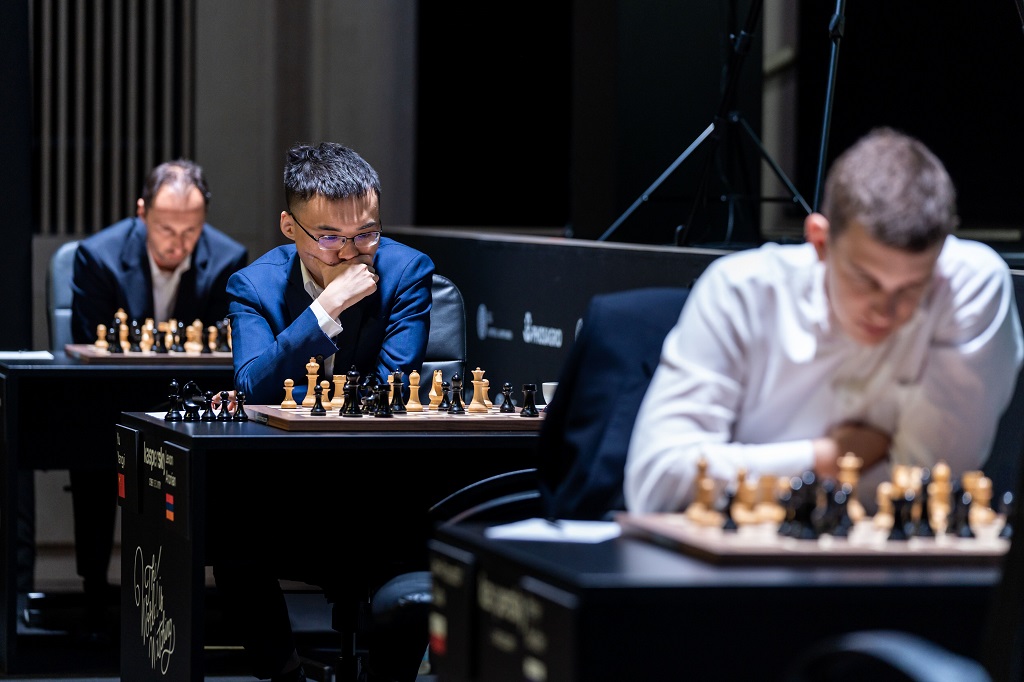
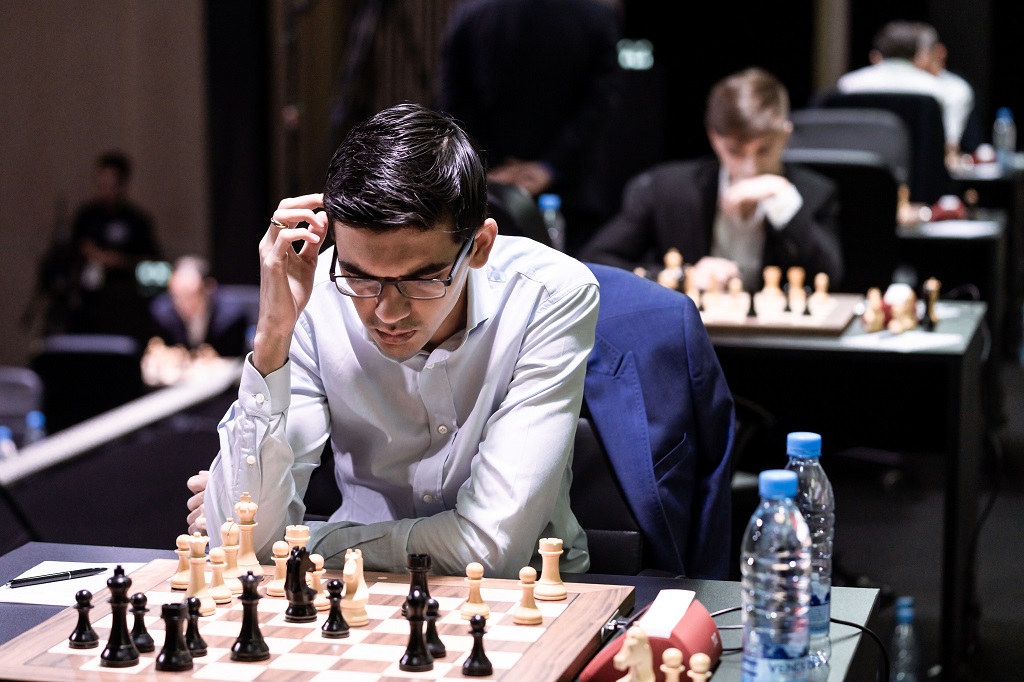
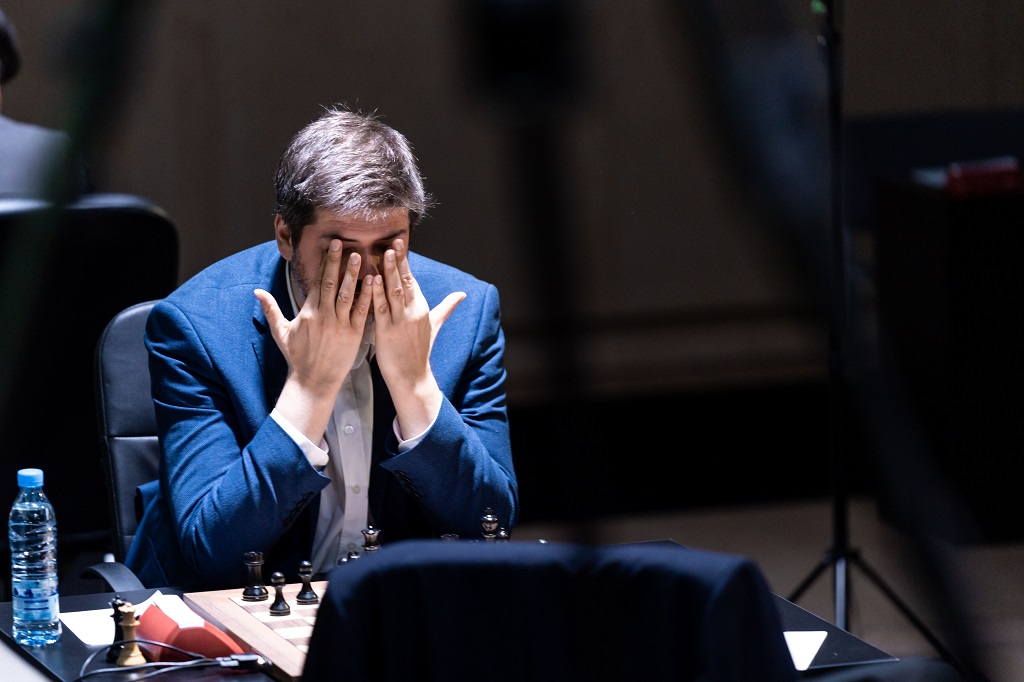
7/14/2019 – Two players have already been eliminated from the FIDE Grand Prix in Riga, as David Navara could not bounce back from an early loss against Maxime Vachier-Lagrave and Daniil Dubov was defeated by Shakhriyar Mamedyarov during the second day of action. The rest of the match-ups are tied after two draws, which means six spots will be decided on Sunday's tiebreaks. | Photos: Niki Riga / World Chess
new: ChessBase Magazine 225
Chess Festival Prague 2025 with analyses by Aravindh, Giri, Gurel, Navara and others. ‘Special’: 27 highly entertaining miniatures. Opening videos by Werle, King and Ris. 10 opening articles with new repertoire ideas and much more. ChessBase Magazine offers first-class training material for club players and professionals! World-class players analyse their brilliant games and explain the ideas behind the moves. Opening specialists present the latest trends in opening theory and exciting ideas for your repertoire. Master trainers in tactics, strategy and endgames show you the tricks and techniques you need to be a successful tournament player! Available as a direct download (incl. booklet as pdf file) or booklet with download key by post. Included in delivery: ChessBase Magazine #225 as “ChessBase Book” for iPad, tablet, Mac etc.!
YOUR PERSONAL CHESS COACH - Whether you’re taking your first steps into the world of club chess, or already playing at a tournament level: with FRITZ, you can train more efficiently, intelligently and with a more personalised approach than ever before. FRITZ is more than just a chess engine – it’s a training revolution! Whether you’re taking your first steps into the world of club chess, or already playing at a tournament level: with FRITZ, you can train more efficiently, intelligently and with a more personalised approach than ever before.
You will learn how Black's dynamic piece activity and structural counterplay more than compensate for White's extra tempo in the colour-reversed setups.
€39.90
A long grind leaves Dubov out
On Saturday, four games ended drawn after thirty or fewer moves, with Alexander Grischuk and Nikita Vitiugov the quickest to take their match to tiebreaks — they only played ten moves. Veselin Topalov, Yu Yangyi, Pentala Harikrishna and Anish Giri also gave up trying early on, all of them with the white pieces. Some went a little further to see if they could get something out of their positions, but sober, level-headed play was the standard of the day.
Two hard-fought draws were seen in Jan-Krzysztof Duda v Peter Svidler and David Navara v Maxime Vachier-Lagrave, with the Frenchman going through to round two thanks to his victory on the first day of action. Meanwhile, the only decisive game of the day saw Shakhriyar Mamedyarov eliminating Daniil Dubov after converting a long endgame a pawn up.
Round 1 - Match results
Mamedyarov will be waiting for the winner of the Duda v Svidler match-up, while Vachier-Lagrave will face either Topalov or Nakamura. The tiebreaks kick off Sunday at 12:00 UTC (14:00 CEST / 8:00 AM EDT).
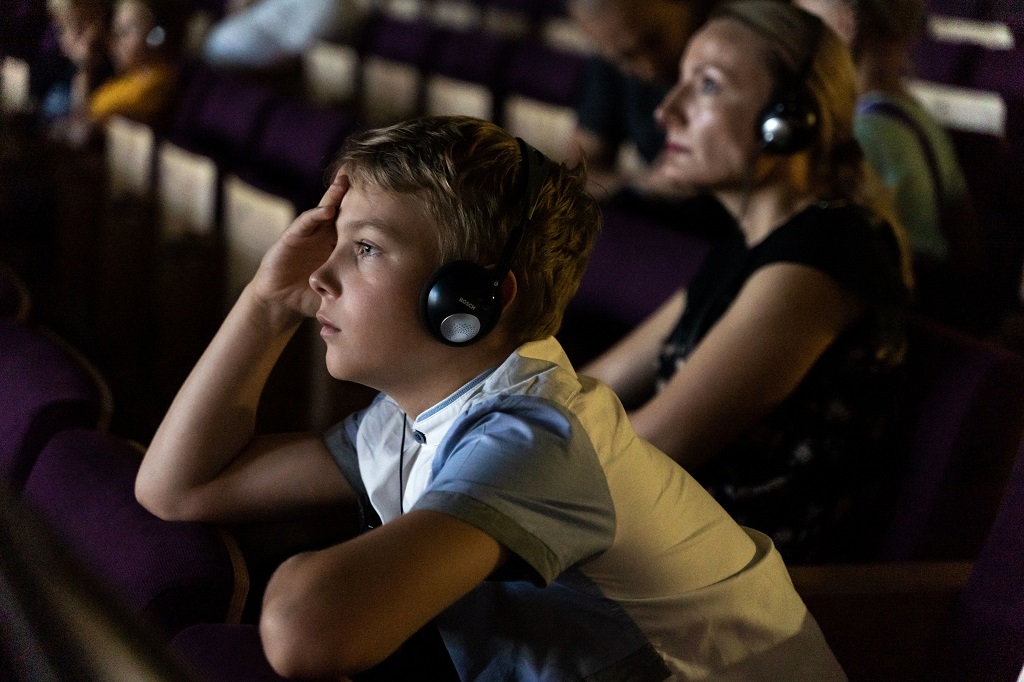
Trying to understand what's going on with the help of the commentators on their headphones | Photo: Niki Riga / World Chess
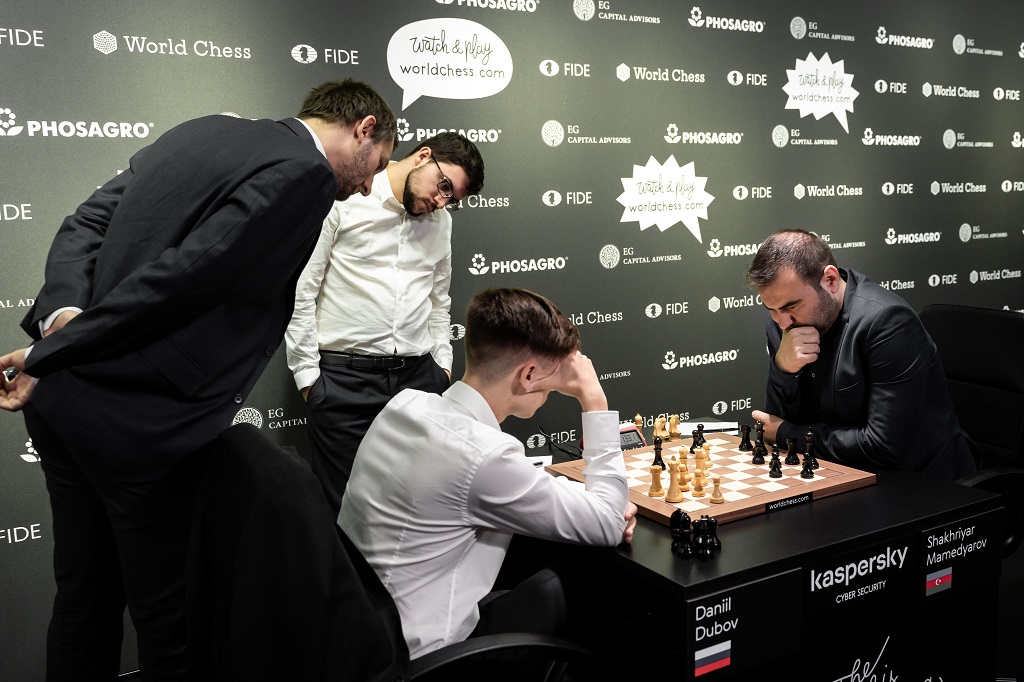
The main attraction of the day, Dubov v Mamedyarov, started with a Grünfeld Defence that followed a 2013 game between two 2400+ grandmasters until move 18. The Azeri offered a draw as early as move 10 and, after declining the offer, Dubov was the one offering the peace treaty on move 22 — by that point, Mamedyarov felt he already had some hopes of getting an edge, though.
The Grünfeld Defence was invented by the famous Austrian Grandmaster Ernst Grünfeld in the early twenties of the last century. One of the first reactions to it came from the great Akiba Rubinstein - the g3 system, fianchettoing the bishop to g2. After that many systems were tried to refute the Grünfeld and nothing really worked. So, Rubinstein's recipe remains a very important positional approach against this dynamic opening.
The queens were traded with 22...♛xe6+ 23.dxe6, and Mamedyarov activated his pieces immediately with 23...g5 24.♗e3 ♚g7 25.g4 ♜fd8. And the grind began, as Black considered it worthy to see how far he could go with his queenside majority.
On move 36, Mamedyarov finally captured White's e6-pawn, and Dubov tried but could not recover the lost soldier on the kingside, as Black defended his slight material advantage accurately. This was the position when the time control was reached:
The endgame after 41.♖xg4 is not clearly winning for Black, but it is not easy at all to defend against someone as strong as Mamedyarov. In the end, slowly but surely, the player from Sumqayit pushed his a-pawn until the fourth rank, inciting his rival to resign after 78 moves.
Vachier-Lagrave and Grischuk were clearly interested on their colleagues' treatment of the Grünfeld | Photo: Niki Riga / World Chess
Fighting but nonetheless drawing
David Navara went for 3.♗b5+ after 1.e4 c5 2.♘f3 d6, avoiding a huge theoretical battle against Sicilian-expert Maxime Vachier-Lagrave. But the Czech grandmaster needed a win to stay alive, and circumventing complications might not have been the best strategy — with such a strong grandmaster across the board, however, we can only understand his thought process.
Black kept a solid strategy while sidestepping tactical difficulties and provoking exchanges whenever possible:
Let endgame expert Dr Karsten Müller show and explain the finesses of the world champions. Although they had different styles each and every one of them played the endgame exceptionally well, so take the opportunity to enjoy and learn from some of the best endgames in the history of chess.
The queens were already off the board, and here Vachier-Lagrave renounced the bishop pair with 23...♝xe4, further simplifying the position. Nevertheless, he did not go for an overly lenient strategy afterwards and kept on finding accurate tactical manoeuvres in order to restrain his opponent's chances. Furthermore, when the draw was signed, the French grandmaster was the one in the driver's seat.
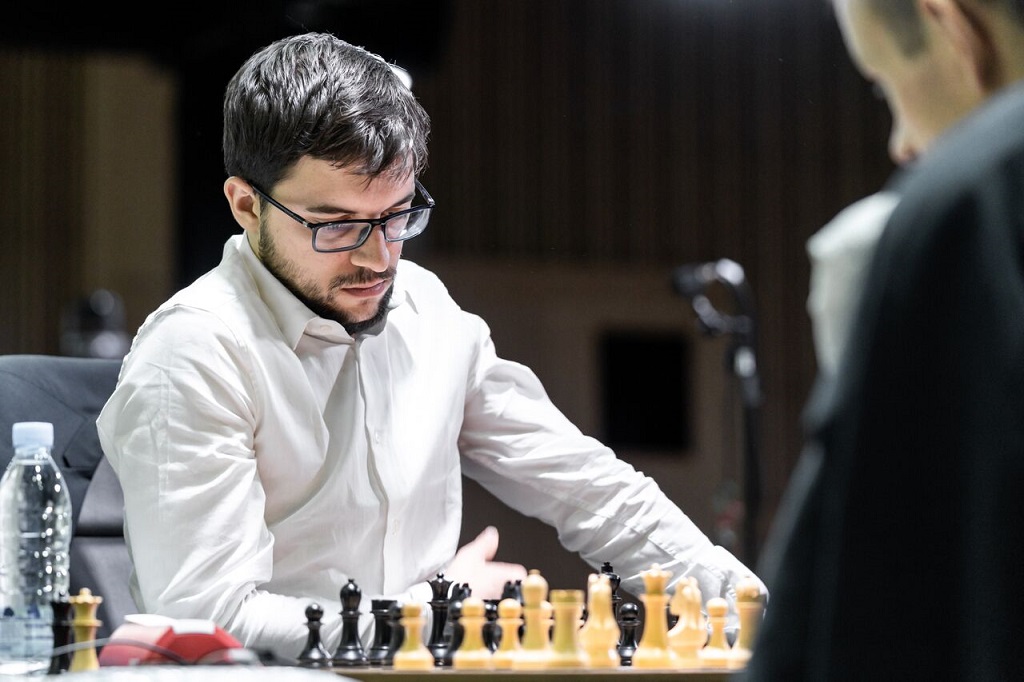
Maxime Vachier-Lagrave will rest on Sunday before his second round match-up | Photo: Niki Riga / World Chess
For a second day in a row, Jan-Krzysztof Duda and Peter Svidler displayed first-rate entertaining chess. The player from Saint Petersburg started taking his time as early as move 5, while he decided on what kind of King's Indian setup he would go for with the black pieces. A complicated skirmish followed, and Duda ended up with the better position thanks to his strong battery on the long diagonal.
Bologan: "If you study this DVD carefully and solve the interactive exercises you will also enrich your chess vocabulary, your King's Indian vocabulary, build up confidence in the King's Indian and your chess and win more games."
Duda had the upper hand after 21.♕a1, as Black's best chance is to respond with 21...♞eg8. Converting the positional edge into something tangible was not easy though. The engines think Duda's biggest imprecision later on occurred on move 27:
Instead of 27.fxg3, the Polish could have gone for 27.♘xg3, keeping the g-file open, but that meant he should have seen the advantage does not evaporate with the tempi spent to reroute the knight with ♘e2 back, ♘d4, etcetera. After the text, Svidler kept the balance until the draw was agreed after 42 moves.
Peter Svidler does not shy away from complex struggles | Photo: Niki Riga / World Chess
This DVD allows you to learn from the example of one of the best players in the history of chess and from the explanations of the authors (Pelletier, Marin, Müller and Reeh) how to successfully organise your games strategically, consequently how to keep y
Commentary by GMs Evgeny Miroshnichenko and Arturs Neikans
Antonio PereiraAntonio is a freelance writer and a philologist. He is mainly interested in the links between chess and culture, primarily literature. In chess games, he skews towards endgames and positional play.
YOUR PERSONAL CHESS COACH - Whether you’re taking your first steps into the world of club chess, or already playing at a tournament level: with FRITZ, you can train more efficiently, intelligently and with a more personalised approach than ever before.
1.c4 e5 2.Nc3 Bb4!? is an opening idea well worth considering. Black immediately threatens to double the pawns on c3 in the style of the Trompowski or Sicilian Grand Prix attack.
Italian Game Powerbase 2026 is a database and contains 8571 top class games from Mega 2026 and the Correspondence Database 2026, of which 479 are annotated.
Videos: Nico Zwirs discusses the Sicilian with 2…e6 3.d4 cxd4 4.Qxd4 Nc6 5.Qe3 Nf6 6.Nc3. Mihail Marin examines Sindarov’s 6.Ne5 in the Queen’s Pawn Defence. Plus the ‘Lucky bag’ featuring 41 analyses by Berg, Ftacnik, Gupta and many others.
If you're looking for a dynamic alternative to the Slav, Queen's Gambit Declined, or other mainstream systems, the Chigorin Defence offers exactly what modern tournament players need.
Michael Kotyk presents a complete repertoire after 1.e4 e5, built around creative ideas, surprising move orders, and practical weapons designed to catch your opponents off guard.
€69.80
€59.90
We use cookies and comparable technologies to provide certain functions, to improve the user experience and to offer interest-oriented content. Depending on their intended use, analysis cookies and marketing cookies may be used in addition to technically required cookies. Here you can make detailed settings or revoke your consent (if necessary partially) with effect for the future. Further information can be found in our data protection declaration.
Pop-up for detailed settings
We use cookies and comparable technologies to provide certain functions, to improve the user experience and to offer interest-oriented content. Depending on their intended use, cookies may be used in addition to technically required cookies, analysis cookies and marketing cookies. You can decide which cookies to use by selecting the appropriate options below. Please note that your selection may affect the functionality of the service. Further information can be found in our privacy policy.
Technically required cookies
Technically required cookies: so that you can navigate and use the basic functions and store preferences.
Analysis Cookies
To help us determine how visitors interact with our website to improve the user experience.
Marketing-Cookies
To help us offer and evaluate relevant content and interesting and appropriate advertisement.