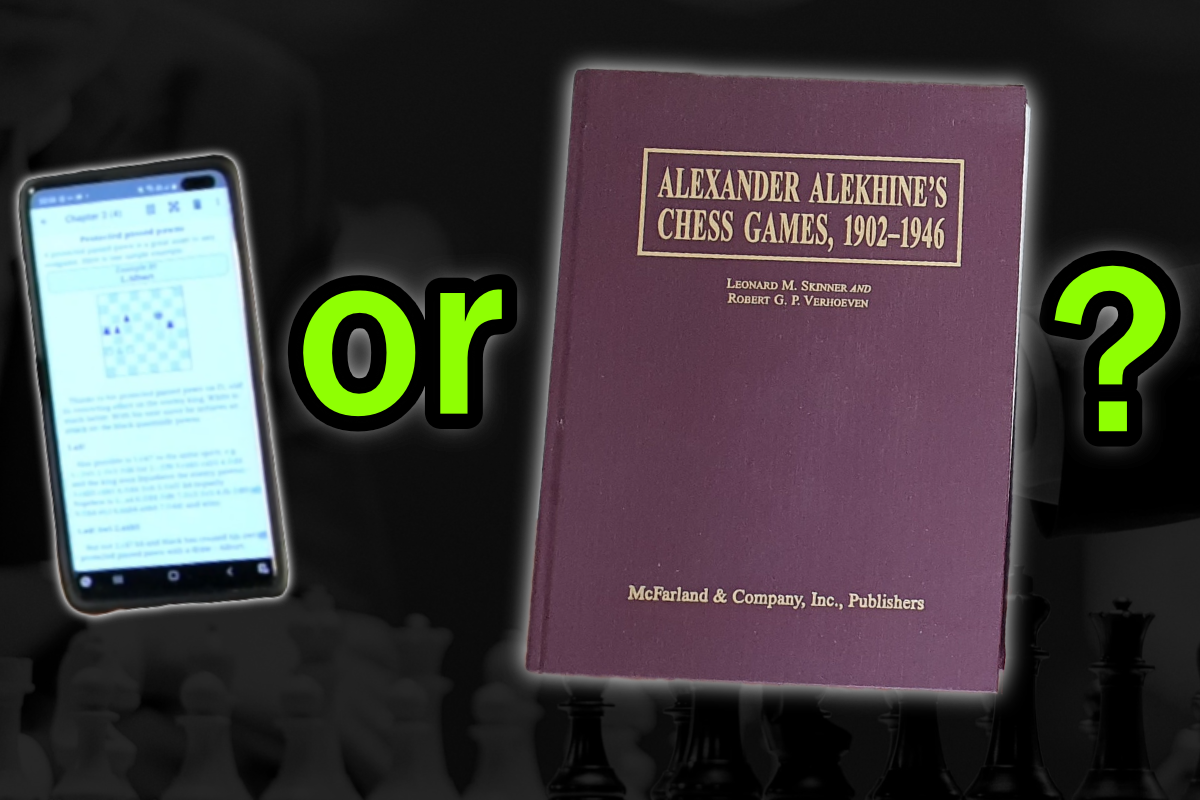
11/4/2024 – Depending on how you approach the question, what you prioritize and what matters to you, the answer might seem clear-cut, but is it? Even comparing just plain ol' books to digital texts can be a divisive topic, but chess e-books also carry their own differences to make the question and arguments fresh, with considerations that are unique to them. Enjoy this article and video.
new: Fritz 20
Your personal chess trainer. Your toughest opponent. Your strongest ally. FRITZ 20 is more than just a chess engine – it is a training revolution for ambitious players and professionals. Whether you are taking your first steps into the world of serious chess training, or already playing at tournament level, FRITZ 20 will help you train more efficiently, intelligently and individually than ever before.
YOUR PERSONAL CHESS COACH - Whether you’re taking your first steps into the world of club chess, or already playing at a tournament level: with FRITZ, you can train more efficiently, intelligently and with a more personalised approach than ever before. FRITZ is more than just a chess engine – it’s a training revolution! Whether you’re taking your first steps into the world of club chess, or already playing at a tournament level: with FRITZ, you can train more efficiently, intelligently and with a more personalised approach than ever before.
Grandmaster Dr. Karsten Müller, one of the world’s leading endgame experts, guides you step by step through everything you need to know in this second volume.
€39.90
The comparisons between tree-born books and silicon-stored texts are plentiful and well-defined. Some people cannot accept one format and revolve around the tactile experience. It isn't one that has any impact on me, and I am a very longstanding reading fanatic. Once immersed in my reading the world around me fades into oblivion and I enter a world of my own, quite literally. This is not meant to convert anyone who feels differently, it is merely my personal take. Chess books and literature are different though.
You can draw up parallels so long as the books are much the same as standard literature, such as the biography of a great player, or the anecdotes by the irrepressible raconteur Sosonko, but move the topic to very chess-specific content and new considerations must be taken into account.
One of the challenges of being as passionate as I am about the topics of both books (or e-books) and chess is that I could talk and share far more than the ultra abbreviated video above. Truth be told, I did. The 18-minute video actually spanned more than 30 minutes originally, but it isn't that I concluded the content I left out was bloviated or boring, it is just that at some point some must be considered to detract from the focus of the subject. Nevertheless, I will share two here.
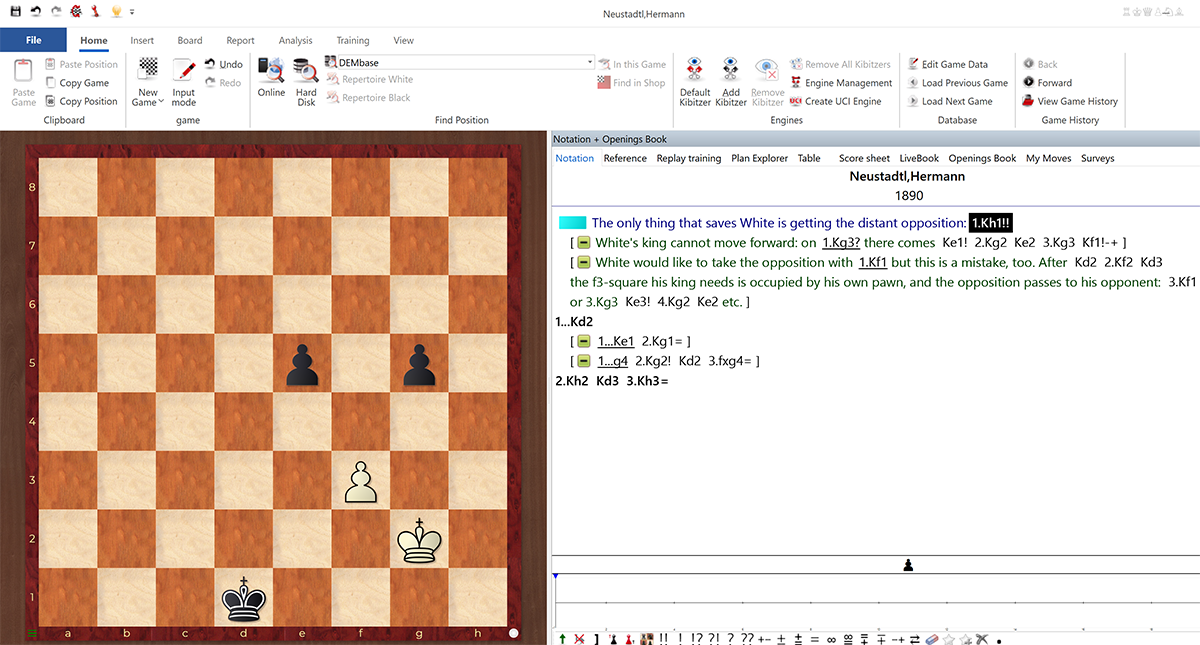
The first was that the first truly interactive chess book, along the modern lines we enjoy today, meaning board and engine to supplement and facilitate the consumption of the chess content, was from ChessBase. At least as a commercial enterprise. The work in question was Mark Dvoretsky's magnum opus, Dvoretsky's Endgame Manual.
First published in 2003, over 20 years ago, the world-famous trainer collaborated with ChessBase to produce a digital version of the work. This was more than just some text files interspersed among the game snippets and positions. He used specific features of the software such as medals and more to make it the ultimate way to study it.
In spite of its reputation for challenging exercises, it was clearly a labor of love and the examples and material chosen are not only instructive, but also aesthetically pleasing. Consider the solution above: 1. Kh1!! Just beautiful.
Nowadays, you can find it converted to a wide variety of e-book publishers, but ChessBase was first, and frankly remains peerless in my humble opinion, even if confined to the desktop. I study it in this format for my personal use and preference.
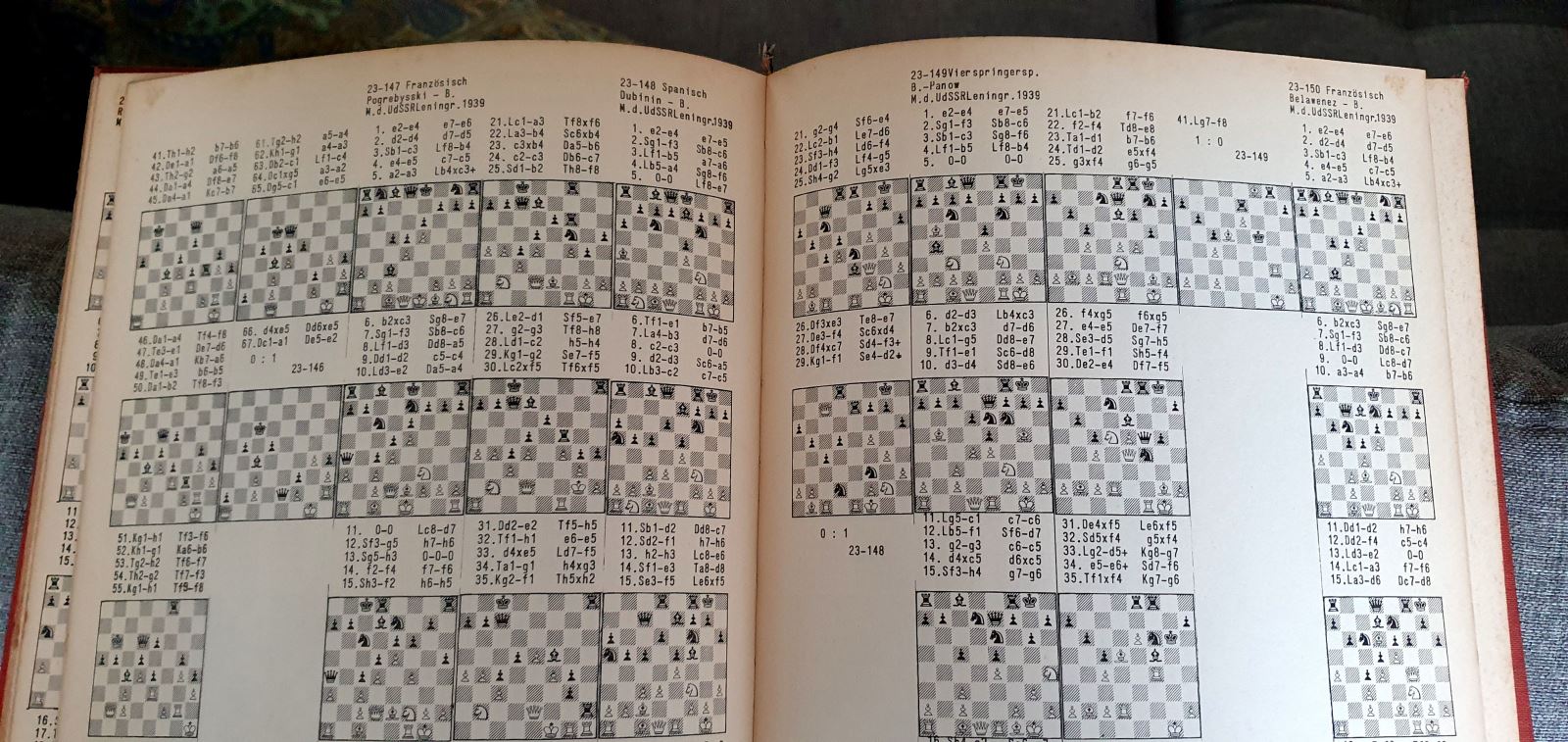
The second anecdote, left on the cutting floor of my video editing software (Filmora FTW), was regarding the defunct German chess books, "Weltgeschichte des Schachs". I mention it as a completely singular concept, of which I have a copy to this day, in which hundreds of games of a player were printed without any comments, but with a unique idea: every five moves, in every single game, a diagram is printed to show the current board situation.
A glimpse inside my copy of Botvinnik, though they are all the same.
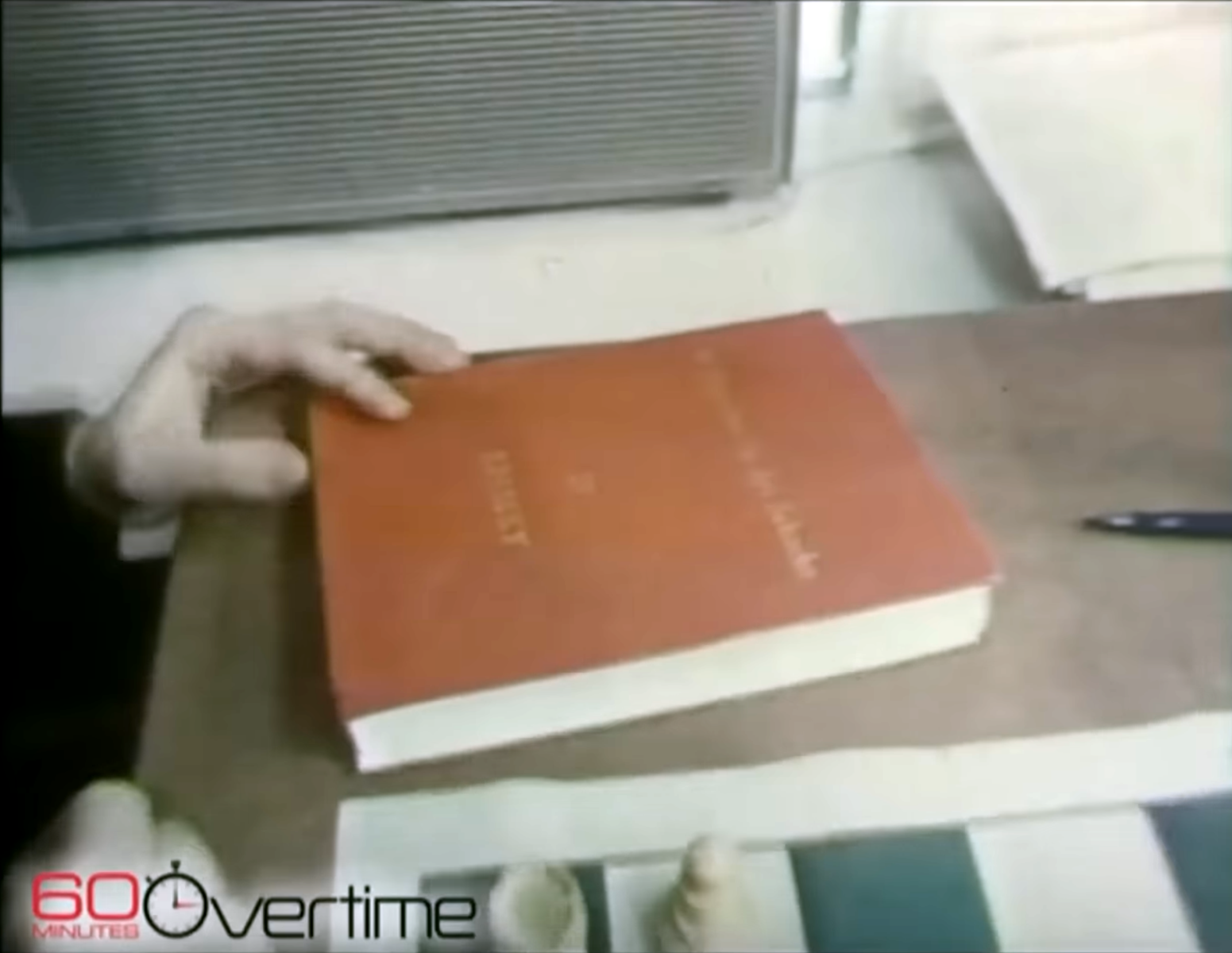
The idea is that you could not only view diagram to diagram to visually see the game's progress, but could even replay the entire game in your mind, with the help of the diagrams, needing only to keep track of five moves at a time. This is in the video above, but I edited out one interesting trivia tidbit. In the 60 Minutes coverage of Bobby Fischer in April 1972, shortly before his match against Boris Spassky, they show him at his home studying Spassky's games in preparation. The book he had open in front of him? You guessed it, Weltgeschichte des Schachs.
The report by 60 Minutes on Bobby Fischer highlighted his complete focus on this book to study Spassky's games.
One thing is clear in all this nevertheless: video and streaming may indeed be booming, but the classic chess literature that has brought us to this point is alive and well and has been adapted to the technology of today. There is no arguing the value and enjoyment of video content, but in the end, chess is a mental activity and the introspective analysis that books encourage are a perfect fit.
Albert SilverBorn in the US, he grew up in Paris, France, and after college moved to Rio de Janeiro, Brazil. He had a peak rating of 2240 FIDE, and was a key designer of Chess Assistant 6. In 2010 he joined the ChessBase family as an editor and writer at ChessBase News. He is also a passionate photographer with work appearing in numerous publications, and the content creator of the YouTube channel, Chess & Tech as well as the author of Typing Tomes, a powerful typing program.
YOUR PERSONAL CHESS COACH - Whether you’re taking your first steps into the world of club chess, or already playing at a tournament level: with FRITZ, you can train more efficiently, intelligently and with a more personalised approach than ever before.
The Nimzo-Indian has stood the test of time for over a century: Still a top choice for elite players today, from Magnus Carlsen to Praggnanandhaa, it remains one of Black's most reliable ways to fight for real chances against 1.d4 2.c4 3.Nc3.
1.c4 e5 2.Nc3 Bb4!? is an opening idea well worth considering. Black immediately threatens to double the pawns on c3 in the style of the Trompowski or Sicilian Grand Prix attack.
Italian Game Powerbase 2026 is a database and contains 8571 top class games from Mega 2026 and the Correspondence Database 2026, of which 479 are annotated.
Videos: Nico Zwirs discusses the Sicilian with 2…e6 3.d4 cxd4 4.Qxd4 Nc6 5.Qe3 Nf6 6.Nc3. Mihail Marin examines Sindarov’s 6.Ne5 in the Queen’s Pawn Defence. Plus the ‘Lucky bag’ featuring 41 analyses by Berg, Ftacnik, Gupta and many others.
If you're looking for a dynamic alternative to the Slav, Queen's Gambit Declined, or other mainstream systems, the Chigorin Defence offers exactly what modern tournament players need.
€34.90
We use cookies and comparable technologies to provide certain functions, to improve the user experience and to offer interest-oriented content. Depending on their intended use, analysis cookies and marketing cookies may be used in addition to technically required cookies. Here you can make detailed settings or revoke your consent (if necessary partially) with effect for the future. Further information can be found in our data protection declaration.
Pop-up for detailed settings
We use cookies and comparable technologies to provide certain functions, to improve the user experience and to offer interest-oriented content. Depending on their intended use, cookies may be used in addition to technically required cookies, analysis cookies and marketing cookies. You can decide which cookies to use by selecting the appropriate options below. Please note that your selection may affect the functionality of the service. Further information can be found in our privacy policy.
Technically required cookies
Technically required cookies: so that you can navigate and use the basic functions and store preferences.
Analysis Cookies
To help us determine how visitors interact with our website to improve the user experience.
Marketing-Cookies
To help us offer and evaluate relevant content and interesting and appropriate advertisement.











.jpg)