Shankland, Karthik and Sarana knock out higher-rated opponents
Round three of the FIDE World Cup concluded on Sunday in Goa, as the remaining 32 players secured their spots in the fourth round. Monday serves as the first rest day of the competition. The final day of round three featured 11 matches that went to rapid and blitz tiebreaks, producing a mix of expected results and a few surprises.
Out of the 11 matches decided on Sunday, 7 were resolved in the first set of rapid games (15+10 time control), 3 required an additional set of 10+10 games, and 1 extended all the way to Armageddon. This was the second time in this year's event that a match reached the sudden-death stage. The marathon encounter involved Maxime Vachier-Lagrave (France, 2740) and Vladislav Artemiev (FIDE, 2637).
After drawing both classical games, Vachier-Lagrave and Artemiev signed four more draws in the first two sets of rapid tiebreaks. They then traded wins in the 5+3 and 3+2 blitz sections before the contest was finally decided in the Armageddon game.
Artemiev bid 2 minutes and 47 seconds to take the black pieces, while MVL started with 4 minutes on the clock. The French grandmaster gained a strategic edge in a Ruy Lopez and converted it efficiently, winning both on the board and with a clear time advantage.
Black's 39...Bf4 here was a critical mistake. Following MVL's imprecise 39.Na1 (better was 39.Na4), Artemiev could have greatly improved the coordination of his pieces with 39...c6 40.Rb4 Bc5 41.Rc4 Rb7 (diagram).
Instead, in the game, there followed 39...Bf4 40.Nc2 Bxg3 41.hxg3 c6 42.Rb6 c5 43.Na3, and White found active spots for his pieces and will be able to make progress while trying to make the most of his extra pawn.
 Why memorising endless theory might not be the best path - and how an idea-based repertoire can change your game.
In today’s fast-paced chess world, especially online, where blitz and rapid games dominate, the traditional approach of grinding through lines of opening theory can feel overwhelming, and even unnecessary. The real challenge? Striking the right balance in your opening preparation. How deep should you go? Where do you stop? This course is built on the timeless wisdom of my legendary coach, Chebanenko, who designed opening repertoires for his “lazy” students - not lazy in attitude, but smart in approach. His philosophy? Don’t memorise. Understand.
Vachier-Lagrave's victory came only after twice recovering from losses in the final two sets tiebreaks, demonstrating both resilience and experience.

The two contenders right after the Armageddon, with the final position on the background | Photo: Michal Walusza
The happy winner | Photo: Michal Walusza
Vachier-Lagrave was among eight higher-rated players who advanced on Sunday. The others were Wei Yi, Richard Rapport, Yu Yangyi, Sam Sevian, Andrey Esipenko, Nodirbek Yakubboev and Daniil Dubov. In contrast, three lower-rated players managed to pull off upsets in their respective matches.
- Sam Shankland (United States, 2649) eliminated Vidit Gujrathi (India, 2715).
- Karthik Venkataraman (India, 2576) beat Bogdan-Daniel Deac (Romania, 2655).
- Alexey Sarana (Serbia, 2675) defeated Jorden van Foreest (Netherlands, 2693).
 In this insightful video course, Grandmaster David Navara shares practical advice on when to calculate deeply in a position — and just as importantly, when not to.
In this insightful video course, Grandmaster David Navara shares practical advice on when to calculate deeply in a position — and just as importantly, when not to.
Free sample video: Introduction
Free sample video: Invisible moves
Karthik Venkataraman's impressive run continues, as he becomes the second-lowest-rated player remaining in the event. The lowest-rated player still in contention is Lorenzo Lodici (Italy, 2572). Both players have now achieved back-to-back upset victories: Karthik defeated Aravindh Chithambaram and Bogdan-Daniel Deac, while Lodici overcame Hans Niemann and Michael Adams.
In round four, Karthik will face Le Quang Liem (Vietnam, 2729), and Lodici will take on Sam Sevian (United States, 2701). With these two underdogs joining several established names, including Arjun Erigaisi, Praggnanandhaa Rameshbabu and Vincent Keymer, the next stage promises another round of intriguing clashes as the field narrows further in Goa.
Vidit Gujrathi was knocked out by Sam Shankland | Photo: Michal Walusza
Karthik Venkataraman taking a stroll | Photo: Michal Walusza
Expert analyses by GM Kartsen Müller
Yu 1-0 Narayanan
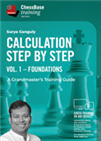 In this course GM Ganguly turns calculation into a trainable skill with a structured path for any level.
If one skill decides more games, it’s calculation. Openings fade, plans change - but seeing clearly, comparing lines, and choosing with confidence wins points. In this course GM Ganguly turns calculation into a trainable skill with a structured path for any level. You won’t just solve tactics; you’ll learn how to think: where to start, which branches to explore, when to stop, and how to keep a crystal-clear mental board under pressure.
Free video sample: Introduction
Free video sample: Forcing moves
Yu Yangyi facing S.L. Narayanan | Photo: Michal Walusza
Sarana 1-0 Van Foreest
 From Mating with a queen; a rook; two bishops; a knight and a bishop; to the basics of pawn endgames – here you will gain the necessary know-how to turn your endgame advantages into victories!
Alexey Sarana playing white against Jorden van Foreest | Photo: Michal Walusza
All games - Round 3
Replay games from all rounds at Live.ChessBase.com
EXPAND YOUR CHESS HORIZONS
Data, plans, practice – the new Opening Report In ChessBase there are always attempts to show the typical plans of an opening variation. In the age of engines, chess is much more concrete than previously thought. But amateurs in particular love openings with clear plans, see the London System. In ChessBase ’26, three functions deal with the display of plans. The new opening report examines which piece moves or pawn advances are significant for each important variation. In the reference search you can now see on the board where the pieces usually go. If you start the new Monte Carlo analysis, the board also shows the most common figure paths.