


The idea of promoting pawns into other pieces feels modern, but is actually quite old. The rule was already known in Shatranj, an early form of today’s chess that was popular in the Persian and Arab world from the 7th century onwards. When the modern form of chess gradually took hold at the end of the 15th century, the rule was retained. However, there were no uniform written regulations regarding the promotion of pawns: were multiple queens allowed on the board, or could a pawn only be promoted to a queen if the one from the starting position had already been captured? Could a pawn be left standing on the opponent’s back rank, or did it have to be promoted immediately? Did promotion have to be to a queen, or could it be to another piece — and did it always have to be a piece of one’s own color?
Most of these questions mainly concerned study and problem composers; in practical play they rarely mattered. But it was not until the middle of the 19th century that the leading chess nations of the time agreed on uniform rules.
The most famous passed pawns in chess history appeared in 1834, in the 16th game of a match between Louis Charles Mahé de Labourdonnais of France and Alexander McDonnell of Ireland, the two strongest players of their time. From June to October 1834 the two played a total of 85 games across six matches — Labourdonnais won this marathon duel with 45 victories, 27 losses and 13 draws. The game that remained in the memory of the chess world was the following win by Labourdonnais.
The game below between the two young talents Faustino Oro and Nico Chasin might one day find its way into the textbooks. Faustino Oro, born on October 14, 2013, in Buenos Aires, became an International Master in June 2024 at the age of 10 years, 8 months, and 16 days. At the time, that made him the youngest International Master in history, but the record did not stand for long. Eleven months later, in May 2025, Roman Shoghzhiev of Russia, born on February 4, 2015, earned the IM title at the age of 10 years, 3 months, and 21 days.
Oro, however, could still become the youngest grandmaster of all time. To break that record, he has until March 11, 2026, to achieve the required norms and reach a rating of 2500. So far, Oro has not yet scored a GM norm, and his rating currently stands at 2464.
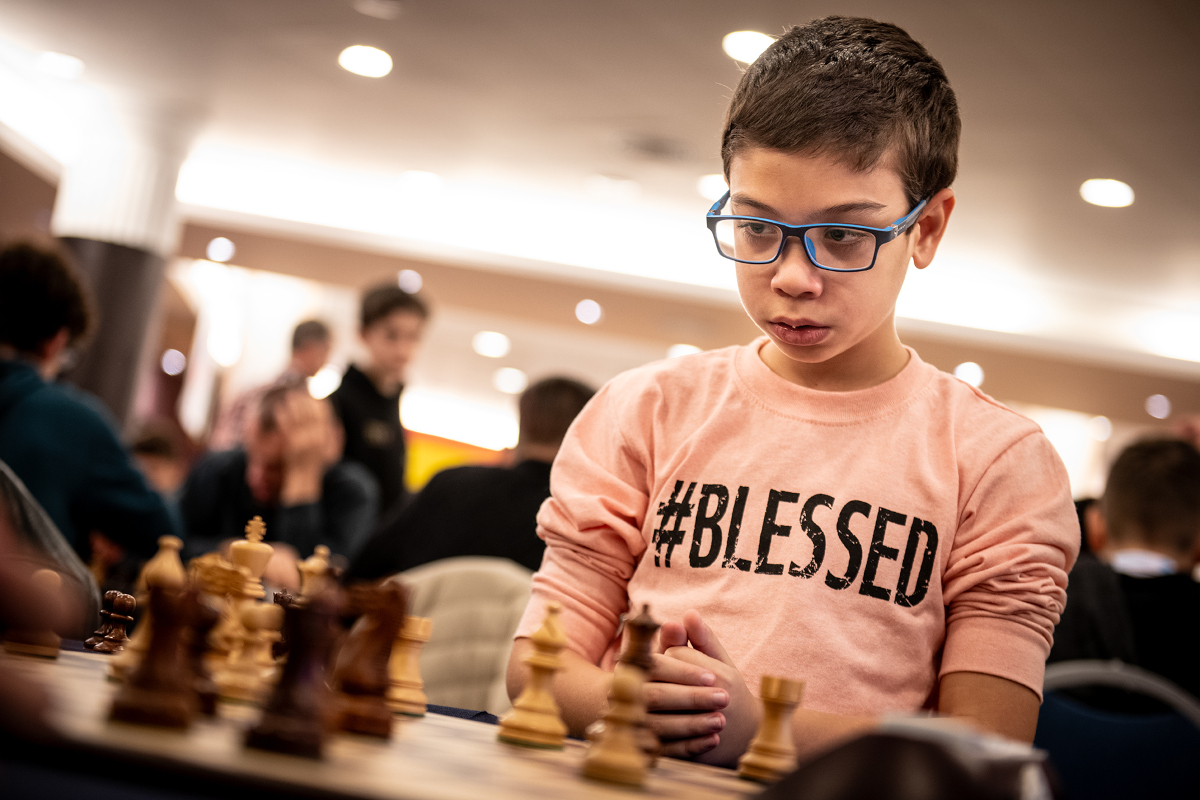
Faustino Oro at the Sunway Sitges Tournament 2023 | Photo: David Llada
Nico Chasin cannot claim such records, but he is among the strongest players of his age group. Born on June 19, 2006, in New York, he finished in shared fifth place with 7½ out of 11 at the U18 World Youth Championship in Florianópolis, Brazil, in November 2024. He has held the title of International Master since 2023.
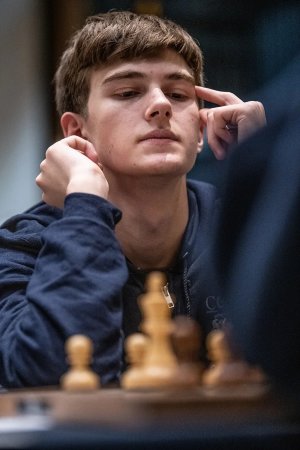
Nico Chasin | Photo: David Llada
In his game against Oro, Chasin showed how strong he is.
So many passed pawns drew attention, and on his YouTube channel Gotham Chess Levy Rozman analysed the game in his trademark spirited style.
The Masters in Fujairah, however, was won by another young player: GM Brewington Hardaway. Hardaway, born on 22 April 2009, also comes from New York and is the first African American grandmaster born in the United States. Maurice Ashley, the first African American grandmaster, had received the title in 1999, but he was born in Puerto Rico.
Hardaway finished the Masters with 7½/9 to take sole first place. Chasin scored 7.0/9 and shared second place, though he ended up fifth on tiebreak. Oro finished on 6½/9 but gained 11.9 rating points.
| Rk. | SNo | Name | sex | FED | Rtg | Pts. | TB1 | TB2 | TB3 | TB4 | K | rtg+/- | ||
|---|---|---|---|---|---|---|---|---|---|---|---|---|---|---|
| 1 | 14 | GM | HARDAWAY, Brewington | USA | 2499 | 7,5 | 2454 | 0 | 43 | 4 | 10 | 19 | ||
| 2 | 55 | IM | AKBAS, Umut Ata | TUR | 2425 | 7 | 2449 | 0 | 36 | 4 | 10 | 25,9 | ||
| 3 | 52 | FM | ASHRAF, Artin | IRI | 2428 | 7 | 2438 | 0 | 34,5 | 5 | 10 | 24,2 | ||
| 4 | 2 | GM | KARTHIK, Venkataraman | IND | 2556 | 7 | 2433 | 0 | 40 | 5 | 10 | 9,1 | ||
| 5 | 39 | IM | MAHDAVI, Reza | IRI | 2454 | 7 | 2396 | 0 | 36,5 | 4 | 10 | 11,7 | ||
| 6 | 37 | IM | CHASIN, Nico | USA | 2458 | 7 | 2392 | 0 | 39,5 | 4 | 10 | 15 | ||
| 7 | 65 | IM | SONG, Yuxin | w | CHN | 2414 | 6,5 | 2444 | 0 | 41,5 | 4 | 10 | 15,6 | |
| 8 | 16 | GM | SIVUK, Vitaly | SWE | 2495 | 6,5 | 2442 | 0 | 43 | 4 | 10 | 8,3 | ||
| 9 | 109 | FM | NOVOZHILOV, Semen | RUS | 2358 | 6,5 | 2431 | 0 | 36,5 | 4 | 20 | 51,8 | ||
| 10 | 54 | GM | ROZUM, Ivan | RUS | 2426 | 6,5 | 2424 | 0 | 36 | 4 | 10 | 17,7 | ||
| 11 | 32 | IM | ORO, Faustino | ARG | 2465 | 6,5 | 2412 | 0 | 41,5 | 4 | 10 | 11,9 | ||
| 12 | 5 | GM | SOKOLOVSKY, Yahli | ISR | 2539 | 6,5 | 2411 | 0 | 37 | 4 | 10 | 0,4 | ||
| 13 | 36 | GM | PRRANEETH, Vuppala | IND | 2458 | 6,5 | 2381 | 0 | 34 | 4 | 10 | 9,6 | ||
| 14 | 29 | IM | TSARUK, Maksim | FID | 2470 | 6,5 | 2374 | 0 | 37,5 | 4 | 10 | 6,4 | ||
| 15 | 25 | IM | STRIBUK, Artiom | FID | 2474 | 6,5 | 2363 | 0 | 35 | 4 | 10 | 5,8 | ||
| 16 | 33 | GM | GOKERKAN, Cem Kaan | TUR | 2464 | 6,5 | 2352 | 0 | 35 | 4 | 10 | 5,6 | ||
| 17 | 72 | IM | KUSHAGRA, Mohan | IND | 2408 | 6,5 | 2347 | 0 | 33 | 4 | 10 | 11,1 | ||
| 18 | 22 | IM | DAVTYAN, Artur | ARM | 2479 | 6,5 | 2347 | 0 | 31,5 | 5 | 10 | 1,8 | ||
| 19 | 68 | IM | ERMITSCH, Magnus | GER | 2409 | 6,5 | 2321 | 0 | 33 | 5 | 10 | 8,2 | ||
| 20 | 94 | IM | PANDA, Sambit | IND | 2379 | 6 | 2479 | 0 | 41 | 4 | 10 | 20,2 | ||
| 21 | 85 | IM | AADITYA, Dhingra | IND | 2394 | 6 | 2450 | 0 | 40 | 4 | 10 | 18,7 | ||
| 22 | 222 | FM | ZHAUYNBAY, Aldiyar | KAZ | 2214 | 6 | 2436 | 0 | 33 | 4 | 20 | 72,4 | ||
| 23 | 3 | GM | SANAL, Vahap | TUR | 2550 | 6 | 2419 | 0 | 39,5 | 4 | 10 | -1,8 | ||
| 24 | 34 | IM | JUBIN, Jimmy | IND | 2464 | 6 | 2416 | 0 | 38 | 5 | 10 | 7,6 | ||
| 25 | 8 | IM | SAMADOV, Read | AZE | 2522 | 6 | 2412 | 0 | 38 | 4 | 10 | 0,4 | ||
| 26 | 15 | GM | GHARIBYAN, Mamikon | ARM | 2495 | 6 | 2397 | 0 | 36 | 4 | 10 | 1,9 | ||
| 27 | 50 | IM | SAPENOV, Daniyal | KAZ | 2429 | 6 | 2396 | 0 | 38 | 4 | 10 | 8,6 | ||
| 28 | 17 | IM | URAZAYEV, Arystanbek | KAZ | 2490 | 6 | 2370 | 0 | 33 | 4 | 10 | -0,2 | ||
| 29 | 49 | IM | KURU, Atilla | TUR | 2435 | 6 | 2360 | 0 | 35,5 | 4 | 10 | 4,7 | ||
| 30 | 57 | IM | DAVTYAN, Arsen | ARM | 2421 | 6 | 2345 | 0 | 34 | 5 | 10 | 4,3 | ||
| 31 | 80 | IM | SHAHIL, Dey | IND | 2401 | 6 | 2344 | 0 | 33 | 4 | 10 | 6,5 | ||
| 32 | 30 | IM | ANSAT, Aldiyar | KAZ | 2469 | 6 | 2340 | 0 | 31,5 | 5 | 10 | -1,2 | ||
| 33 | 46 | IM | ILINCA, Felix-Antonio | ROU | 2446 | 6 | 2324 | 0 | 34 | 4 | 10 | -4 | ||
| 34 | 45 | IM | AHMAD, Khagan | AZE | 2449 | 6 | 2307 | 0 | 32,5 | 4 | 10 | -3,1 | ||
| 35 | 58 | IM | TALIBOV, Shiroghlan | AZE | 2420 | 6 | 2304 | 0 | 34 | 5 | 10 | 0,3 | ||
| 36 | 104 | IM | VIANI, Antonio Dcunha | IND | 2364 | 6 | 2283 | 0 | 30 | 5 | 10 | 4,3 | ||
| 37 | 116 | FM | SHTURMAN, Arseniy | FID | 2348 | 5,5 | 2467 | 0 | 40,5 | 4 | 20 | 40,4 |
...
Chess-Results: Superstars | Master