

[Note that Jon Speelman also looks at the content of the article in video format, here embedded at the end of the article.]
When Gata Kamsky famously exploded after being flagged with rook the rook (creating the marketing opportunity which led to the mildly obscene coffee mug which I give to honoured guests), I was very much on his side.
In the age of Internet chess, it has become normal and acceptable for even very strong players sometimes to flag each other with say bishop v. opposite-coloured bishop. It's a different world online and while I can't object in bullet games in which flagging is at least half the point, at anything longer I find this fairly repulsive.
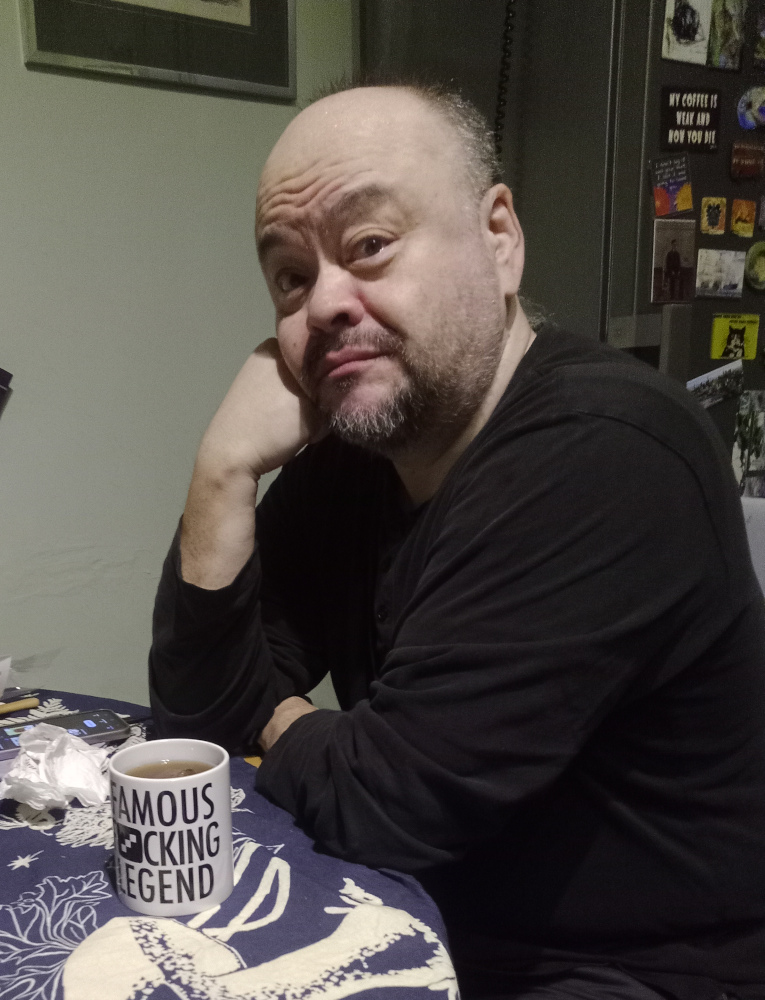
My friend and many years ago erstwhile second Jonathan Tisdall had the idea of merchandising FFL ("famous f****** legend"), which he passed on to a graphics designer friend initially as a tee shirt rather than a mug - he was staying with us during the London Classic, so here he is in our kitchen with it
It's therefore a tremendous joy on the contrary to see chess players behaving really well under huge pressure. And elsewhere on this site there is a wonderful recent example as Wei Yi and Andrey Esipenko coped with the end of their semifinal match in the FIDE World Cup.
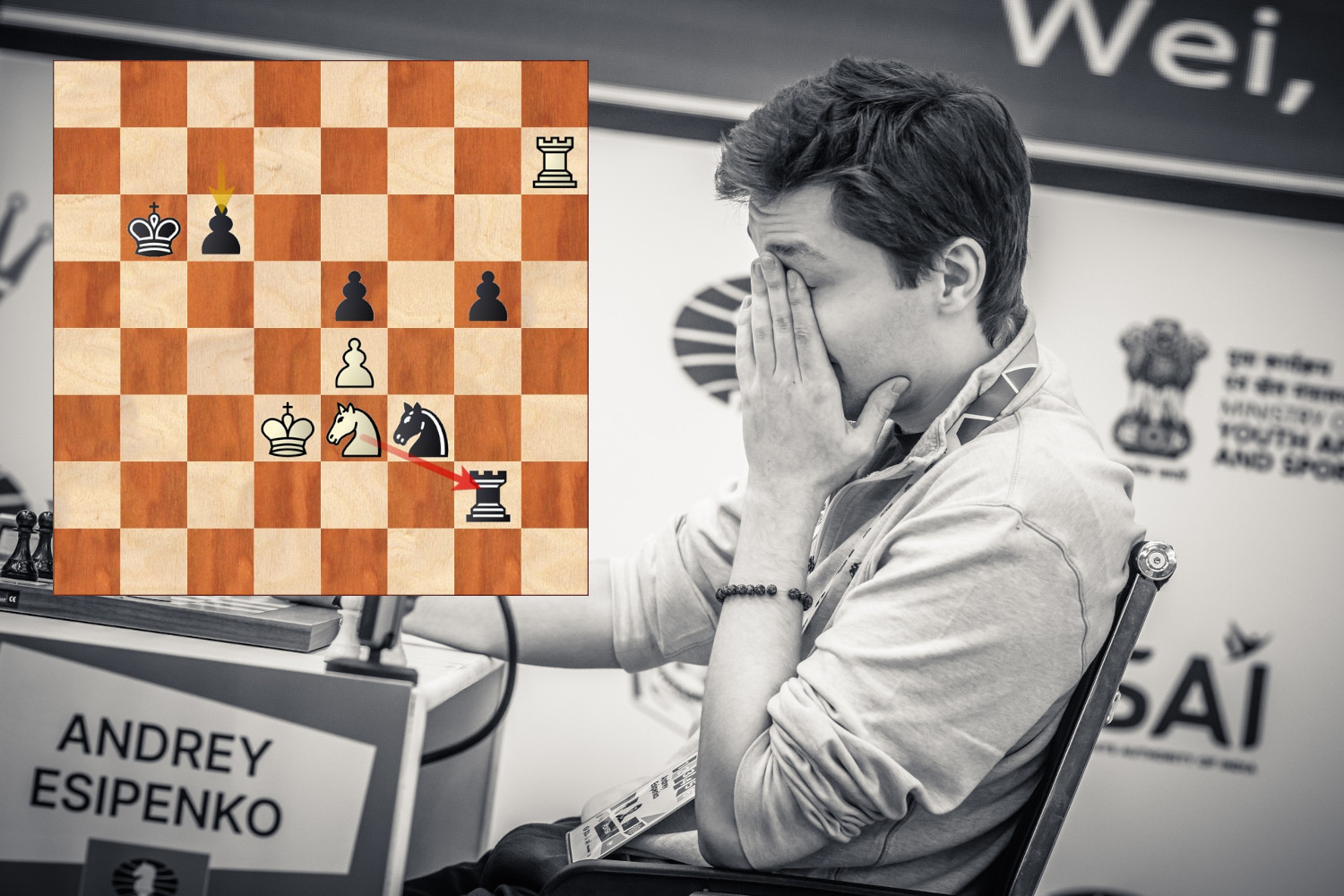
This, of course, acted as a qualifier for next year's Candidates Tournament, and by winning the game to reach the final Wei Yi guaranteed himself a place while Esipenko had to compose himself and then battle his way through the match for third place against Nodirbek Yakkibboev to book his spot. However, the game had ended, and the actual finish in which Esipenko blundered a whole rook in a better ending must have been shattering to both of them in diametrically opposite ways.
After soaking up his opponent's pressure, Esipenko had taken over to gain a big advantage. Here, though, short of time he made a mistake and followed it with an absolute howler.
55...Kb6?
55...Ra2 would have given excellent winning chances.
56.Ne3 c6??
57.Nxg2 1-0
If you go to the ChessBase report, there is a video of the final moments, and I was enormously impressed by how they both comported themselves. I don't play poker because it's really not within my ambit, but I used occasionally to watch tournaments on television, and you saw players who had got a lucky card on the river running around squawking. Wei Yi, who had just fulfilled a dream, sat there quietly, presumably wildly joyful and also slightly embarrassed, and signed the scoresheet.
The Russian player Alexander Ilyin-Genevsky, who once beat Capablanca - see the pgn below - was also a boxer and said that losing at chess was worse than being punched in the face. Esipenko must have been totally dazed, but he managed to shake hands and quietly sign the scoresheet himself before leaving. In private, he may have punched a wall or screamed his head off, and he has all my sympathy, but he maintained a public face which was both seemly and perhaps helped him to recover quickly so that he could do battle the next day. Bravo!
Another outstanding example of sportsmanship occurred in the final round of last year's Toronto Candidates Tournament after Ian Nepomniachtchi had somehow held on against Fabiano Caruana, thus denying the American grandmaster the chance to play off against Gukesh Dommaraju for the right to challenge Ding Liren for his title. After an epic battle, they sat quietly together at the board analysing and Nepo commiserated with Fabi.
Video by ChessBase India
I was watching Esipenko live and have to say that, like him, I failed to notice that the knight could also go backwards! Sometimes a piece is destined for a square and it's hard to notice that it can veer off, even if it takes something huge. It reminded me of a game which I think I did once show here before, in which I put a whole queen en prise on move 40, albeit after a "proper" time scramble at a time when incremental controls weren't even practicable as we used mechanical clocks (I sometimes hanker back to those times chess players didn't need increments).
Here I played 40...Qb3 and moments later held out my hand to resign. But he was oblivious so I went for a walk around the tournament hall where luckily all the other games had finished. I've been told that there was a crowd outside the ropes, but nobody was there to gather inside, and he didn't realise. After several minutes, he played 41.Nd3 and I replied 41...Nxc3 offering a draw - which he accepted!
Draw agreed.
I had to decide whether to tell him what had happened and, while not wanting to be rude, thought that it was better to do so now rather than wait for him to walk through the doors of the hotel and be seized by crowds of happy truth tellers.
After Esipenko's blunder, I saw Internet chat about how supposedly "weak" he is. Stuff and nonsense! GMs are not robots and the basic lesson of this column if you want something didactic is that we are all capable of making appalling mistakes, and it's much better not just for seemliness but also for yourself if you can maintain equanimity at least in public.
Select an entry from the list to switch between games